


Published : 10 Mar 2019, 08:42 AM
Updated : 17 Oct 2022, 11:36 AM


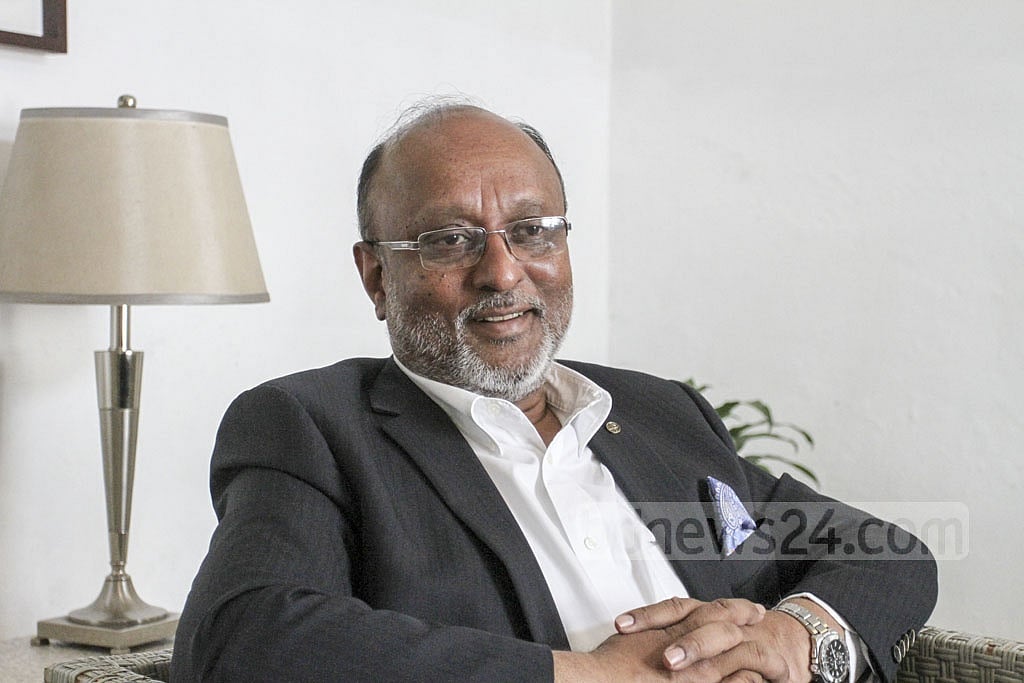
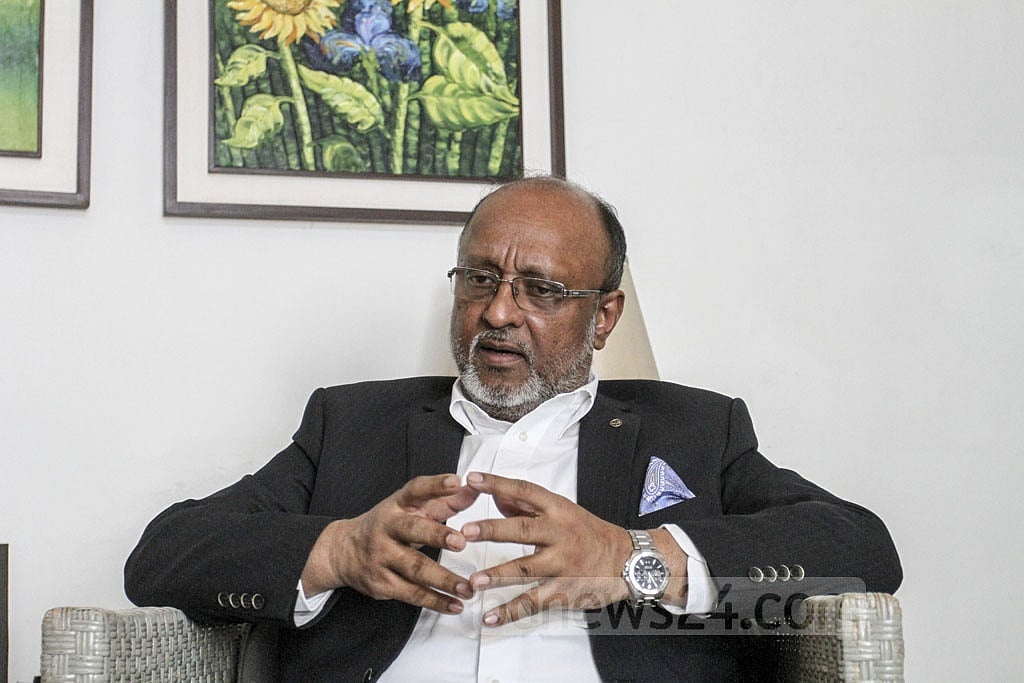
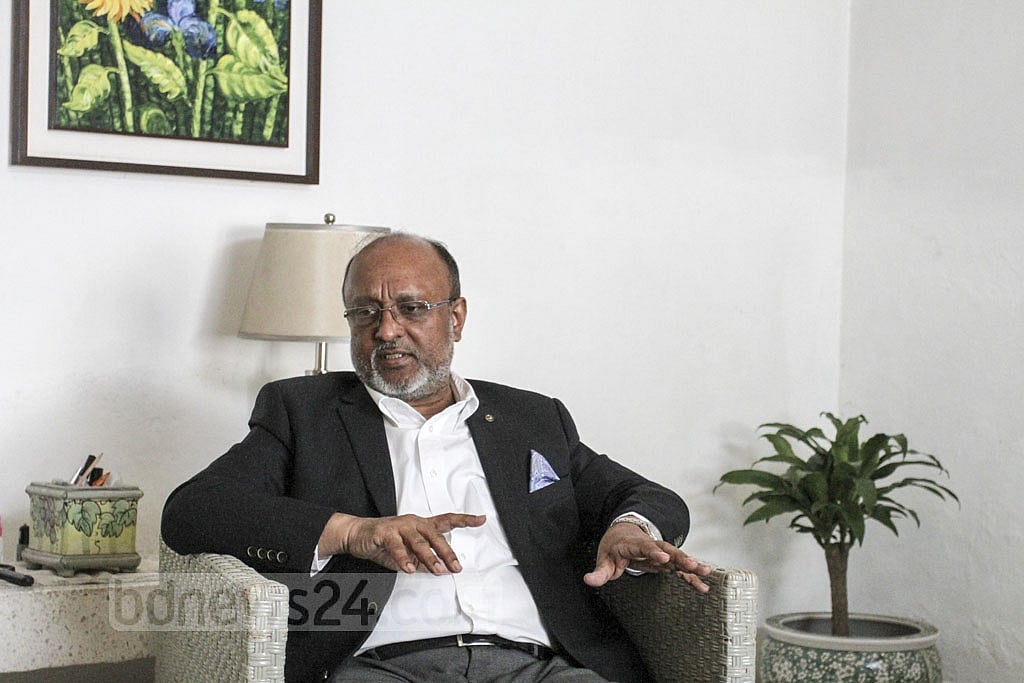
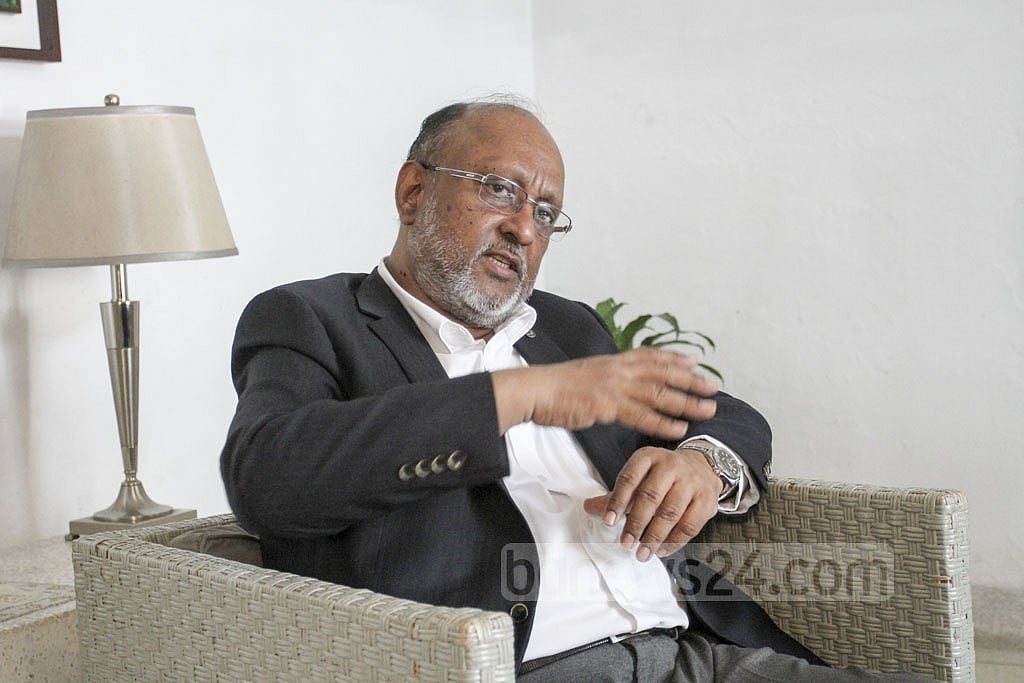
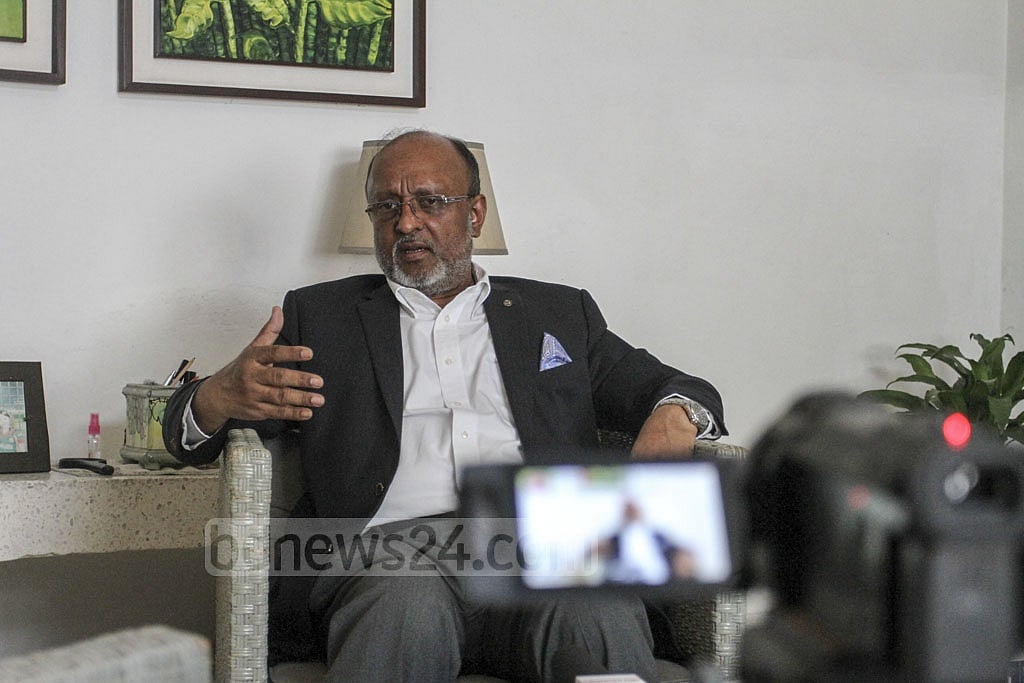
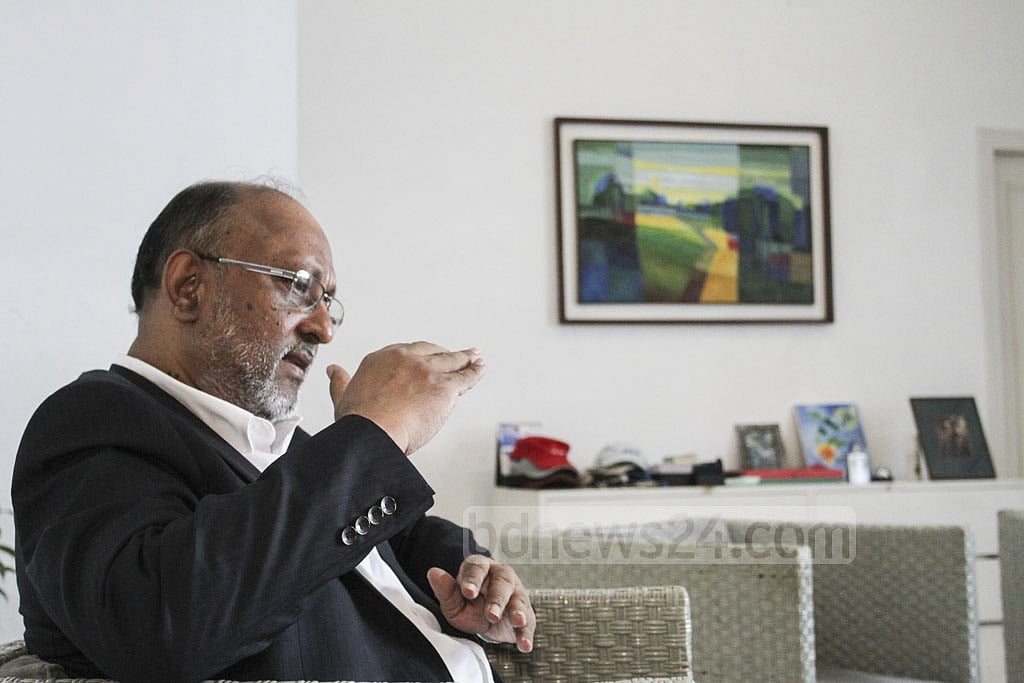
For every business deal, there is always a quiet guy who works behind the scenes. For Bangladesh, it was Ambassador Golam Moshi, a non-career diplomat, who made it happen. He is constantly aware that he has been blessed by Prime Minister Sheikh Hasina.
It appears that the visit is less about the present, but more about the future. Moshi believes the visit has greater significance than the top-line item of the agreements. He sat down with bdnews24.com on Saturday to discuss the Saudi team’s visit and the developing relations between the two countries, migrant workers and the changes he has seen during his time in the post.
Moshi also took questions on an unsavoury topic — the murder of Washington Post columnist Jamal Khashoggi, allegedly by Saudi security agents in Istanbul. The subject turns the spotlight back on Crown Prince Mohammed bin Salman, whose relations with the west have frayed since the unravelling of the episode.
Saudi Arabia is now keen to forge closer ties with Asian economies. Prince Mohammed swung through South Asia in February with plans to invest billions of dollars in Pakistan and India. The visit by the Saudi ministers and business leaders to Dhaka is seen as a preamble to Prince Mohammed’s trip, and Moshi signalled that his visit is not too far off.
“Our most important achievement is not just the agreements or the MoUs, but the confidence building that the delegation will engage in,” Moshi said.
Back in Saudi Arabia, the delegation will inform the authorities about the potential of investing in Bangladesh. Investors will thus know that Bangladesh is the “right place and it’s the right time for investment”.
“It is not just six agreements. It was more than that. There were more than 32 representatives representing at least 20 major companies, including Aramco.”
They will help spread the word of Bangladesh’s development and encourage others to invest, Moshi said.
Saudi Aramco, the world’s biggest oil exporter, aims to become a global refiner and chemical maker, seeking to profit from parts of the oil industry where demand is growing the fastest while also underpinning the kingdom’s economic diversification.
The company discussed the possibility of setting up an oil refinery and storage facility not just for Bangladesh but for the entire region.
“In just this sector, the investment could be $10-15 billion,” Moshi said.
If the deal gets through, it will be part of the company’s ambitious plan to invest $500 billion globally over the next 10 years, including $160 billion for natural gas developments and $100 billion for chemicals projects.
The ambassador also attempted to clear up the confusion over the size of the investment both sides agreed to. Bangladesh presented a list of potential investment projects to the delegation of around $35 billion, he said.
A committee, including representatives from both countries, will scrutinise the proposals and will meet for the first time in Jeddah in the early part of Ramadan to decide which projects are suitable and viable.
“I am very optimistic that we will meet Bangladesh’s estimate of $35 billion,” Moshi said. “They are very keen and they are very much interested, so I’m sure this will be one of the biggest Saudi investments in Bangladesh in the coming days.”
SETTING UP THE MEETING
Though the visit was brief, it took a lot of effort, the ambassador said. “It took a year of work to arrange a one-day meeting.”
But he singled out the efforts by Hasina, who he said had highlighted the importance of securing Saudi investments to him even before he took up the post.
Hasina had impressed the Saudi royal family with her sincerity and vision during their meeting in October 2018, he said.
“At the meeting the honourable prime minister was assured by the crown prince that he is going to send a very high-level team to Bangladesh to explore the opportunities where they can invest the money because they have a huge surplus cash.”
Asked whether Prince Mohammed would make a visit to Bangladesh, as he had done to India and Pakistan recently, Moshi said: “This is very much a part of his agenda.”
“You may say this is the advance team as both of the ministers [Saudi Minister for Commerce and Investment Majid Bin Abdullah Al Qosaibi and Economy and Planning Mohammed bin Mezyed Altwaijri] are senior members of the cabinet. They are actually the advance team for any visit of his royal highness the crown prince.”
SAUDI ARABIAN CONTROVERSIES
Moshi did not offer clear responses to the death of journalist Jamal Khashoggi and the war in Yemen, stating that these issues did not relate to Bangladesh.
“Our foreign policy is clear. Saudi Arabia is the largest market for our migrant employment. It is the largest source of remittances. We have more important issues to address. We do not want to get involved in these complications.”
“It is not a priority for Bangladesh to say something,” Moshi said.
He did, however, say that Saudi Arabia and Bangladesh have had cordial relations since 1975 and that both countries have supported each other on the international stage and would maintain their bonds.
Moshi insisted that Bangladesh limited its role to non-combat areas. “Our cooperation and collaboration with Saudi Arabia in the defence sector will be purely non-combat.”
“This means we’ll have our people in engineering, logistical services, in monitoring the borders. It has nothing to do with any combat at all because it goes against the principles of our commitments towards the UN mandate and as a peacekeeping force.”
WORKER ABUSE IN KINGDOM
Ambassador Moshi spoke more openly about a controversy that directly affected Bangladeshis — female migrant workers who returned home and alleged they had been abused while working as domestic aides in Saudi Arabia.
The ambassador said the overall situation of returnees was more complicated than the more notable stories that had been picked up by the media.
“There have been some unfortunate cases, but we have around 250,000 expatriate women working as domestic workers in Saudi Arabia. There are about 11,000 returnees, which is less than 5 percent.”
Though some returnees had experienced abuse, many others were having difficulty adjusting, Moshi said, for which the responsibility falls on agents and the government agency that deals with migrant workers.
“Saudi families pay $2,000 to hire any maid from Bangladesh from the manpower agents. The agents should train female domestic workers properly to do this job.”
But often women from rural areas find themselves in a totally different environment and culture and have trouble coping, he said.
The ambassador brought up the case of the Philippines government that sent 750,000 female domestic workers to Saudi Arabia and made it mandatory for them to undergo training to prepare for the job.
Moshi urged the Bureau of Manpower Employment and Training to take the initiative to train these workers. Asked what the embassy has done for those migrant workers who have been in trouble, the ambassador said that the government was ready to provide them with shelter, protection and legal aid and assistance.
"But often they do not want to go to court. They don’t want to stay there and just want to return home.”
The embassy acquired a safe house where 500 people could be housed and fed during his tenure. Allegations of abuse were referred to the police within 48 hours, the ambassador said. He also gave assurances that the Saudi authorities were quick to act on such allegations.
A CHANGING FOREIGN SERVICE
Ambassador Moshi said ensuring migrant workers had easy access to support from their government was key to the changes he had tried to introduce.
Before Moshi left for Saudi Arabia four years ago, Hasina had told him to help migrant workers and make consular services user-friendly so ordinary people would feel that it was their embassy and could make use of it.
“I am sorry to say I had to terminate many staff members because they misbehaved with those who came in,” he said.
Over a dozen staff had been dismissed for their misbehaviour, he said.
“Those who come to the embassy come from working in 50 degrees [Celsius] outside. Even if they shout you should not shout back,” Moshi said, citing his instruction to his staff.
“We are sitting in an air-conditioned room and we are getting a salary from the government … and so we must give the service that the people are coming to the embassy for.”
The foreign service has changed in recent years and will have to change with people’s needs, according to Moshi.
“I closely watch the other embassies. Times have changed. Most of the countries put emphasis on economic diplomacy now. Political diplomacy, I should say, is more or less over.”
The Bangladesh foreign service needs more officers, a strong research and economic cell and clear guidance from top officials to be successful in the future, he said.
As an outsider to the service, Moshi said that he and other non-career diplomats seemed more likely to be ‘go-getters’, though they sometimes forgot the proper protocol.
“I think nowadays protocol doesn’t matter much, because the world is now open. Everyone wants the free flow of information and discussion. The dimensions have changed.”
However, the ambassador was quick to point out that his staff with long careers in diplomacy greatly helped him.
The conversation of future investments by Saudis that started at the top will be a bright spot in Moshi’s career. The secret of his success is a blend of his newfound diplomatic skills and his background in politics and business.
“In the end, I think you need a mixture of both.”













