


Published : 21 Feb 2013, 07:41 AM
Updated : 20 Oct 2022, 03:34 PM


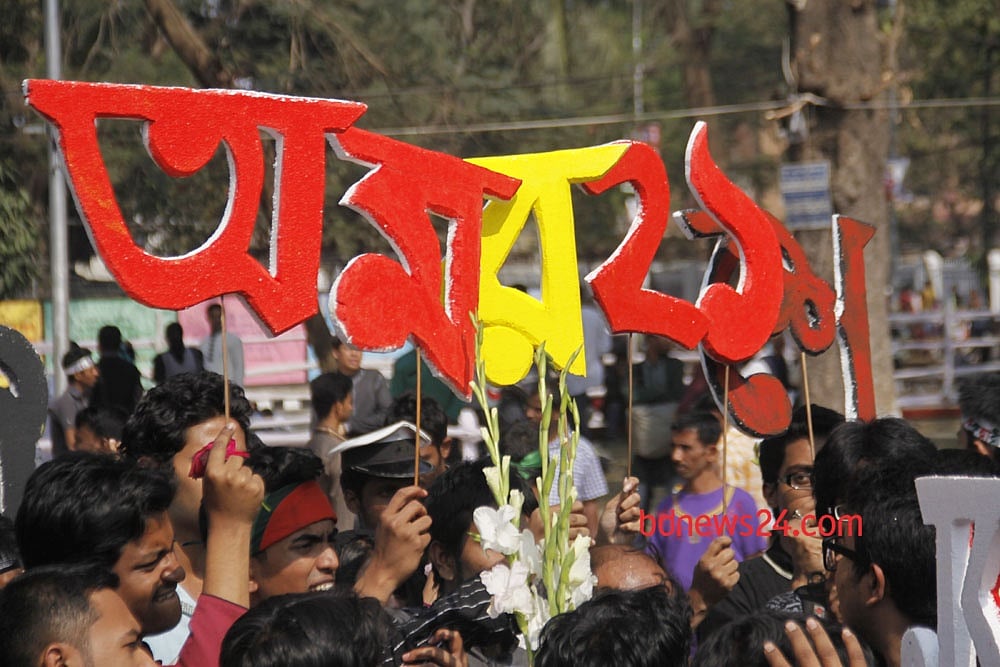
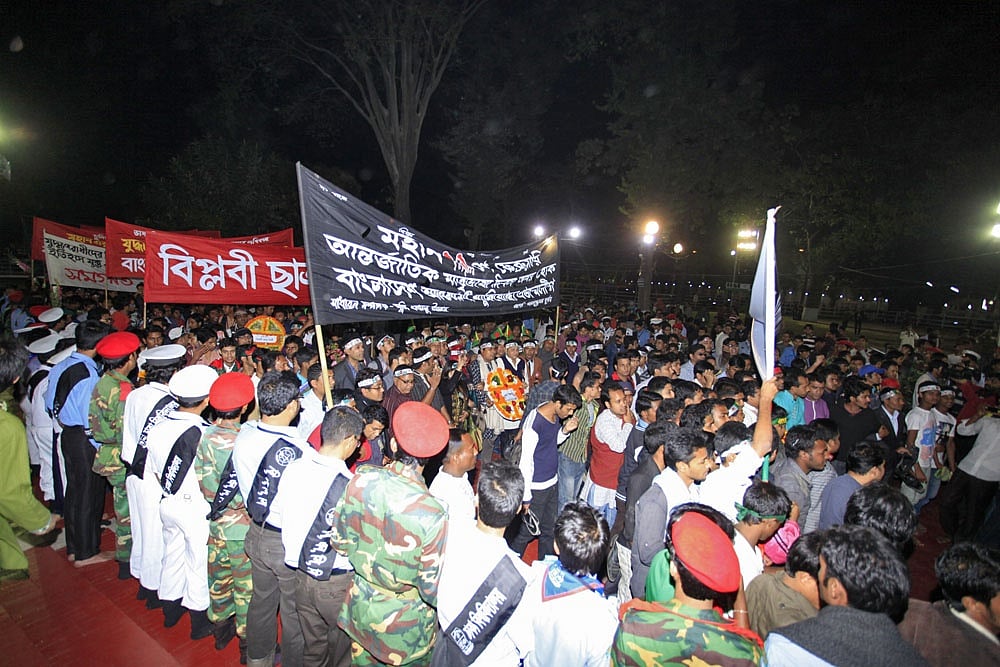
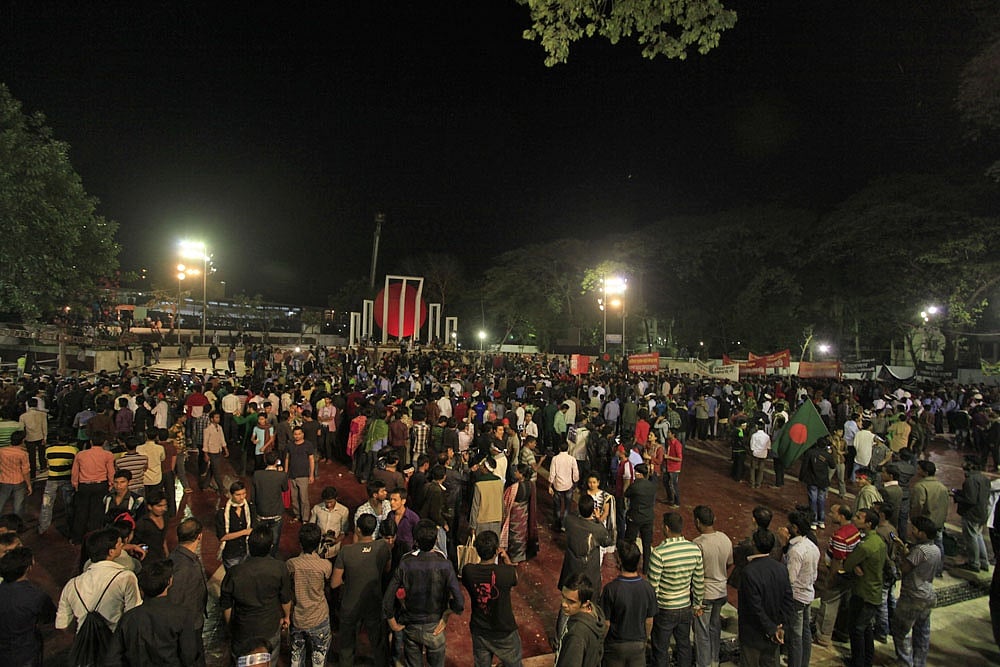
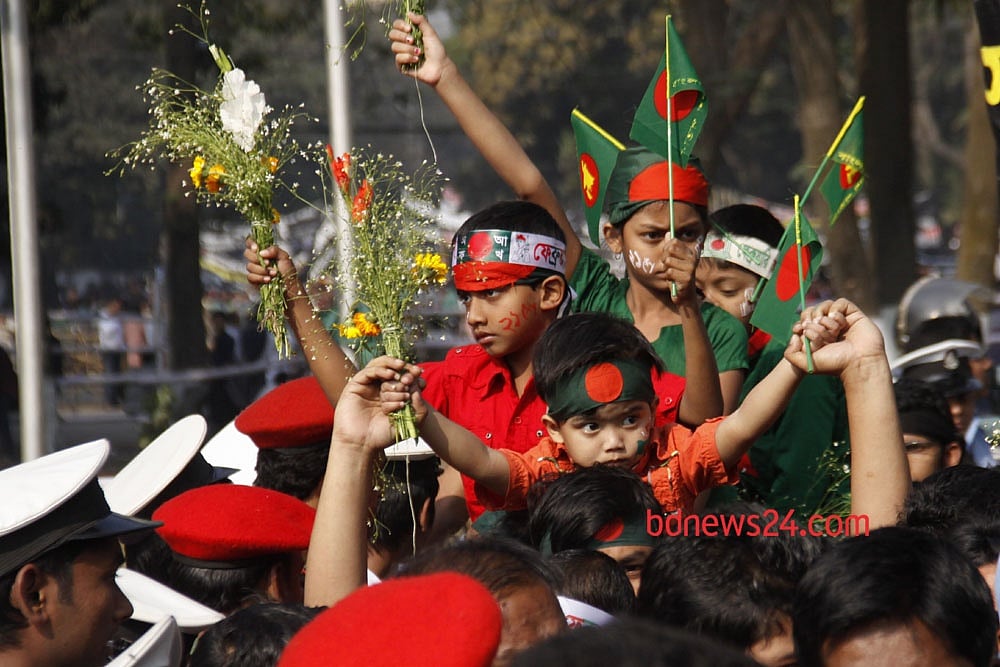
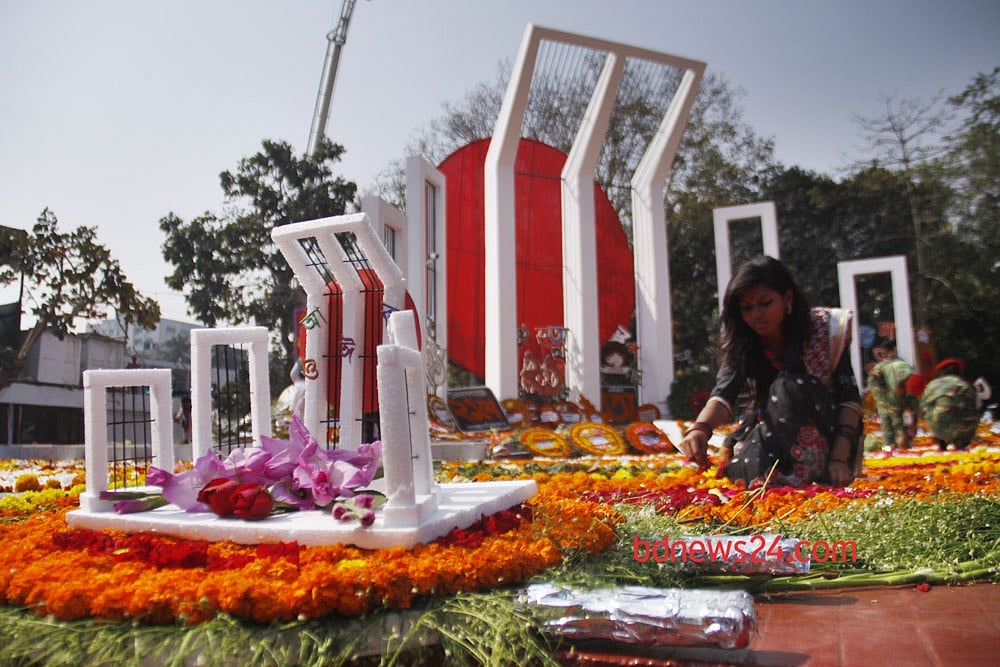
Tens of thousands of people began to gather at the Shaheed Minar, the memorial for the 1952 language movement martyrs, late at night on Wednesday.
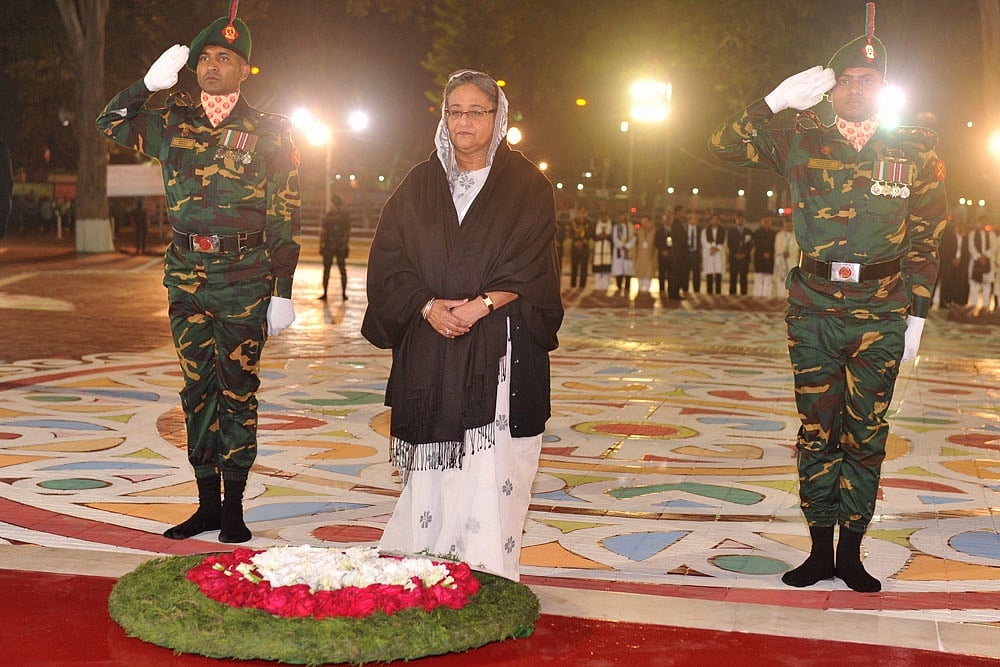
At the midnight hour, political leaders were joined by social and cultural activists to pay their respects to the martyrs.
Prime Minister Sheikh Hasina was the first to pay her tribute at 12:01pm.
She walked to the memorial’s altar two twice-once with the Members of her Cabinet and then with her party colleagues as Awami League President.
She was followed by Parliament Speaker Abdul Hamid, Dhaka University Vice Chancellor Prof AAMS Arefin Siddiqui.
The Shaheed Minar was soon a sea of flowers with thousands placing wreaths and many more waiting in the queue to follow.
People from all walks of life thronged Shahid Minar on Thursday morning.
Students from different schools marched towards the venue after 6.30am.
“Amar Bhaier Rokte Rangano Ekushey February,’ was on everyone’s lips.
The day this year has a special siginifcance as a powerful social movement against the ‘war criminals’ of 1971 rolled into the 17th day on Thursday.
The protestors congregating at Shahbagh are demanding death penalty for all the 1971’ ‘war criminals’ now standing trials in the two special tribunals as well as a ban on the religion-driven politics of Jamaat-e-Islami.
Shahbagh’s Ganajagaran Mancha led by its spokesperson Imran H Chowdhury placed a wreath at the Shaheed Minar at 1am.
The mancha has urged all educational institution to sing the Ekushey song at 3pm in a gesture of solidarity towards the Shahbagh movement and its objectives.
President Zillur Rahman and the Opposition leader Khaleda Zia could not come to Shaheed Minar.
The President’s Deputy press secretary Sazzad Haider gave ‘unavoidable’ reasons for his absence.
Khaldea Zia is in Singapore for medical treatment.
The BNP paid their tribute at the memorial led by acting secretary general Mirza Fakhrul Islam Alamgir.
They were followed by the Workers Party, Communist Party of Bangladesh, BSD and Samyabadi Dal.
Several youngmen died in police firing on 21st February 1952 to quell protests against the government decision to impose Urdu on the people of erstwhile East Pakistan, who wanted Bengali to be recognized as one of the official language .
The language movement began the intense alienation of the Bengalis and finally led to the Liberation War in 1971.
The UNESCO has declared 21st February as the International Mother Language Day on Nov 17, 1999.
The day is the national holiday and national flags will be kept half-mast in this day.
In India, which is home to millions of Bengalis, the day is also observed as “Language Martys Day”.
The day is being observed in West Bengal and the states of Tripura and Assam, which have large Bengali populations.







