


Published : 17 Feb 2020, 04:29 PM
Updated : 17 Oct 2022, 11:02 AM


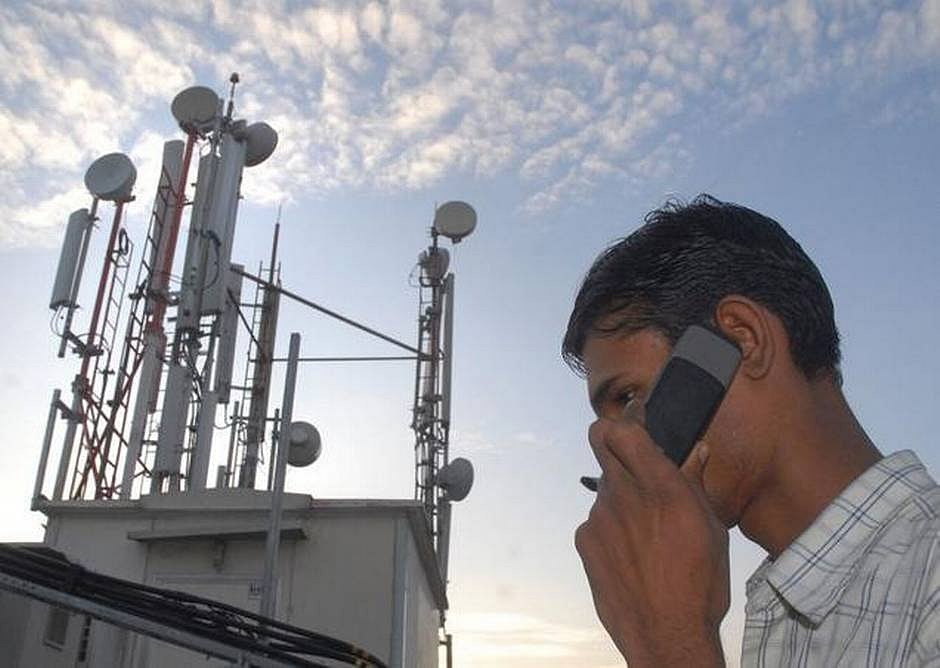
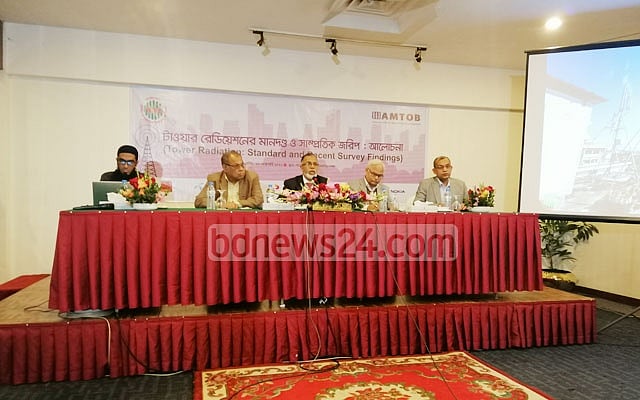
“Radiation is found to be much lower than the threshold fixed by BTRC and international standards; there’s nothing to worry about,” said Md Aminul Hasan, a commissioner of Bangladesh Telecommunication Regulatory Commission, said on Monday.
The High Court in April 2019 ordered the authorities to do a survey to see if the radiation emitted by rooftop towers is causing harm to human health and the environment.
The High Court ordered the BTRC to submit a report in four months following the hearing of a writ petition. Besides, it also ordered the regulators to identify the specific absorption rate, a measure of energy absorbed by the human body when exposed to a radio frequency while using a mobile phone.
A survey has been conducted on mobile phone network tower radiation in parts of the country and BTRC will continue the study, said Hasan.
“We found the radiation level satisfactory and uploaded the results regularly on our website,” he said adding that there is no alternative to setting up more towers to improve telecom services.
“Confusion surfaced over the mobile network tower radiation. We assured the government and private institutions and building owners that there’s nothing to worry about.”
There are around 33,000 towers owned by telecom operators, according to BTRC.
“Radiation is of two types -- ionising and non-ionising. Ionising radiation including nuclear waste, ultra-violate radiation, Gama-ray and X-ray is harmful to human health. It can affect the human health at DNA level,” said BTRC Deputy Director Shamsuzzoha as he presented a keynote paper.
A survey conducted in Dhaka, Chattogram, Khulna, Sundarbans, Feni, Rajshahi, Sylhet, Rangpur, Jamalpur and other parts of the country did not find the network tower exceeding the limits, Shamsuzzoha said.
“We hope that the confusion among the people regarding mobile network towers will be gone. We have seen birds nesting and living on some towers for long. On some of the rooftops, we have seen vegetable gardens with good yields beside a tower,” he said.
“The confusion about mobile network towers should be removed as we have to move forward with our technology. There’s nothing to worry about,” said Prof Satya Prasad Majumdar.
“We need more sites in future when we introduce 5-G networks. We must not fall behind,” said AMTOB Secretary General SM Farhad, who moderated the event on the standards of mobile network tower radiation.







