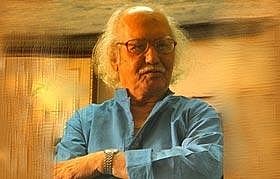
Profile Kabir Chowdhury: 1923-2011
Kabir Chowdhury, son of a government official, was born in 1923 in Brahmanbaria of the then Tipperah district of united Bengal. He grew up in an atmosphere of liberal ideas and secular thinking.
bdnews24.com News Service
bdnews24.com
Published :
13 Dec 2011, 06:53 AM
Updated :
10 Aug 2022, 05:56 PM
Dhaka, Dec 13 (bdnews24.com)--Kabir Chowdhury, son of a government official, was born in 1923 in Brahmanbaria of the then Tipperah district of united Bengal. He grew up in an atmosphere of liberal ideas and secular thinking.
He did his master's in English literature and graduation in 1944 from the University of Dhaka. Kabir Chowdhury was appointed education secretary in 1972 immediately after the independence war when his celebrated younger brother Munier Chowdhury was killed by the local collaborators of the Pakistani army.
He was member-secretary of the first National Education Commission under Dr Kudrat-e-Khuda, and later became the education, sports and cultural affairs secretary.
Chowdhury taught English literature at Dhaka University after a career in the government education service and emerged as a leading figure in the fight against communalism and religious fanaticism in the last decades.
Kabir Chowdhury was the head of Bangla Academy from early 1969 to the middle of 1972 and played a major role in propagating secular values during the mass movements of 1969 and 1970.
The national professor headed several organisations that worked for secular democracy, such as the "Committee for Resisting the Killers and Collaborators of 1971", better known as "Ekattorer Ghatak Dalal Nirmul Committee", "Citizens Social Rights Movement", and "Citizens United Front".
He worked closely with the late Jahanara Imam in trying to bring the killers of 1971 to book as war criminals, and helped set up a People's Court that found leaders of Jamaat-e-Islami and BNP guilty of war crimes. They then urged the government to try them in a properly constituted tribunal.
But, the then government turned around and charged Kabir Chowdhury and 23 other of his colleagues for sedition and instituted a formal case against them. The case was withdrawn later during the caretaker regime headed by retired Chief Justice Mohammad Habibur Rahman.
Kabir Chowdhury served as chairman of the Bangladesh Afro-Asian Writers Union for many years. He was also a member of the presidium of the Bangladesh World Peace Council and the Bangladesh Afro-Asian Peoples Solidarity Organisation.
He headed the Bangladesh-Soviet Friendship Society for over a decade. He was the president of the Bangladesh Vidyasagar Society and headed the Advisory Council of Ekattorer Ghatak Dalal Nirmul Committee.
His stream of work has seen him contributing significantly to the dissemination of secular ideas and democratic values. He has written extensively on anti-fundamentalism, religious fanaticism and communalism, and has stressed the need for developing broad human values and realising the importance of cultural diversity, and the imperatives for developing a pluralistic society.
Kabir Chowdhury was the chairman of the Committee that organised the South Asian Conference on Communalism and Fundamentalism, held in Dhaka some time ago. In 1994 when the Islamic fundamentalists of Bangladesh declared poet Taslima Nasreen a heretic and demanded her head Kabir Chowdhury strongly came out in her defence.
In 1998 he was made a national professor of Bangladesh.
During his long career Kabir Chowdhury has spoken at many national and international meetings of writers and social activists on literature, socialism, secularism and democracy. He has addressed gatherings in Germany, Russia, US, Bulgaria, Angola, Japan, Pakistan and India.
For his contribution to education, literature and civil society movement Kabir Chowdhury has been nationally and internationally honoured. Among the numerous awards he has received are the Bangla Academy Literary Award, the Ekushey Award, the Independence Day Award, Bangabandhu National Award, Mohammad Nasiruddin Literary Award, Sher-e-Bangla Award and India's William Carey Award.
The 88-year old passed away at his Naya Paltan residence in the early hours of Dec 13, 2011.
bdnews24.com/zk/rn/tk/bd/1243h