


Published : 06 Apr 2017, 01:35 AM
Updated : 05 Aug 2022, 07:18 PM


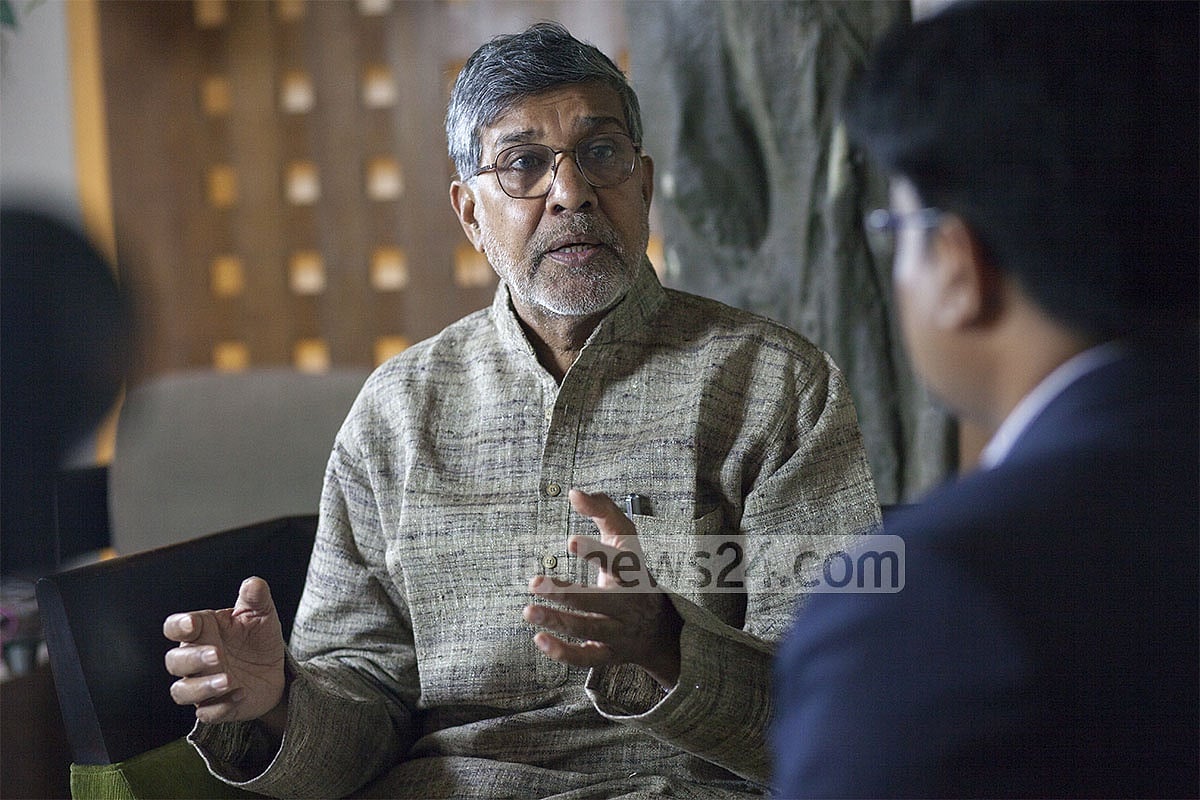
“The government must play a role, certainly, but it is more important for the people to demand equality and feel that equality is their right,” Satyarthi, 63, said in an exclusive interview with bdnews24.com on Tuesday.
He spoke on the need for income equality, education, youth outreach and the projects he has undertaken on these matters.
The activist, who has worked steadily since the 1980s, emphasised the growing need to address global income inequality.
“I strongly believe that income inequality is a form of economic violence and, as such, is a serious threat to stability, security and peace.”
“It is ironic that the world is progressing economically, technologically, culturally and intellectually, but, on the other hand, the income gap is growing.”
Just eight of the richest people on earth own as much combined wealth as half the human race, according to an Oxfam report released in January.
That’s a notable change from last year, when it was reckoned to take 62 of the superrich to match the assets of the 3.6 billion people in the poorer half of mankind.
“This gap creates conflict and, sometimes, violence. We cannot build a safer, sustainable and peaceful world without filling it,” he said.
The answer to the widening income gap, according to Satyarthi, is education.
“We must build a stronger demand for equitable, inclusive and quality education,” he said.
“Education empowers people.”
Through bridging the gap and democratising education for all children, equality can be brought about faster than in any other way, he said.
Satyarthi also spoke of his work on the ‘100 Million for 100 Million’ campaign, a partnership effort that engages children from affluent backgrounds to work with those from poorer families.
“Our campaign hopes to build this sense of responsibility and inculcate the values of global citizenship.”
Satyarthi, who shared the Nobel peace prize of 2014, with Malala Yousafzai of Pakistan, believes well-off children are full of energy and idealism and are eager to prove themselves. On the other hand, he said, many young people are the victims of child slavery, trafficking and violence. The ‘100 Million for 100 Million’ campaign tries to bring these groups together and harness that energy and idealism to build a better world.
“Often, even in schools and colleges, the privileged class do not have much knowledge about their own rights, let alone their responsibilities. In those societies children often lack the space to express themselves. Their parents are often too involved in moneymaking and social functions.”
Through this campaign Satyarthi hopes to fill that vacuum in the lives of affluent youth and involve them from neighbourhood to country-wide activities that uplift those children left behind and allow the groups to become equal partners.
Asked about his view of the situation in Bangladesh, Satyarthi said the country “has made remarkable progress, not only in the economic sphere, but also in the social context.”
He went on to praise the improvements in education, the infant mortality rate, birth rate and life expectancy, and gave particular credit to the government for their ‘tremendous initiatives’.
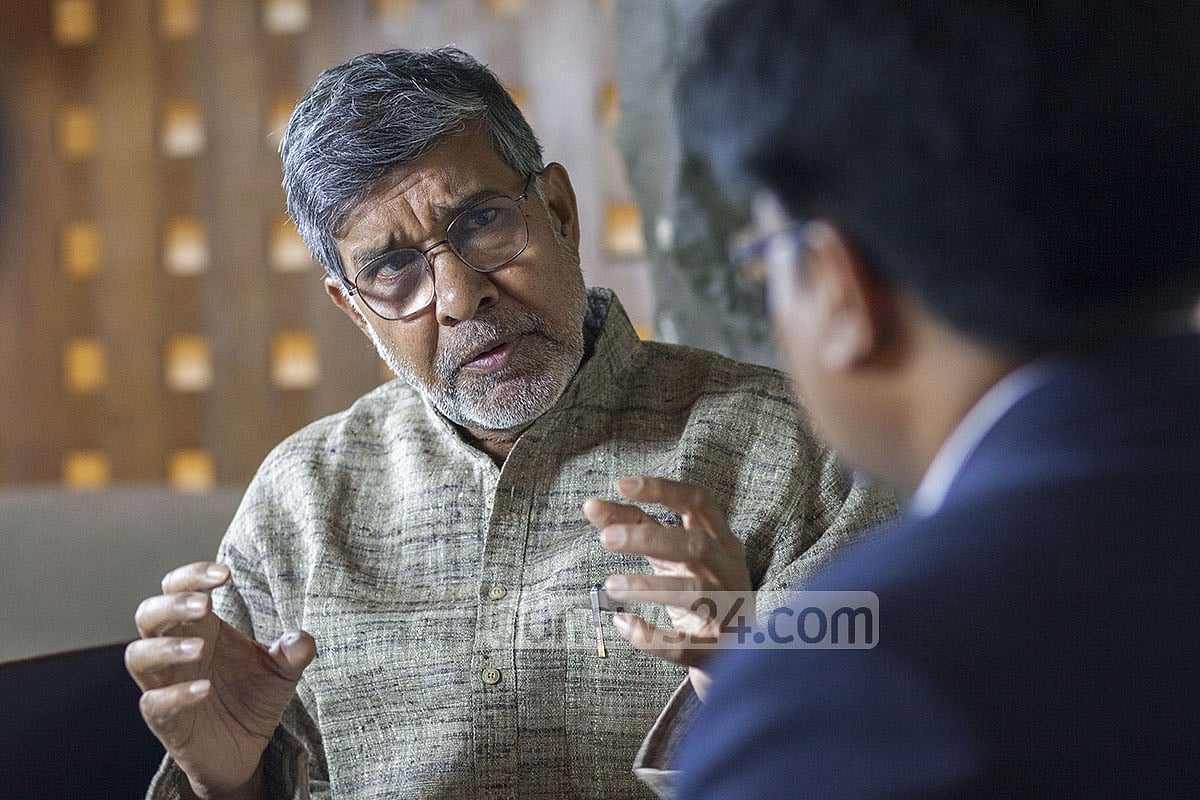
Though a notable figure on the world stage, Satyarthi has often been known to keep a low-profile.
“I never changed my lifestyle. I consider myself a custodian of [the money we receive]. Every single penny should be invested for the children, instead of on big salaries or profiles,” he said.
“I never spent a single penny on my own public relations. When we do good work, the media comes.”
The Nobel prize, however, has helped him get in the door to speak with more high-profile individuals.
“A big success of our efforts was the incorporation of child slavery, trafficking and violence issues into the sustainable development goals, which are the future commitments for the world.”










