Published : 06 Oct 2026, 05:28 PM
Updated : 06 Oct 2026, 05:28 PM


At least 2,200 NGOs in Bangladesh are at risk of funding shortages as donor countries cut allocations for development assistance, according to a study by the Bangladesh Institute of Development Studies (BIDS).
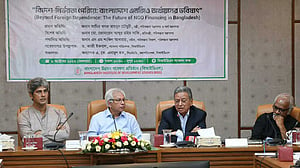
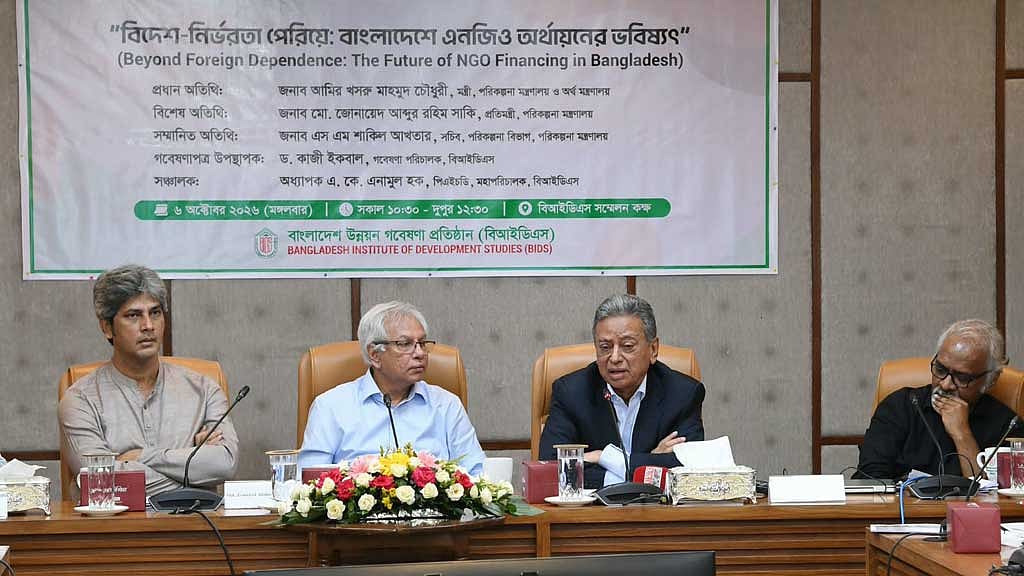
The findings were presented at a seminar titled “Bidesh-Nirvorota Periye: Bangladesh NGO Orthayoner Bhobisyat” [Beyond Foreign Dependence: The Future of NGO Financing in Bangladesh] at the BIDS conference room in Agargaon on Tuesday.
BIDS Research Director Kazi Iqbal presented a summary of the study.
The study said foreign aid is declining rapidly across the world on a sustained basis.
“In 2025, development assistance from wealthier countries fell by 23 percent in real terms, the largest annual decline ever,” it said.
“The United States has shut down its aid agency USAID. The UK, Germany and France have also cut their aid budgets for the next few years and redirected funds towards defence. Therefore, this funding is unlikely to return easily.”
However, Bangladesh has not yet felt the full impact of the decline, according to the report.
“Funds for previously approved projects are still being released, amounting to Tk 101.43 billion in the 2025-26 fiscal year. But the number of newly approved projects fell to 1,654 in 2025-26 from 2,061 in 2021-22,” it said.
“About 2,200 small and medium-sized NGOs are most at risk. These organisations do not have microfinance operations and depend almost entirely on grants.”
The survey found that the budgets of NGOs depending solely on foreign grants have declined by an average of 40 percent, while the decline was only 12 percent among NGOs with microfinance operations.
Iqbal said the study was prepared by analysing organisation-level data from the NGO Affairs Bureau and the Microcredit Regulatory Authority, along with a survey of 46 NGOs.
The study proposed several measures to address the crisis. These are:
Creating a public list of eligible NGOs that can access government procurement, corporate social responsibility and other funding
Developing guidelines to implement the NGO provisions of procurement regulations
Setting up funds through the NGO Foundation and PKSF for small and medium-sized NGOs
Including provisions in the draft CSR policy for eligible implementing organisations and unspent funds
Providing legal recognition and tax benefits to social businesses
Finance Minister Amir Khosru Mahmud Chowdhury was the chief guest at the seminar.
Calling for reduced dependence on foreign grants, Khosru said greater participation of NGOs in various government programmes could create alternative sources of funding for them while making development and social protection programmes more effective.
“A coordinated framework is needed for human development, protection of local culture and private-sector participation. NGOs and others concerned are already working in various areas, including the creative economy. This partnership needs to be given a more institutional and policy-based form,” he said.
Emphasising the need for stronger institutional partnerships among the government, NGOs and the private sector, the minister said: “The role of NGOs is extremely important in delivering the government’s overall services directly to people at the grassroots level.”
Highlighting traditional crafts such as Shital Pati, he said modern design, value addition and marketing should be promoted to take such traditional products to international markets.
The minister also stressed the need to ensure four conditions when approving projects: value for money, return on investment, employment or entrepreneurship creation, and environmental considerations and protection.
“No project will be approved unless these four conditions are met,” he said.
State Minister for Planning Zonayed Abdur Rahim Saki, Planning Division Secretary S M Shakil Akhter and others were also present at the seminar.