


Published : 03 Jul 2018, 11:43 AM
Updated : 19 Oct 2022, 02:14 PM


“There is a “lose-lose situation for people” as they are suffering in both sides of the border – northern Rakhine State and the camps in Cox’s Bazar,” said Maurer at a press briefing in Dhaka on Tuesday after visiting Myanmar and Cox’s Bazar.
“Conditions to return will require not only humanitarian and mitigating activities, but also effective political steps towards ensuring freedom of movement, access to basic services, freedom to undertake economic activity and access to markets in Rakhine and most importantly trust in security arrangements for returnees.”
Maurer said he was not here to apportion blame. “Both governments are making efforts and I’m convinced of their goodwill.”
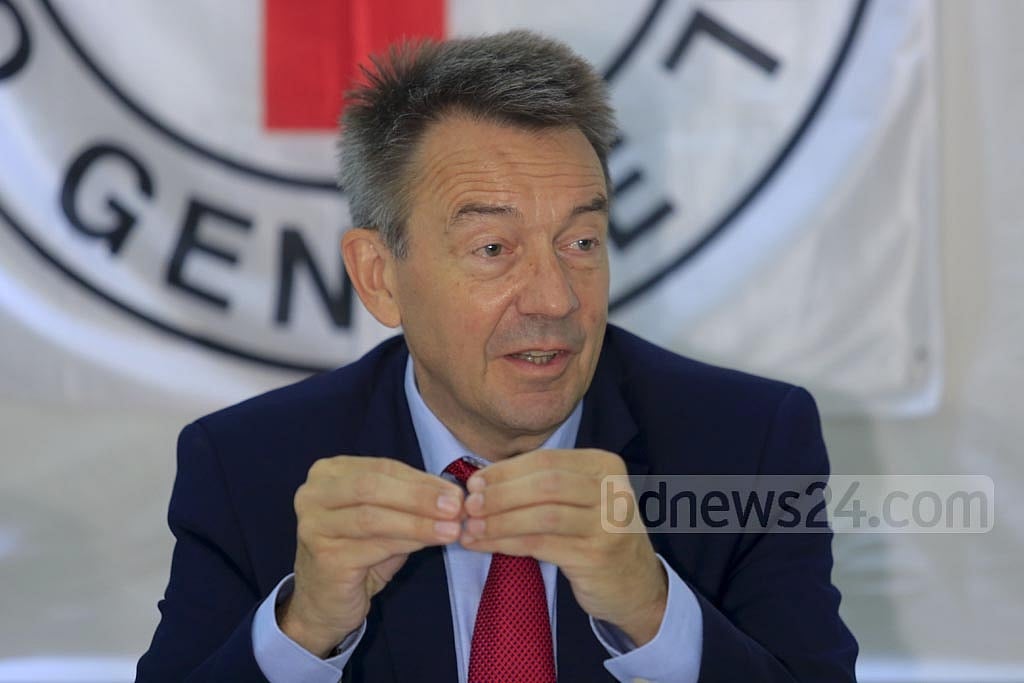
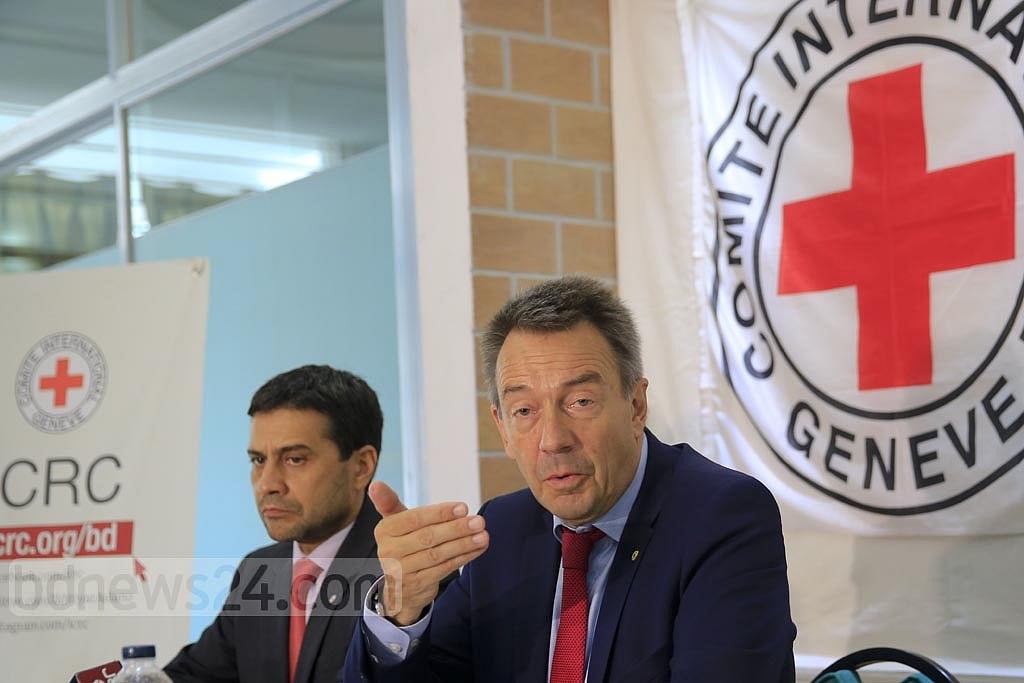
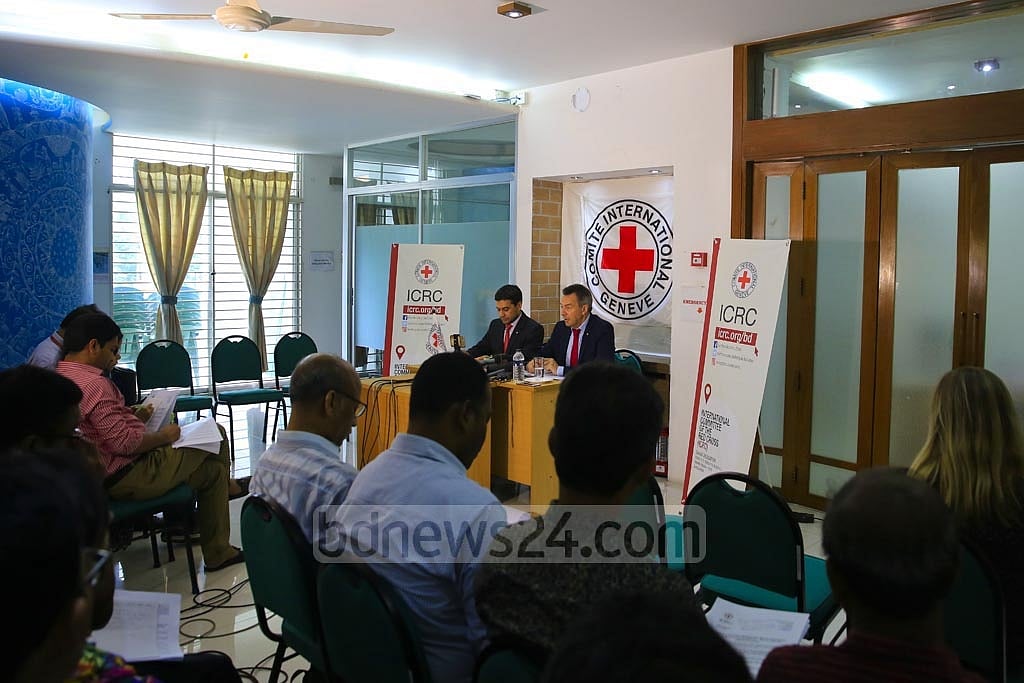
ICRC President Peter Maurer briefs media at its Dhaka office on Tuesday morning. Photo: Muhammad Mostafigur Rahman
“We have also seen the excellent recommendations from Kofi Annan’s Commission, which we support. Humanitarian organisations too are doing their best to alleviate the suffering,” Maurer said.
“But so far, despite all the talking and all the efforts, too little has changed for the people here,” the president said without using the word Rohingya for those persecuted people of Myanmar who denied their citizenships.”
The ICRC was the first international body that obtained the access in the Rakhine State following the Myanmar army's brutal crackdown on the country's ethnic Rohingya minority.
Over a million Rohingyas are now living in Bangladesh.
In both countries, ICRC’s activities range from detention visits to healthcare to humanitarian negotiation and diplomacy following the international humanitarian law.
Maurer who travelled both sides of the border—the northern parts of Rakhine State where people had fled violence and the refugee camps in Cox’s Bazar—said he was leaving the region with “a sober assessment” of the situation.
“I met those who stayed and those who left and it is clear that people are suffering on both sides. People lack secure housing, electricity, latrines, medicine and healthcare. There are few options for people to earn an income to allow them to move beyond aid and emergency conditions.”
ICRC President Peter Maurer briefs media at its Dhaka office on Tuesday morning. Photo: Muhammad Mostafigur Rahman
“Those sheltering in the camps in Cox’s Bazar live in shocking conditions that violate human dignity. With the monsoons arriving, their lives will only get worse. They cannot stay and they cannot return,” he added.
“I cannot claim that life for those in Rakhine State is significantly better. In this remote, rarely visited area, we drove through the areas where villages once stood. Little remains now and the vegetation is rapidly reclaiming the land. In other parts, former schools and health centres stand empty,” said Maurer.
“In one village I visited, less than a quarter of the population remains, only 2,000 of the original 9,000 villagers. I spoke with all communities, Muslim, Buddhist, and Hindu. They described how the social fabric and local economy have been destroyed, making people entirely reliant on humanitarian aid.”
“The conditions are simply not there for large numbers of people to return home,” the president recounted.
“For humanitarian reason alone, something has to change. Our collective bet efforts must break this intractable situation and address its root causes. The ICRC is keen to play its part.”













