Published :
22 Jan 2012, 07:46 AM
Updated :
09 Aug 2022, 03:20 PM
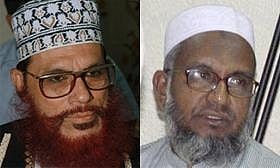
Dhaka, Jan 22 (bdnews24.com)—The war crimes tribunal has rejected two similar applications of Jamaat-e-Islami leaders Abdul Quader Molla and Delwar Hossain Sayedee asking for copies of the investigation reports.
The International Crimes Tribuanl, set up to bring trial against suspects for crimes against humanity in the nation's War of Independence in 1971, has already indicted Jamaat's executive council member Sayedee on 20 counts of war crimes including murder, rape, arson and loot. The tribunal is also scheduled on Jan 29 to begin indictment hearing in Molla's case.
The court on Sunday said the investigation report was different from other documents and not comparable with the similar documents that the defence is supplied with under the war crimes tribunal or the other courts of law in Bangladesh.
This investigation report, the order said, was not admissible as evidence in the courtroom and thus the defence did not have a right to claim access to it.
Furthermore, the order stated that this report contained certain particulars and information regarding witnesses and victims of the war crimes that could not be divulged to the defence for the sake of their security.
Tribunal member, Justice ATM Fazle Kabir read out the order. Defence counsel M Tajul Islam and prosecutor Syed Haider Ali argued.
Tajul Islam made the same arguments that he had on Jan 16 in a petition in Quader Molla's case, while Haider Ali argued against it, also in a similar line.
ARGUMENTS
Tajul began the argument citing a provision of the tribunal's 1973 Act which provided for the defence's access to all documents lodged with the formal charges.
The provision says: "A copy of the formal charge and a copy of each of the documents lodged with the formal charge shall be furnished to the accused person at a reasonable time before the trial; and in case of any difficulty in furnishing copies of the documents, reasonable opportunity for inspection shall be given to the accused person in such manner as the Tribunal may decide."
He also argued that the tribunal was bound to consider the investigation report when taking charges into cognisance and also when framing charges.
Tribunal member A K M Zaheer Ahmed engaged in a discussion with the defence counsel pointing out that the tribunal's act did not mention the 'investigation report' explicitly but it was incorporated into the rules of procedure that the tribunal framed in 2010 for its convenience and in order to establish a link with the investigation.
Tajul Islam strongly pointed that the investigation report was very much a document and since this was being considered for building a case against the accused, the defence had a right to it.
Judge Zaheer Ahmed told him there was no doubt that this was a document.
Tribunal chairman, Justice Nizamul Huq then asked Tajul Islam what he thought of the words 'documents which the prosecution intends to rely upon', referring to a certain provision of the act relating to which documents the defence would be provided with.
Islam replied that it only meant those documents that would be used to establish the charges brought against the accused.
When Justice Huq asked if the investigation report in this regard had the same value, Tajul Islam said, "I don't know."
Upon Huq's exclamation, "Oh you don't!" Tajul elaborated that he did not know at the moment.
"But [the investigation report] was submitted along with the formal charges because they have indeed relied upon it or they would not submit it in the first place."
Prosecutor Syed Haider Ali said that all the confusion about whether the defence had a right to the investigation could be done away with if two sections of the act and the rules were taken together. He referred to paragraphs 16.2 of the act and 18.4 of the rules.
Haider Ali argued that the two provisions clearly showed that the defence had no right to the investigation report.
He further posited the idea that "documentary evidence and document cannot mean the same thing". The prosecutor said that the investigation report was not even mentioned in the act and only introduced by the rules.
The prosecutor also pointed out that the investigation report was not quite part of the investigation conducted by the competent agency since, according to the definition of the rules, it was something prepared after completing the enquiry.
He cited the relevant section of the rules saying, "Investigation Report refers to the report submitted by the Investigation Agency after completion of investigation in a case under the Act."
Tajul Islam said in his rebuttal that Haider Ali appeared to have argued against all that he argued for decades.
He reiterated his previous points saying that the investigation report was very much a document and furthermore it is being relied upon since the tribunal was considering it for framing charges and taking charges into cognisance.
"Nowhere is it mentioned that the defence will not be provided with a copy of the report," and went on to say that the defence is not denied its right to the investigation report anywhere else.
Finally Tajul Islam said that the defence believed that it should be given access to the document to meet the "ends of justice and ensure a fair trial".
When Haider Ali stood up to speak again the tribunal said further argument was not really necessary in the matter and the tribunal chief Nizamul Huq called for one of his bench officers to take down the order.
ORDER
Justice Fazle Kabir then gave the order noting the arguments of defence counsellors M Tajul Islam and Mizanul Islam both of whom are in the defence teams representing the Jamaat leadership. He also noted arguments put forward by prosecutors Syed Haider Ali and Muhammad Ali.
Justice Kaibr said that the nature of the tribunal was different from other courts and as such its jurisdiction and powers were higher than that of the defence or the prosecution.
He noted that the tribunal could call for examination of any document, secret or public, for its own satisfaction. But the defence or prosecution may not necessarily have access to such documents.
Kabir also noted that the investigation report contained all details and particulars of the witnesses that could not be give to the defence for security purposes.
The tribunal member also stated that the investigation report was not in any way admissible as evidence in the court.
As such, the order stated, "the defence cannot claim the right to the investigation report".
The defence application was thus rejected. Justice Huq added that the order would be applicable for the both the cases — Molla and Sayedee. Although Judge Zaheer Ahmed had said on Jan 16 that the order would be applicable to all the cases, the tribunal did not give such an indication explicitly in the courtroom.
Justice Huq also thanked the defence and prosecution for arguing well as they were about to leave the courtroom brining the day's session to a close.
"But all in vain!" Tajul replied, already on his feet.
REACTION
Tajul Islam told the press later that while the tribunal's orders had to be complied with, such an order was "unprecedented".
He also pointed to a specific charge that was not included in the formal charges proposed by the prosecution against Sayedee. "But the tribunal brought a charge against Sayedee for the execution of one Bhagirathi."
Standing on the steps at the entrance of the Old High Court Building, which previously housed the chambers of the chief justice, Tajul used that example to show that the tribunal was actually relying on the investigation to frame charges and also take cognisance of charges.
"If that is indeed the case, then I must have access to the document that determines the charges against me."
Tajul Islam also said that reason the tribunal showed for not providing the report to the defence was because it would compromise the identity of witnesses.
"But that is a concern everywhere else in the world and it does not hinder the defence from getting copies of the investigation reports."
Prosecutor Zead-Al-Malum told the press at the prosecution's offices that Tajul Islam had only stated a "half-truth" when asked about the case of Bhagirathi.
"What is wrong with the tribunal bringing in a charge? The tribunal is perfectly within its rights to do so."
He criticised the defence for filing the application since the case against Sayedee had gone into cross-examination and was progressing smoothly. "Such petitions are nothing but ploys to delay and thwart the trials."
"We, the prosecution, on the other hand are trying to ensure that the trials proceed swiftly and smoothly."
When asked if such a decision was unprecedented, Malum told reporters, "Absolutely not." He went on to explain that there were 35 tribunals in session at the moment across the world. "Each of these tribunals has their own set of rules. And one cannot say that this is unprecedented."
Abdul Quader Molla's case will up for indictment hearing on Jan 29 while Sayedee has already seen 15 prosecution witnesses testify against him.
Sayedee was indicted on Oct 3, 2011 on 20 counts although the prosecution had proposed 31 counts against him and his case is the most advanced at the tribunal.
Besides Quader and Sayedee, others already arrested on war crimes charges include former Jamaat chief Ghulam Azam, current chief Matiur Rahman Nizami, secretary general Ali Ahsan Mohammad Mojaheed, assistant secretary general Mohammad Kamaruzzaman, BNP's standing committee member and lawmaker Salauddin Quader Chowdhury, and former member of BNP founder Gen Ziaur Rahman's cabinet Abdul Alim.
Of the eight Jamaat and BNP leaders facing the charges, only Alim is out on conditional bail.
bdnews24.com/ta/bd/1534h