Nipah worry stings govt
People hesitate from breaking age-old customs to abide by health warnings in case of nipah, says minister Ruhal Haque.
bdnews24.com News Service
bdnews24.com
Published :
07 Feb 2012, 10:55 AM
Updated :
09 Aug 2022, 03:23 PM
Dhaka, Jan 27 (bdnew24.com) – As the government grapples to control the highly infectious and fatal nipah virus, health minister AFM Ruhal Haque has said that people do not want to accept health messages by breaking away from tradition.
Experts say a simple practice of not drinking raw date sap, or juice, can prevent the virus from infecting.
"(But) people do not care to abide by the message. We spread messages every year, but they (people) don't accept. It (drinking raw sap) is an age-old custom in rural Bangladesh," AFM Ruhal Haque said on Tuesday at the Secretariat while briefing the media about the nipah outbreak situation in the northern district of Joypurhat.
All six infected people died in Joypurhat in this year's first outbreak of the disease last month.
As of Feb 7, nipah has killed 157 people out of 208 infected since 2001, when the virus first struck as an "unknown" ailment.
While the minister sought "concerted" efforts to raise awareness, Prof Mahmudur Rahman, director of Institute of Epidemiology Disease Control and Research (IEDCR), which oversees infectious diseases, said: "Once infected, we don't have a cure (for nipah). Its fatality rate is over 75 percent. It was 100 percent this year and last year."
Though it is believed that border districts of India have the virus, reports are not available from the Indian government to confirm it. Replying a question, the minister said he would discuss the issue with his counterpart in India.
The health ministers of the neighbouring countries are expected to meet soon.
AWARENESS THE KEY
According to experts, it usually takes between five and seven days between exposure and first sign of symptoms in a patient: fever, altered mental status, and seizure.
Prof Rahman said they would adopt a strategy to prevent nipah, keeping "awareness" as the key strategy.
A highly contagious disease, Prof Rahman said the virus can pass from one person to another by contact.
Nipah was first detected in Malaysia in 1998 but at present Bangladesh, a hotspot for emerging diseases, is the only country in the world that reports the disease.
It has become a cause of concern for the health authorities since it strikes every year during Jan to April.
HOW TO TAKE CARE
The IEDCR director advised people to wash their hands frequently while caring nipah-infected patients. He said people near infection persons should not share bed and food, and remain at least three feet away from patients while caring for them.
Caregivers should also wear masks, he said.
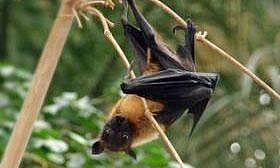
The virus usually comes from fruit bats. A study using infrared cameras found that fruit bats perch on jars put up on palm trees to collect the sap, and try to drink the juice. They also urinate into the pot.
"Its (bat's) saliva and urine carry the virus," Prof Rahman said. But boiled sap, he said, is good enough to drink, as the virus is killed in 70 degrees Celsius.
Nipah virus was detected in a US lab in 2004 after 27 people died in Faridpur district and 23 in Rajbari. Before that, it had led to many deaths as an 'unknown' ailment.
Meherpur, Naogaon, Rajbari, Tangail, Faridpur, Manikganj, Rangpur, Kushtia, and Thakurgaon districts of central and northwestern region are highly vulnerable to nipah, IEDCR records show.
bdnews24.com/nih/std/1640h