
Published : 21 Sep 2026, 02:52 AM
Updated : 21 Sep 2026, 03:07 AM


Ripa Sultana had never felt the need to collect her daughter from school. Their home is close to Badda Girls’ High School in Dhaka, where Saima Tabassum is an eighth-grader.
Usually, the teenager could make the short journey between school and home without her mother worrying too much.
That changed this week.
Ripa was waiting outside the school gate to take her daughter home, driven there less by necessity than by an unease she could not shake.
“I was really worried today, so I came to pick her up,” she said. “She left home in the morning angry and without eating. There is so much insecurity and uncertainty around us. She is growing up, and now I'm constantly thinking about what happened on the road? Who did she speak to? Is she all right?”
The killing of schoolboy Ishayat Shahriar Apratim in Cumilla has made those fears sharper.
“A little boy was killed over a phone,” Ripa said. “News like this makes your heart tremble. That is why I came to collect my daughter.”
Apratim’s death has reverberated far beyond Cumilla.
He disappeared from the Kotbari area on Friday afternoon after going out with his mother’s iPhone to take photographs. Police recovered his body the following afternoon from bushes in the Lalmai hills at Sananda village near Cumilla University.
Police have said he was killed so that the iPhone he was carrying could be taken from him.
The case has reopened an uncomfortable conversation in Bangladesh. How much freedom should children have, how far should parents monitor them, and where does parental responsibility end and society’s responsibility begin?
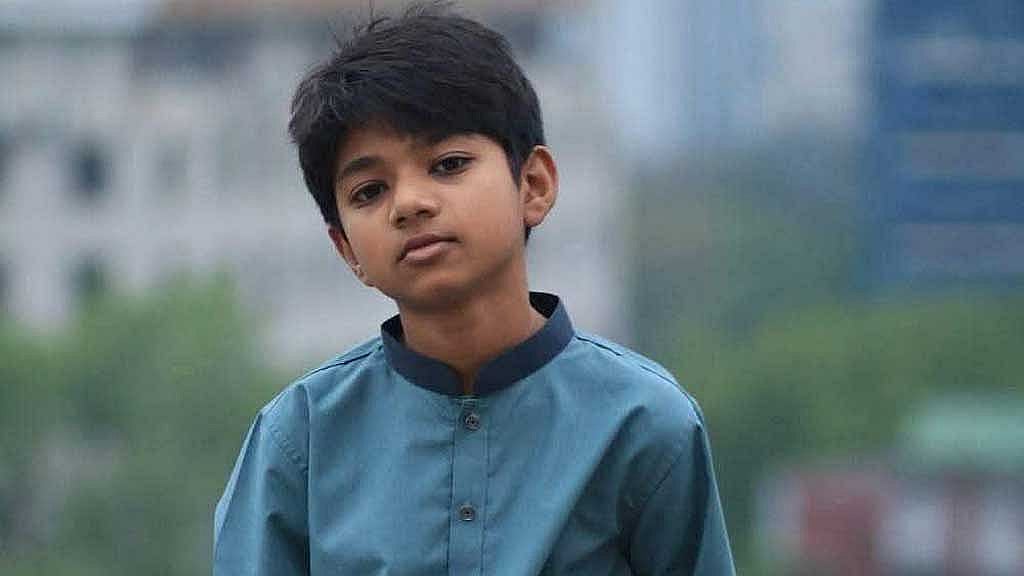
ASM Rahmat Ullah Bhuiyan, deputy country director of Save the Children Bangladesh, cautions against turning the tragedy into a simple debate about the parenting of a child who was killed.
“A child’s development is not the responsibility of the family alone,” he said. “A child grows up within an entire society. Parenting needs to be considered in that broader context.”
He said "sensitivity" was particularly important when discussing the family of a victim.
“If we tell a mother who has lost her child that her parenting was important, I question how sensitive that would be,” he said. “But we should not look only at the victim. We can also talk about the parenting of the person who caused the victimisation.”
The anxiety is being fuelled by troubling figures.
Between January and August 2026, the bodies of 36 children were recovered after they had gone missing, according to monitoring by rights organisation Ain o Salish Kendra (ASK). The organisation recorded 254 child deaths in different incidents over the same period.
Police Headquarters data show 15,717 children were reported missing between January and June. Of them, 13,679 were recovered, while 2,038 remained missing.
Parents Speak
Apratim’s killing has left parents across Bangladesh confronting questions they already struggled with: how to protect children without smothering them, how much independence to allow them, and whether constant supervision is either desirable or possible.
In Dhaka’s Mirpur-12, Ishtiaq Ahmed worries about both of his children, Roni and Joni - identified with single names -- who attend South Point School.
The private sector employee said reports of missing children on Facebook and in the news had made him and his wife increasingly anxious.
“I take one of them to school in the morning before going to the office,” he said. “My wife takes the other one around 11am, and the first one finishes at noon. Then she brings them both home together.”
The couple have now decided that neither child will be allowed to go anywhere alone.
“If necessary, cooking at home can stop, but they will not be allowed to go out alone,” Ishtiaq said.
They are even considering moving the children to a school that provides its own bus or transport service.
For Sajjad Hossain, an NGO worker whose son is at college, the problem is different.
His son is older. He has friends, travels alone, and naturally wants more independence. Sajjad knows that this is part of growing up. What he does not know is where to draw the line.
“He goes to college, he has friends, he goes out alone. That is normal. You have to accept it as children grow older,” he said.
“But now I wonder, do I actually know who he spends time with? What is happening on his phone?”
Children, he said, are growing up in a world very different from the one their parents knew.
“When we were young, we played in fields. Now they are growing up on screens. You cannot fully track who they are talking to or what they are watching.”
Doing nothing, however, feels equally risky.
“If I do nothing, I feel as though I'm inviting danger,” Sajjad said. “Where is the balance? That is the biggest question now. Not only for me, but, I think, for every parent in this city.”
For Mobarak Hossain, an office assistant with two children, parenting brings another kind of pressure: money.
He works for a modest salary at an office in Dhaka’s Mohakhali and tries, he said, to give his wife and children what they want.
Lately, his son has been asking for an expensive phone after seeing friends with costly handsets.
“I want my son to grow into a good person,” Mobarak said. “But I cannot afford to buy him one.”

Parenting Under Scrutiny
Apratim’s murder has also triggered intense discussion on social media over contemporary parenting.
Facebook users from different backgrounds have argued that in an age of smartphones, social networks, and unrestricted flows of information, parents need to pay more attention to children’s psychological wellbeing, friendships, and online lives.
Facebook user Bayezid Ahmed pointed to Apratim’s presence on Facebook, Instagram, and TikTok and photographs showing him riding motorcycles and mixing with people older than him.
He noted that Bangladesh law does not allow under-18s to obtain a motorcycle driving licence.
Bayezid also referred to police statements about a suspect in the killing and argued that parents should try to understand the backgrounds of the people their children spend time with.
“Who does your child spend time with? What is the background of those people?” he wrote. “Are they involved with drugs? Are they delinquent? Are they members of a teenage gang? Finding that out also falls within your responsibility.”
Md Rashed Khan, the prime minister’s political assistant, made a similar point in a Facebook post on Sunday.
“Where our children are going, who they are spending time with and what their circle of friends is like -- keeping track of these things is also the responsibility of every parent,” he wrote, saying Apratim’s killing had brought that responsibility into sharper focus.
Another Facebook user, Antor Mashud, said the case should prompt parents to think again about the need for “proper parenting”.
Police have arrested one young man and two adolescents in connection with Apratim’s killing. At a press conference, the district police chief said Apratim had friendships with them despite the age difference.
That has widened the discussion beyond the victim’s family.
If parents are expected to know who their children spend time with, questions also arise about the families of children or young people accused of serious violence.
How does an adolescent become involved in such an extreme act? What happened while they were growing up? How closely were they supervised? What role did family life play?
Those questions are increasingly becoming part of the parenting debate surrounding the case.

What Experts Say
Experts say the issue cannot be understood only through criminal law.
There is also the psychology of adolescence, a period when children seek greater independence while their ability to assess risk is still developing.
Roufun Naher, an assistant professor in the Department of Educational and Counselling Psychology at the University of Dhaka, said parenting becomes particularly important around the age of 13.
“At 13, children develop a strong urge to move around and behave more like adults,” she said. “But at the same time, their brain development is not yet complete.”
She said the ability to judge whether a decision is healthy or unhealthy continues developing into the late teenage years.
“Yet this is exactly the age when children want the freedom of adults,” Roufun said. “That is where parents need teenage-parenting skills.”
Parenting, in her words, is not something that begins when a child becomes difficult to manage.
It is a continuous process, beginning with care during pregnancy, moving through infancy and childhood, and then into the period when a child develops an individual identity and enters adolescence.
Teenagers also become increasingly susceptible to peer pressure.
“They want to be like their group,” she said. “Many parents struggle to maintain the balance at this stage, and the distance between parent and child grows.”
Social media has made the challenge harder.
Roufun Naher described its widespread use as a form of “mass madness”, with people almost unconsciously spending large amounts of time on Facebook and TikTok.
It is not, she stressed, simply a problem involving one teenager. It is a broader social trend.
Parents also face a credibility problem if they demand behaviour from their children that they do not practise themselves.
“If parents themselves are addicted to social media and then tell their children to stay away from mobile phones, the child will naturally question that,” she said.
The Dhaka University teacher also pointed to attachment theory to explain the different ways parents and children can relate to each other.
A secure attachment, she said, gives a child room to explore while maintaining parental attention and supervision.
At the other end are excessively protective “helicopter parenting”, neglectful parenting, and disorganised attachment associated with family violence or trauma.
“Insecure attachment often develops when parents themselves are going through psychological instability, stress or trauma,” she said.
Parents will make mistakes, she added.
“There is no such thing as perfect parenting. The real question is whether I am psychologically capable of raising a child and whether I have the skills to do it.”
Her advice to parents has two parts.
First, they need to consider their own psychological stability and whether they are ready for the responsibility of parenting.
Second, they need to learn the knowledge and skills involved in raising a child and practise them patiently.
The family, the peer group and crime
Sheikh Hafizur Rahman Karzon, a professor in the University of Dhaka’s Department of Law, also sees the Cumilla killing raising wider questions about juvenile crime and the role of families.
Apratim was 13, he said, and parents should have an understanding of the people their child hangs around with.
“If the people he spends time with do not come from healthy, balanced families and are involved with drugs or crime, then either the child himself can be drawn off course or he can become a victim,” Prof Hafizur said.
“In this case, we saw that he became a victim.”
Adolescence itself makes the task more complex, he said.
During puberty, children begin directing more of their attention beyond the home. They may become attracted to fantasy, displays of heroism, and new friendship groups.
That makes it important, in his view, for parents to know something about the families and backgrounds of their children’s friends.
Prof Hafizur also pointed to consumerism as a factor that can shape behaviour.
“Artificial wants are now being created in society that are not actually people’s real needs,” he said. “The greed and desire created around things such as iPhones can, in many cases, contribute to crime.”
His comments are an interpretation of wider social influences rather than a finding about the precise cause of Apratim’s killing.
Preventing juvenile delinquency, Prof Hafizur said, requires action at several levels -- from families and schools to communities and, finally, law enforcement and government agencies.
“If the family cannot manage it, psychiatrists can provide counselling at community clinics,” he said. “There are also probation officers in the Department of Social Services, although that system is still not active enough.”
He placed particular emphasis on families of children accused of offending, saying earlier intervention could in some cases prevent violence.
ASK Executive Director Tahmina Rahman said the recovery of a child’s body after the child has gone missing should never be treated simply as an isolated crime.
Authorities, she said, must examine how the child disappeared, what was done to find them, whether there was negligence or a failure of coordination and who was involved in the crime.
Those questions, she said, require an independent and effective investigation.
‘Child Safety Not for Families Alone’
For Rahmat Ullah Bhuiyan of Save the Children Bangladesh, the debate ultimately has to move beyond whether individual parents did enough.
Protecting children over the long term, he said, requires families, communities, and the state to act together.
“A child’s development is not the responsibility of the family alone. A child grows up through the whole of society,” he said.
“Child safety will not be provided only by the family. Society must provide it, and the state must provide it. Everyone has to fulfil their own responsibility.”
That is why, he said, discussions about parenting after a child’s death have to be handled carefully.
Questioning the parenting of a bereaved mother can itself be deeply insensitive.
But the broader issue remains relevant, particularly when considering the childhood and upbringing of those accused of harming others.
Parenting, Rahmat Ullah said, should therefore not be treated as an issue confined to individual households.
He argued that Bangladesh is facing wider strains involving social, family and religious values, while changes in children’s daily lives have created new pressures.
School hours have been reduced in recent years, he said, while children have less time for sport and other developmental activities. Parents, meanwhile, are increasingly busy.
“A child should be on the playing field, in the classroom and with the family. Those are the key spaces,” he said.
“But children are now spending more time on social media. That is something we need to think about.”
But, trying to remove social media from children’s lives altogether is unrealistic, according to him.
Instead, both parents and children need to understand online safety.
“We cannot deny social media in this age,” Rahmat Ullah said. “But it is important to make parents and children aware of online safety.”
For him, parenting also means helping children rediscover other parts of childhood.
“Bringing children back to school, sport, reading books, and storytelling, that, to me, is also a form of parenting.”