


Published : 16 Dec 2015, 09:49 AM
Updated : 19 Oct 2022, 07:06 PM


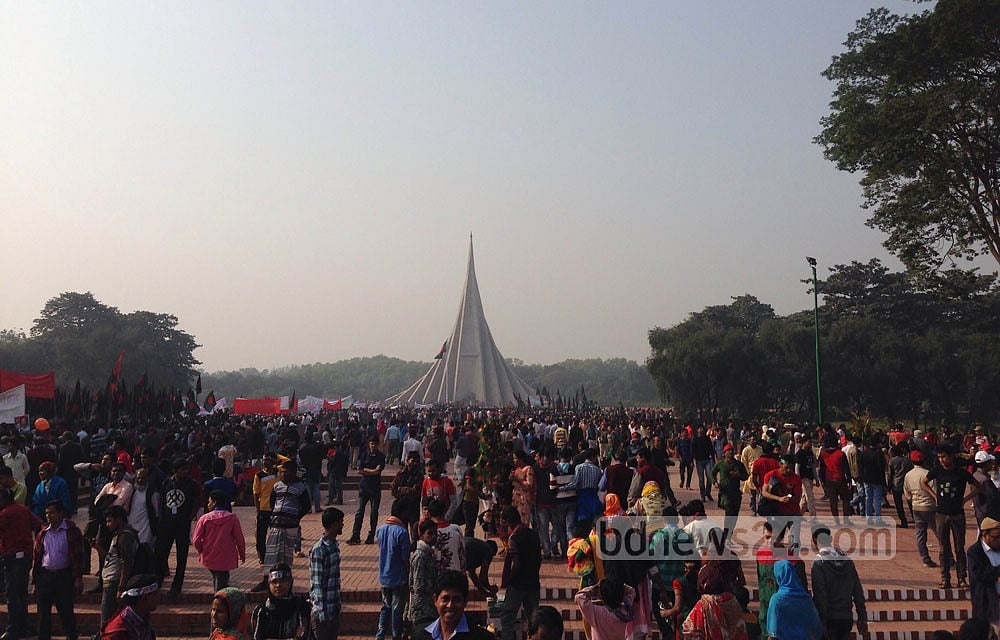
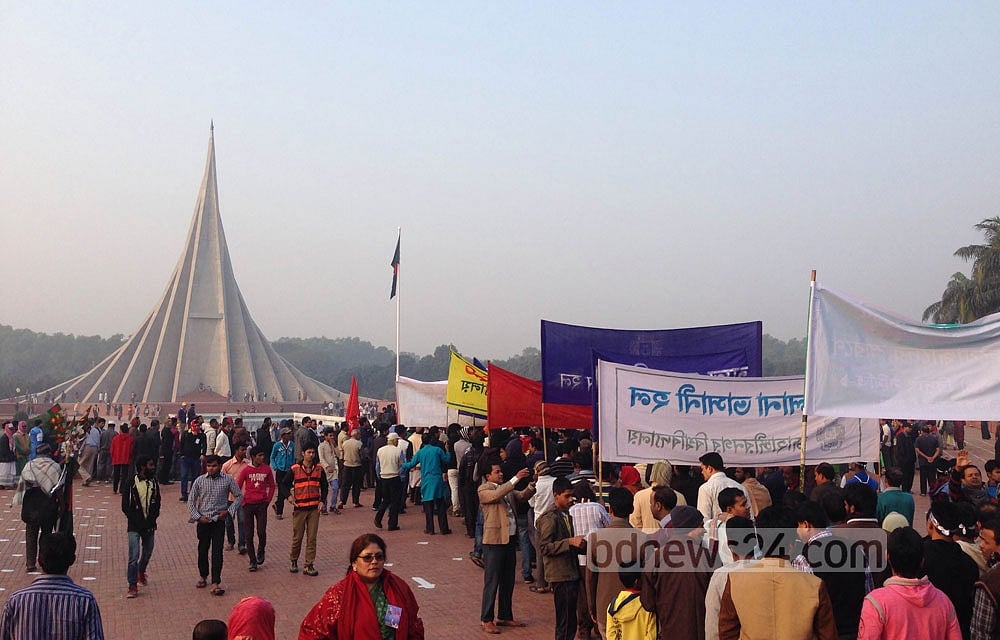
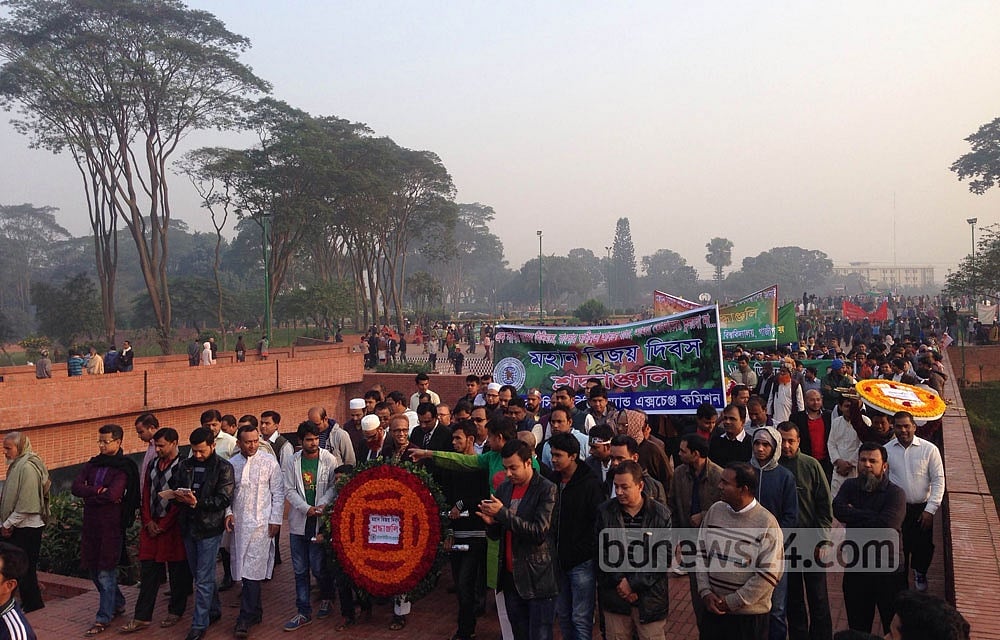
Nearly three million people were killed in the nine-month long 1971 Liberation War and 200,000 women and girls were dishonoured.
Wednesday’s Victory Day programmes started at sunrise with a 31-gun salute at the National Parade Ground at Sher-e-Bangla Nagar in capital Dhaka.
It was followed by many paying tributes to the martyrs at the National Memorial at Savar.
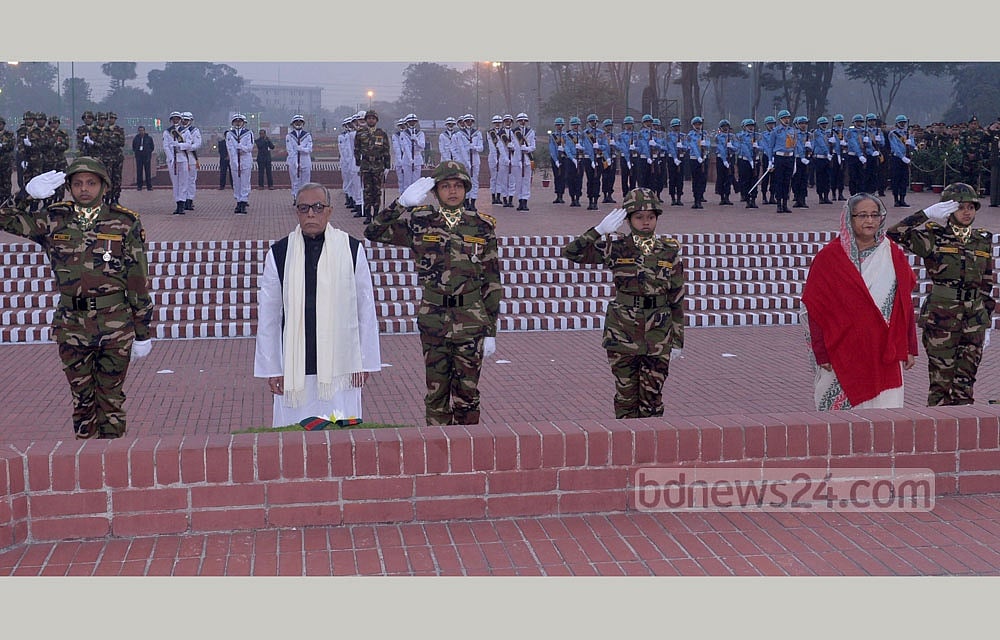
President Md Abdul Hamid and Prime Minister Sheikh Hasina paid their respects to the war heroes at the Memorial at around 6:30am.
They placed floral wreaths, which was followed by a guard of honour presented by a smartly turned out contingent of the three armed services with melancholic tunes played on the bugle.
Hamid and Hasina then stood in silence for a while to remember those valiant souls.
Then Speaker Shirin Shramin Chaudhary and Chief Justice Surendra Kumar Sinha paid tributes by laying wreaths at the Memorial.
After that, Leader of the Opposition Raushan Ershad, Cabinet members, MPs, judges, the chiefs of the three forces, members of the Indian armed forces who had fought in the war and diplomats of different countries paid their respects.
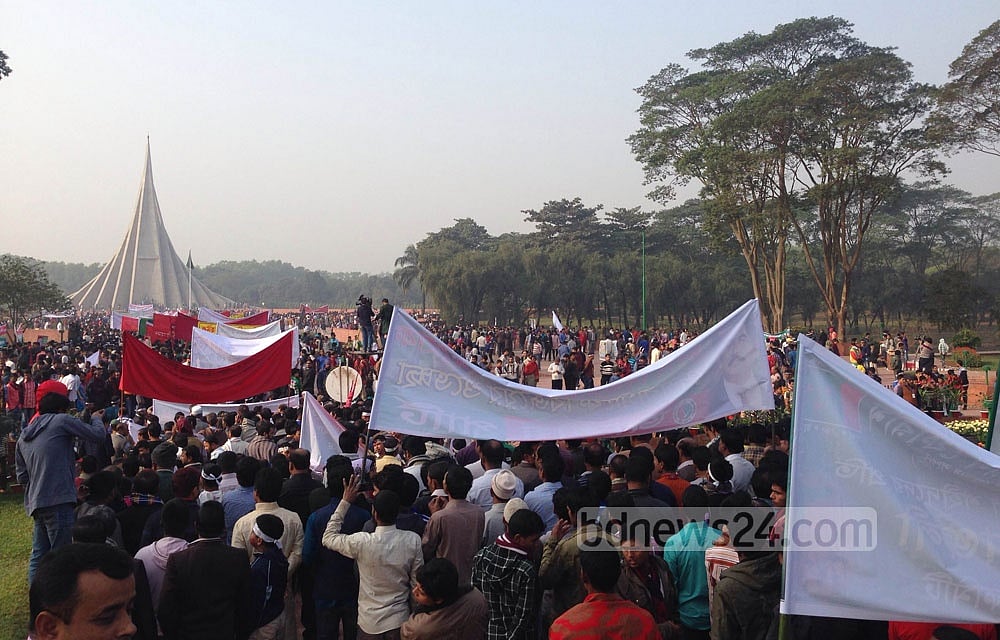
The Memorial was then opened for all.
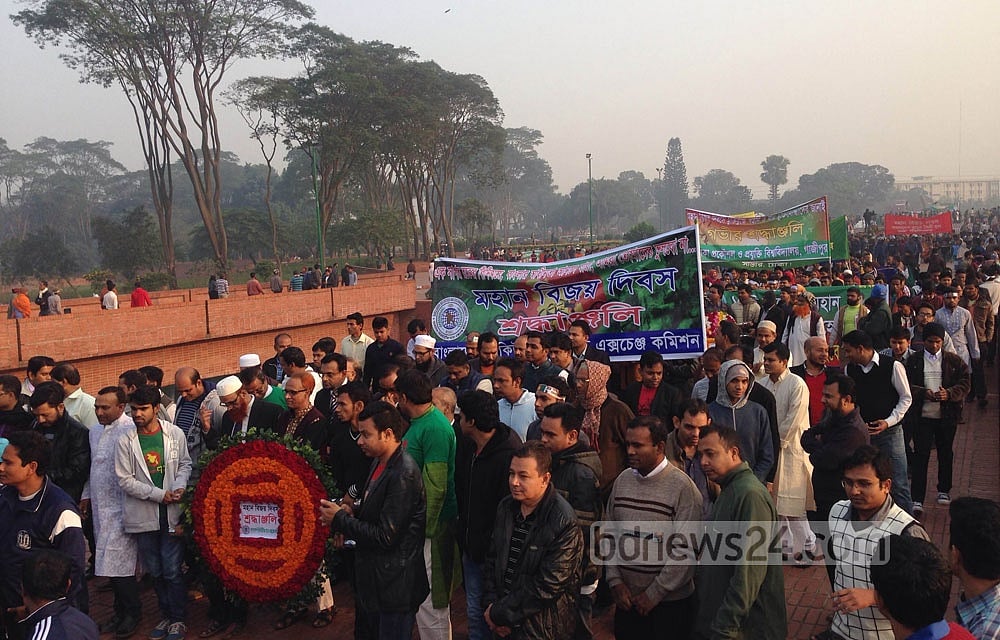
Thousands from across the social divide thronged the Memorial with flowers and the national flag on hands to honour the heroes, who gave their lives for to free the country from the Pakistani occupation forces in 1971.
The Memorial was covered with floral wreaths placed by different political parties, social and cultural organisations, and ordinary citizens.
The war that started with Bangabandhu Sheikh Mujibur Rahman's call for independence on March 26, 1971 raged for nine months.
It came to a bloody end with the Pakistani army’s surrender on Dec 16 that year at the Race Course Maidan (now Suhrawardy Udyan) in Dhaka.
A number of people who opposed Bangladesh's birth managed to get away with change in the political landscape in 1975.
Many of the war criminals, however, had now been put on trial four decades later in the International Crimes Tribunal set up in 2009.
Most of those convicted are from the Jamaat-e-Islami, a party itself accused of perpetrating war crimes, while several others are from the BNP.
Four of them, sentenced to death for their war crimes, have been executed so far.
Those who were hanged last are senior BNP leader Salauddin Quader Chowdhury and Jamaat Secretary General Ali Ahsan Mohammad Mujahid, who were even made ministers in the independent Bangladesh.
Along with the citizen’s tributes at the National Memorial, the Victory Day parade was held at the National Parade Grounds at around 10am and the armed forces performed various drills.
President Abdul Hamid attended the parade as the chief guest and accepted the salute. Prime Minister Sheikh Hasina, too, was present there.
The day is a national holiday in Bangladesh.













