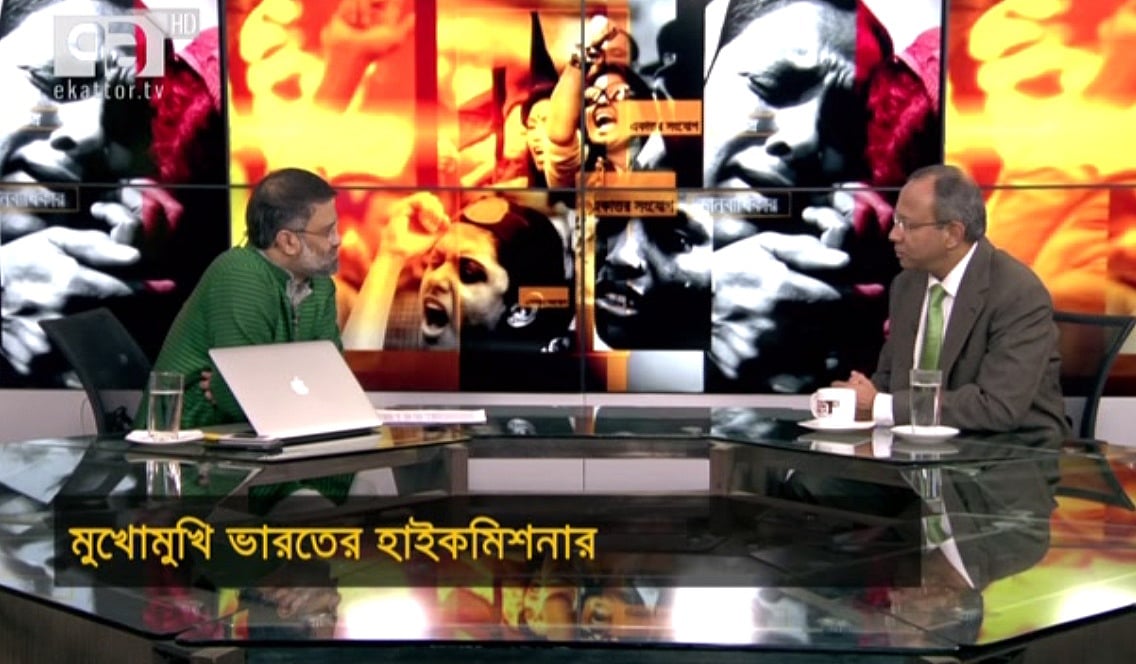
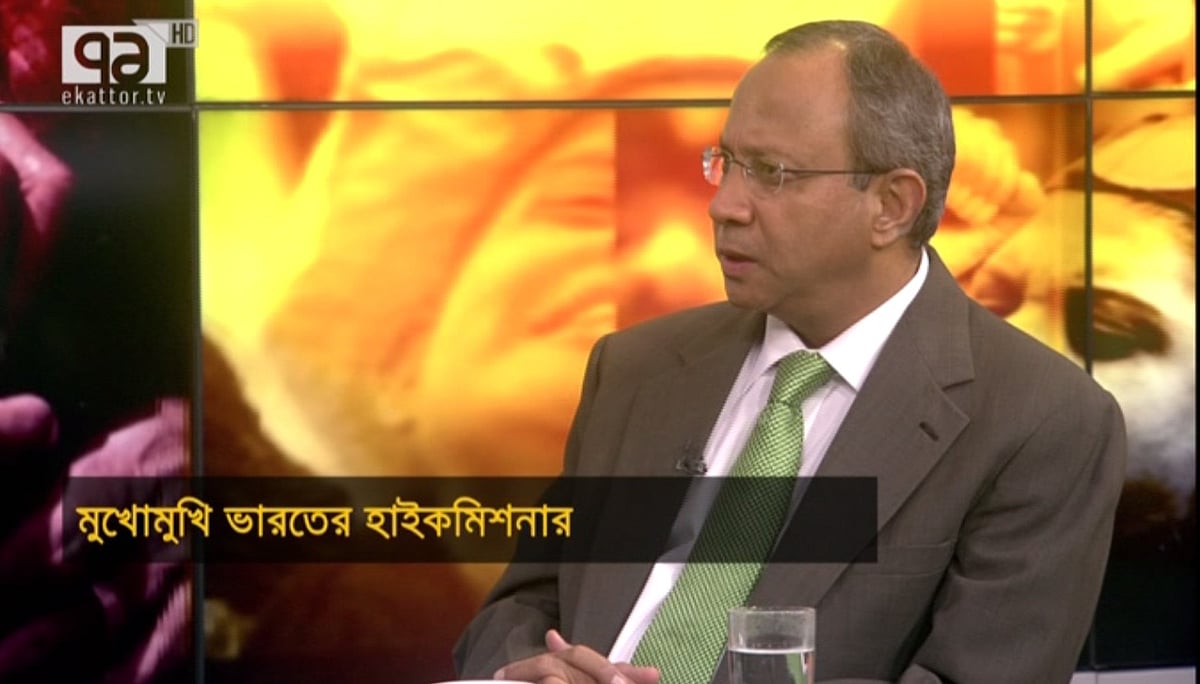
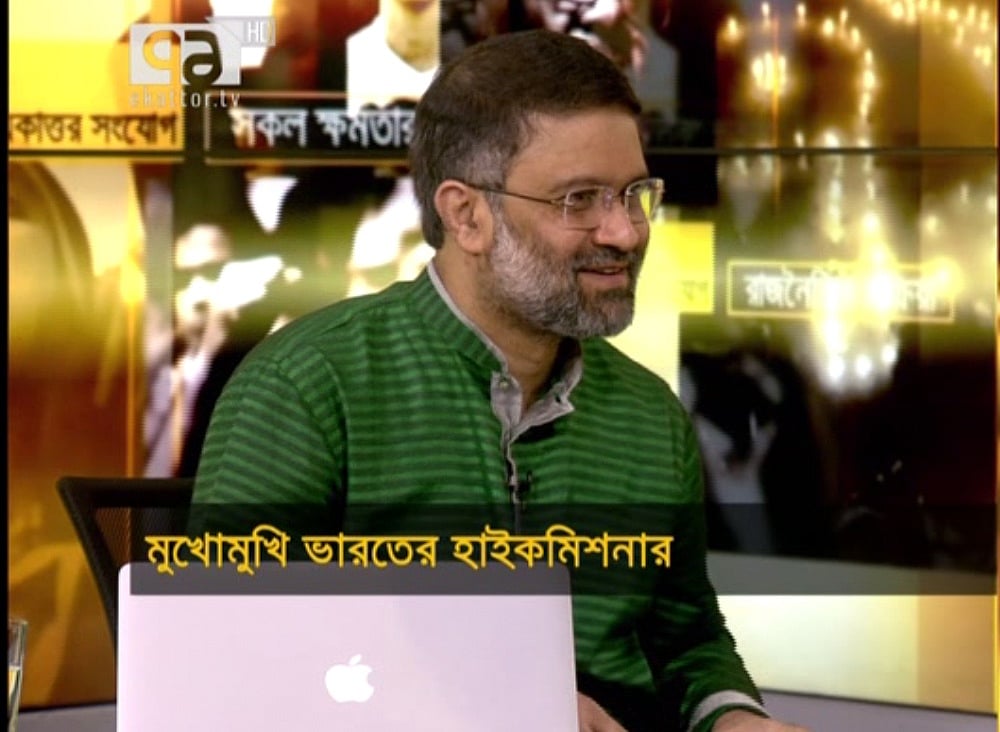
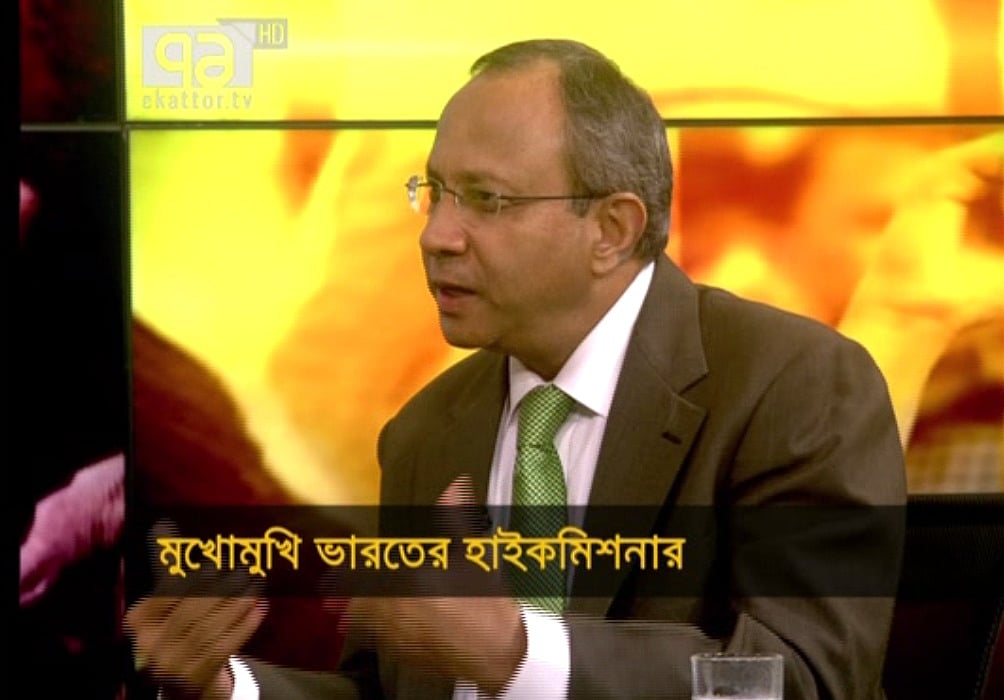
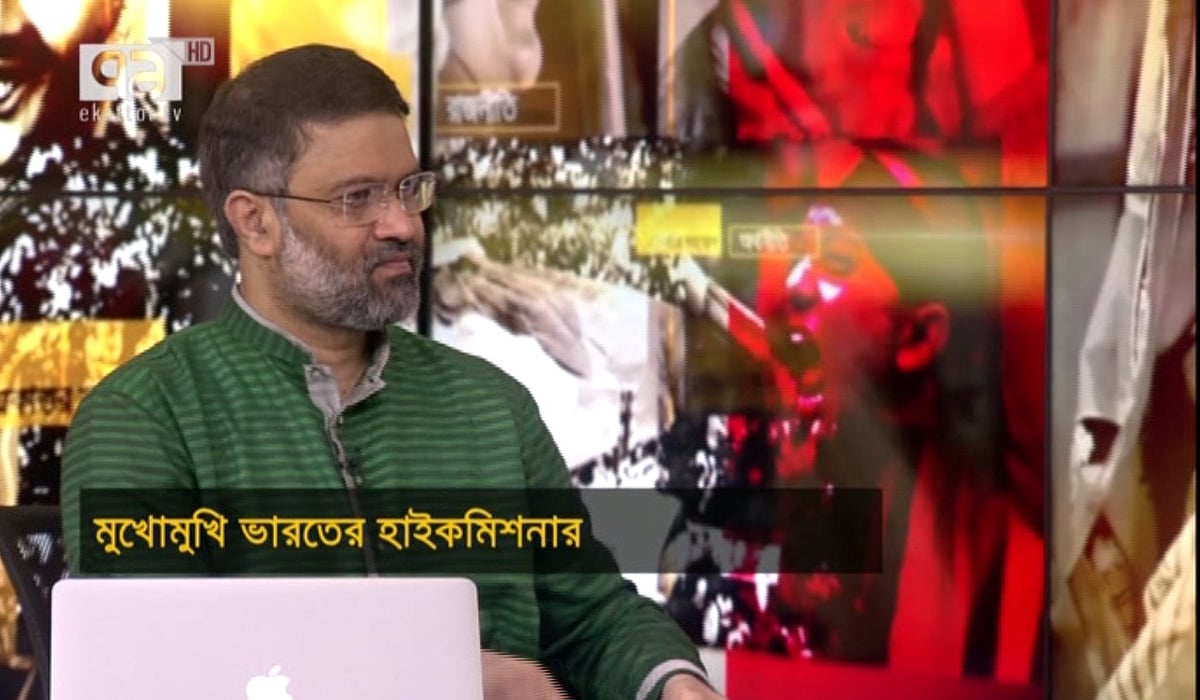
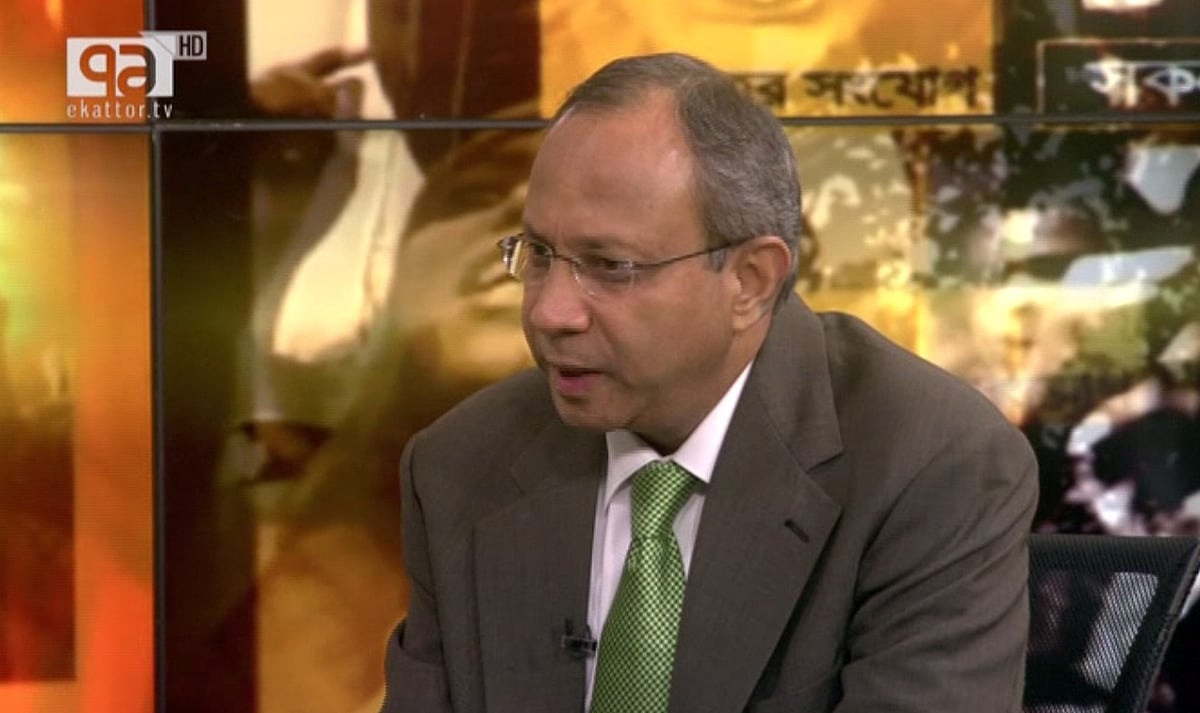
Prime Minister Narendra Modi has taken charge in Delhi. During his election campaign Mr Modi and his senior party colleagues threatened to crack down on what they described as "illegal migrants from Bangladesh" especially, during their campaign in West Bengal and the states of the Northeast. That has raised fears that there will be attempts to push back such people again as it happened during the previous BJP-led India government in the late 1990s. Many, of course, do remember the so-called “Operation Push-Back” in the early 1990s. On assuming power though, Mr Modi has, however, sent positive signals that he is keen to push ahead deals like Teesta water sharing that could not be concluded during the Congress-led UPA government. Indian High Commissioner in Dhaka, Pankaj Saran, has been saying for a while now that the regime change in Delhi will not affect relations with Bangladesh. He had said this much before Mr Modi took over. Our editor-in-chief Toufique Imrose Khalidi spoke to Pankaj Saran in some detail on India-Bangladesh relations. Excerpts:
Khalidi: Have you finalised the dates of your foreign minister Sushma Swaraj's visit to Dhaka?
Saran: Well, the question of high-level visits between India and Bangladesh is still under discussion and we are working out the exact dates for the visit. We will be in a position to make an official announcement when the details have been settled.
Khalidi: Any likely dates?
Saran: Not yet. Dates are under discussion. As and when we finalise and reach an agreement with the government of Bangladesh, we would be making an official announcement.
Khalidi: Our Prime Minister Sheikh Hasina had asked Mr Modi to make his first foreign visit to Bangladesh. Instead, he's going to Bhutan and probably his next stop will be Tokyo, if I'm not wrong. But he's sending his foreign minister to Bangladesh on her first visit. What can we in Dhaka read into this?
Saran: Well, you know I don't think it's appropriate to actually discuss communications or correspondence between two heads of government. So, that's the first part of what I would like to say. But, having said that, the fact of the matter is that Prime Minister Modi has accepted the invitation to visit Bangladesh. He's very honoured by the invitation and he definitely looks forward to meeting Prime Minister Sheikh Hasina in the months ahead. And the more important point from my point of view is how do we proceed with the relationship and what direction it will take and what would be the contours and the agenda and the priorities that would be set. So, I'd like to focus more on the substantive aspect of the relationship.
Khalidi: So, does that mean Mr Modi now wants to assure Bangladesh of moving ahead with India's sovereign commitments but is not in a position to actually go ahead with deals like the Teesta water sharing?
And would he like to come to Dhaka when he's in a position to actually sign the deal?

Saran:
Well, I think there is too much speculation on that question. What I would like to say is that this government, the new government, is committed to its relationship with Bangladesh. I think this was made very very clear when the honourable Speaker of the Bangladesh Parliament called on Mr Modi on the very first day he took over as prime minister and that was a very useful and a very important meeting because it made the leaderships of both countries sit face to face. And they discussed whole range of issues and the commitment of the new government to taking forward the relationship with Bangladesh was spelt out in very very clear terms. And it was said that the new government in India is not only committed to maintaining but also building on the momentum of the relationship that we have seen in the last few years.
Khalidi:
The last time the BJP was in power, New Delhi announced it had no favourites in Dhaka. Former National Security Advisor Brajesh Mishra travelled to Dhaka to congratulate the new Prime Minister Khaleda Zia at that time, in what was seen as a clear message that India was prepared to do business with non-Awami League regimes. Which is why many BNP leaders seemed very happy when the BJP came back to power this time. Would you now see a return to the policy of no favourites in Dhaka?
Saran:
Well, I wouldn't put it in such stark terms. What I would like to say is that the government in India does not as a matter of principle interfere in the internal affairs of Bangladesh. The question of who leads Bangladesh or who is elected by the people of Bangladesh is something which the people of Bangladesh alone have to decide. As far as India is concerned, we have a track record of dealing with every single government that has been in power since the Liberation of Bangladesh in 1971. And I think that track record speaks for itself. And with every government we have made some headway in the relationship in some areas. Yes, admittedly there have been periods when we have not been able to move as fast as we would have wished. But the fact is that over a period of last 40 years, the relationship has progressed in almost all sectors. And we are today at a stage when if you look at the full relationship in its full manifestation, I can say that it is a much more comprehensive and a better integrated relationship than it was in the past.
Khalidi:
Coming back to this election, the January 5th elections, the West, especially the US, has pressed for fresh elections here saying that the January 5th elections were 'inadequate' and India had then defended that it was a constitutional necessity. Would your new government hold the same view now?
Saran:
Well, I think at that time what we said that ... this was a constitutional requirement. We also said in the same statement that we hope that the democratic processes would be allowed to continue. Now, that was then. In so far as today is concerned, I think we have to move ahead today. And I do not see that issue will be revisited today, because today the agenda is different.
Khalidi:
So, you would never support any non-democratic transfer of power in Bangladesh?
Saran:
It is not for India to support or not support. I think the primary stakeholder and perhaps the only stakeholder are the people of Bangladesh. I think to expect India to pronounce on elections in Bangladesh would, to my mind, appear to be ... from our point of view a very presumptuous thing to do.
Khalidi:
You know I ask this because Bangladesh has a history of having these unelected governments, military governments, non-democratic governments. Do you think India has a role to play in stopping that?
Saran:
If you look at the policies, the kind of policies that India has pursued since 1947, I think, broadly speaking, you will see that we have been very careful about ensuring that democracy takes deep roots within India. And we have built the institutions that are needed to ensure that we actually strengthened democracy within India. When it comes to what happens outside India's borders, then I think we have a different approach and that approach is predicated on many many issues.
Khalidi:
But the West tries to do that very often, you know.
Saran:
Well, I think that's basically...
Khalidi:
India is also (emerging as) a big power...
Saran:
...every country, I would say, has a different approach on how to deal with other countries. In the case of India, we ourselves were at a stage when we were developing our own polity and society and economy and we were not really in the business of, let's say, promoting democracy overseas. That was not what I would say would be a defining...
Khalidi:
[If not promoting,] what about defending?
Saran:
We have said again and again that how a country governs itself is something which the people have to decide. In so far as external assistance is concerned or the role of, say, outside power is concerned, whether it's a neighbour or a more distant [country], wherever it is required, wherever we have received a request, we have contributed in other manners. For example, in terms of capacity building, in terms of institution building, in terms of sharing of experiences. So, these are the ways in which we have tried to help other countries in strengthening their own democratic institutions. So, I would say technical assistance, sharing of experiences, training, capacity building are the things that we have normally done as a matter of practice. Whether it is in South Asia, whether it is in Africa, whether it is in other parts of the world, if people say we would like to learn from India about how to conduct an election or if we want to learn from India about how to strengthen democratic institutions, we have been extremely forthcoming in sharing our experience.
Khalidi:
On the question of reciprocity, the present government in Bangladesh has addressed many of India's concerns, especially security concerns, rather quite sincerely. Actually you would admit that the crackdown against the rebel groups from India's northeast region has been a continuous process. I'm sure you would agree that the recent arms haul in Habiganj indicates that. But, does it not worry you that such huge quantities of heavy weapons like anti-tank weapons, mortars, rocket launchers, are finding their way here perhaps on way to your country?
Saran:
Oh, absolutely. I mean, this has been the principle thesis of our relationship with Bangladesh for the last many many years, which is that we have to acknowledge that we have a long border, in fact, in our case it's the longest border we have with any country. It is one of the most densely populated borders in the world. It is one of the most poor...
Khalidi:
And porous...
Saran:
Yes it's porous and poor and densely populated and the unfortunate fact of this border is that because of the low income levels and low development levels, there are a lot of illegal activities also taking place. So, we have always maintained that the security of India and the security of Bangladesh are closely interlinked and that there is no other option except for the two countries to work together to bring about a border area which is free from such activities. Neither Bangladesh can do this alone nor India can do it alone. And if you have that level of political understanding between the leaderships and between the authorities of the two countries, it is only then that you can actually make complete progress on the ground. Because there are people who are trying to disturb the peace, there are people trying to instigate instability in both countries and I do not think that either country benefits from allowing such forces or such people to succeed.
Khalidi:
So, you consider it a mutual threat for both India and Bangladesh. But most of these weapons originate in China, don't they?
Saran:
I have no information about where these weapons originate. This is something which I would leave to the investigating agencies and I think it is entirely their domain and I am hardly in a position to comment on that.
Khalidi:
You've said before that regimes change but interests don't and so, you said a regime change in Delhi will not affect Dhaka-Delhi ties. What are India's permanent interest vis-à-vis Bangladesh that we don't see ever changing?
Saran:
Well, let me say and clarify what exactly I had said. What I had said was that as a general proposition the interests of countries remain the same. And to the extent that policy is a function of those interests, then to that extent policy should also remain more or less the same. Now, when I made that statement and today, there is a big difference, and the big difference is we have a new government in office. So, the questions being raised at that time have to a great extent been answered.
Khalidi:
Is that statement haunting you now?
Saran:
It's not haunting me. What I'm saying is that today we have the president making a statement in parliament outlining the new government's priorities. And the new government's priorities have been very clearly laid out and those, according to them, we have clearly got a priority for development of an integrated and inter-connected South Asia, a South Asia which is prosperous and stable. And the government is committed to building upon these relationships. Now, I would say beyond that because these are still early days but we have a presentation of policy framework already. But in addition to that, because I know there would be lot of interest in Bangladesh as to what next. Here, I'd say let's judge the new government by its actions.
Khalidi:
Okay. China has already supported the present government in Dhaka and relations seem to be moving in top gear as the prime minister has just finished her trip to China. Does this really worry India that Bangladesh and China are moving closer?
Saran:
Well, you know, I think it's highly presumptuous of me to comment on how Bangladesh pursues its relations with third countries. My limit goes only to the extent of what I do with Bangladesh. So, I would not like to comment on how Bangladesh is conducting its foreign policy, that's the prerogative of the government and people of Bangladesh. In so far as the specific question of China is concerned, you see the fact of the matter is that China, India, Bangladesh, Japan -- we are all part of the Asian continent. I think it is well understood by now that we all agree that we must move towards a regional cooperative framework in Asia, in which we focus on the issues which are of paramount importance to the people of Asia. Our own relationship with China, for example, has evolved considerably over the last 10/20 years. Today, for example, last year, in 2013, bilateral trade was something to the tune of $66 billion with China and up to, if I am not wrong, up to June 2012, the cumulative value of Chinese contracts in India stood at $58 billion. So, you see there is a new dimension, a new reality that is taking shape, and that reality is that the Asian continent is beginning to look at itself and to deal with each other and to harness the comparative advantages of all the countries. So, I think to the extent that we can move on this path, it will be good for all the countries.
Khalidi:
High Commissioner, would you be okay with China building the deep sea port at Sonadia, which has been on the cards for a while now. Wouldn’t India's strategic experts cry foul again about a Chinese ‘string of pearls’ (cordon) around India or do you see Sonadia as useful to India to access its northeast?
Saran:
Well, I think, there are two questions in your question. I mean, the one is about Sonadia as a deep sea port and the second is about a particular country building that port. So, I would like to separate the two here. Let me take the second one first. If you are asking me whether if we have a view on Bangladesh building a deep sea port in Bangladesh, somewhere in Bangladesh, let's say in Sonadia, my response to it would be: India will support and welcome any development of infrastructure which helps to revive or to take the Bangladesh economy forward. In so far as which country is building or contributing to the port, if there is an investment or an infrastructure development, which is what it is, then we would, as I mentioned to you, would welcome that development for Bangladesh's economy. If it can contribute to regional prosperity ... the world is changing ... and we have to acknowledge that ... capital will flow from areas which have surplus to areas which are in deficit, and capital and investment will flow where there is demand. So, you have a situation where the Chinese are sitting on large reserves of capital and investment. You have a situation where countries like Bangladesh are deficit in capital and investment and there is a mutuality of interest. Now, we have always said in many forums ... both within Asia and globally and in the multilateral groups like the G20 and others, where we work closely with China, that we really need to now begin to move faster in developing cooperative framework which is unique to Asia and which leverages the strengths of individual countries because at the end of the day what we would like to see for every country and for every member of the Asian continent is effectively more development, more equitable development, more inclusive development. Yes, naturally, our government has said that we will pursue our foreign policy based on enlightened national interest. So, where we do see, if we do see a conflict between the aims which I have described to you and our security aims and our national strategic objectives, then of course, there will be that line to cross. But keeping that aside, as a general proposition, the development of infrastructure in Bangladesh is something which helps Bangladesh to develop its economy is something which we would definitely welcome.
Khalidi:
Back to more specific bilateral issue, will India consider a comprehensive agreement on sharing waters in all common rivers as some Indian think-tanks have suggested?
Saran:
Yes, I know there's a lot of discussion and lot of work is being done on how to address the water issue. The Joint Rivers Commission (JRC) was created actually in 1972.
Khalidi:
But it's not been in the best of shape.
Saran:
It's not been meeting regularly for the last few years...
Khalidi:
Why is that the case?
Saran:
Well, I think what happened was that, for many reasons, a lot of the discussion was actually taking place outside the framework of the Joint Rivers Commission. So it was felt that if you can get your work done through other forums then let's try that approach. But in the last meeting of the Joint Rivers Commission, we have agreed and we have identified six rivers on which we have agreed that we should begin work on discussing the sharing of waters on these six rivers. This was in addition to Teesta and Feni. So, I can see at a point in future that this matter will come up for discussion between our two countries. And we'll have to wait and see how the two governments can agree on steps on how to move forward.
Khalidi:
But if you are bypassing such institutions, agreed frameworks like I mean JRC, then people might lose their faith in such arrangements in future.
Saran:
No, the Joint River Commission exists, it is an established institutionalised mechanism. So, I'm not suggesting for a moment we bypass it. I was replying to your question as to why it has not met. The reason it had not met was because we had been able to move forward on some of the issues, even outside of the framework. But in every case we...
Khalidi:
Do you agree it has to be made more functional? More...
Saran:
Absolutely, absolutely. If you look at the statute that established the Joint Rivers Commission, it is extremely comprehensive. And it contains provisions not just for sharing but for flood forecasting, for joint studies, for joint management and it is very very comprehensive. So it was actually... and it is also very open-ended. So, it is not restricted. It also has a provision for calling emergency meetings should the need arise. So, it's a very very well-structured statute. And there will definitely come a time in the not too distant future when we will have to come back to the table and discuss with Bangladesh the question of water sharing, and I'm hopeful that in the coming periodthis matter will be discussed again with Bangladesh.
Khalidi:
High Commissioner, one more bilateral, a major bilateral issue -- the Land Boundary Agreement. How do you assure us?
Saran:
Simply that we are committed to its implementation, we are committed to its ratification. You know that the current Bill for amending the constitution is pending in the Rajya Sabha, which is the upper house, and the government is committed to building a consensus so that it can be passed in the Parliament and this commitment has been reiterated by our new government, our new prime minister to the honourable Speaker. So, we stand committed to it. And we will try and take all steps necessary to see how we can move forward on this very important issue.
Khalidi:
Assam or the West Bengal governments will not be a problem this time?
Saran:
I would just like to say that we are developing the consensus, there is a new kind of political configuration in the country after the election. The new government is committed to it.
Khalidi:
The new government doesn't need anyone's support. It has the majority.
Saran:
Yes, the fact of the matter is they have an absolute majority... in the Lok Sabha... and perhaps not in the Rajya Sabha. But what is important is that they have given an assurance to your government on the very first day of taking over, to be precise on the 26th of May that they are committed to implementing the land boundary agreement and, of course, prior to that, its ratification.
Khalidi:
I'll come back to border issue again, the killings and stuff like that. But now tell me about the visas. People keep complaining about the Indian visa procedure. Getting an Indian visa is quite difficult. Why?
Saran:
I'm you know very sorry to hear that we have not been able to meet the expectations of the people. I would like to assure you that this is something which we attach the greatest importance to, how we can help and improve our visa services.
Khalidi:
After all, these middle classes, they are not going to settle in India. They are going to go and spend money. They are tourists or health tourists, they are spending money in India, contributing to Indian economy.
Saran:
No...
Khalidi:
Poor people from this country are contributing to Indian economy (jokingly). Still you are not letting them do it. Why?
Saran:
No, that is not the answer to the question. We are in a constant effort to improve the visa services. What is actually happening is that there is a capacity problem which we have that we are unable to cater to the kind of requests that are being made to us.
Khalidi:
So it’s volume. Then all you have to do invest in manpower. You need more people to deal with the number of applications.
Saran:
Yes that’s right.
Khalidi:
Let me ask you another question. A young student from Bangladesh on a government scholarship studying in India has to go to a police station every time he or she arrives in India. Why?
Saran:
Well I don't think that's true... if you know a case I'll be happy to check...
Khalidi:
Yeah, I know of a case. A young girl of 19 or 20 who arrived in India to study on a government scholarship has to go to another district town every time she arrives in India to register herself with the local police.
Saran:
I'll be happy to check. But as a matter of rule, if you are staying in India for a certain duration of time, you do not require any police reporting whatsoever; this does not apply to Bangladeshi national. It applies to nationals of some other countries but not Bangladeshis.
Khalidi:
Bangladeshi students are being asked to do that.
Saran:
I'll have to check exactly what is the reason for this.
Khalidi:
And even the British nationals or US nationals of Bangladeshi origin are being harassed, that's the allegation. Why?
Saran:
Well, if there's such a case, we'll be happy to look into it but my feedback is that we have done some reform on the immigration side, which is actually being commented upon very positively by Bangladeshi travellers to India. And as you know the other major liberalisation we have done jointly is that we have removed the visa requirement for official passport holders. So, that takes care of a large number of people and of course diplomatic passports are always exempt from visas. So, and...
Khalidi:
And this SAARC visa exemption has been...
Saran:
SAARC visa is not administered by us. It's coming out of Kathmundu, the SAARC Secretariat.
Khalidi:
It used to be a year but now it's now three months in some cases. Why?
Saran:
Well, that's a SAARC decision. But in so far as Indian visas are concerned, we have a different regime and I can say to you that many Indian visas are actually long-term multiple entry.
Khalidi:
Another issue that makes big headlines in Bangladesh is trade. The two-way trade is heavily tilted towards India. The two-way trade figure is $5.34 billion in 2012-13 fiscal, of which Bangladesh exports were $563 million, roughly half a billion, while you are selling about $5 billion worth of products to Bangladesh. Any hope for Bangladeshi manufacturers?
Saran:
Of course... I think this is an issue which worries us because trade has to be sustainable. I mean, you cannot have imbalanced trade continue forever. So, which is why we basically have opened the Indian market to Bangladeshi products.
Khalidi:
But there are complaints from the businessmen that you are slapping supplementary duties and other non-tariff barriers like, you know, you don't accept BSTI or Bangladesh Standard Testing Institute certification.
Saran:
No, what we are doing is we are giving national treatment. So, if a Bangladeshi product or an exporter is getting a certain treatment in India, he's getting the same treatment that is being given to an Indian manufacturer. If the request is that I want treatment that is better than what we are giving to Indian manufacturer, that's a separate issue. But what we have done that is we have made a quantum leap in the trade regime between India and Bangladesh ...
Khalidi:
Does it make sense when you are saying it is duty-free and then you are slapping supplementary duties on Bangladeshi products?
Saran:
Not all Bangladeshi products. As I said there are certain levies that are imposed on both the manufacturer of the item in India as well as the manufacturer in Bangladesh. So, there is a regime....which is... on equal footing. What we have done is, we have ensured that there are no quotas and there are no customs tariffs on Bangladeshi exports to India and particularly in the textile lines which are the most sensitive for Bangladesh. So we did that very consciously despite opposition from our own textile manufacturers. And if you look at the statistics and break down this figure $563 million, you will see that the maximum percentage increase of Bangladesh exports to India has actually been in the RMG and textile sector. Of course, the base is very small but there is potential and I would only continue my job of spreading the message to the chambers and to business forums and to investors in Bangladesh -- please do alter your business model and cater to 1.2 billion people.
Khalidi:
Land port infrastructure has not been in good shape. Do you think India can do more to help?
Saran:
I agree, I agree. If you are talking of barriers to trade, I would agree with you that land port infrastructure definitely is one barrier. And here, I will blame both governments. And I'm happy to say that this government, our new government, is going to put a lot of emphasis on land port infrastructure. The problem has been, this infrastructure dates back to the '40s, and the '50s and the '60s. And that is because we have not been able to cater to the demands of the small trader, the man on the border who has actually grown up in life not doing multi-billion dollar business but just doing day to day trade. And we have now embarked on a fairly ambitious programme to improve our border infrastructure. And we are developing. Akhaura-Agartala land port has been inaugurated last year. Petrapole-Benapole should come up very soon; it accounts to 80 percent of our trade. And we have identified few other land ports which we will develop into integrated check posts.
Khalidi:
One last question High Commissioner. If India treats Bangladesh as a friend as you and many other Indian leaders and diplomats have repeatedly said and one diplomat like Rajib Sikri, whose wife was high commissioner here, Veena, even said that Bangladesh is India's most important neighbour. Then why would you like to fence off the entire border? Why does Delhi see the border as a problem rather than as an opportunity? With a friendly neighbour you keep doors open, don't you?
Saran:
The fencing off the border, I think, is an issue we have discussed with Bangladesh many many years ago. Now, Bangladesh authorities have themselves told us that in many ways this has helped both the border guarding forces to patrol the border better, to reduce criminal illegal activity and to bring some semblance of the rule of law in the bordering regions. This does not, in any manner, mean that legal and legitimate movement of people or movement of goods or movement of ideas or anything else will get hampered. What it actually just means is that we are trying to put the entire paradigm of India and Bangladesh relationship into a legal framework rather than leave it to unscrupulous elements on both sides of the border who may be taking advantage of a situation in which neither country has full control ...
Khalidi: But being fenced off throughout the border doesn't give you a good feeling.
Saran: I would say, what should actually be the focus is how easily can people, legitimate people, legitimate travellers move between India and Bangladesh. That I think, to my mind, is real issue. We are putting in place a regime in which people… after all, as you know, Indian visas are given free of cost, there is no charge. This is a conscious decision. So, if you are putting in place a regime where these two....
Khalidi: So is the Bangladeshi visa.
Saran: So is the Bangladeshi visa, which is a good decision. It's a good decision taken by both sides in recognition of the fact that what we need to do is to migrate from an illegal regime to a legal regime.
Khalidi: High Commissioner, thank you, thank you so much for your time.
Saran: Thank you so much.
The interview was broadcast on Ekattor TV at 8pm Friday