Published : 21 Feb 2014, 05:25 PM
Updated : 23 Apr 2022, 02:19 PM


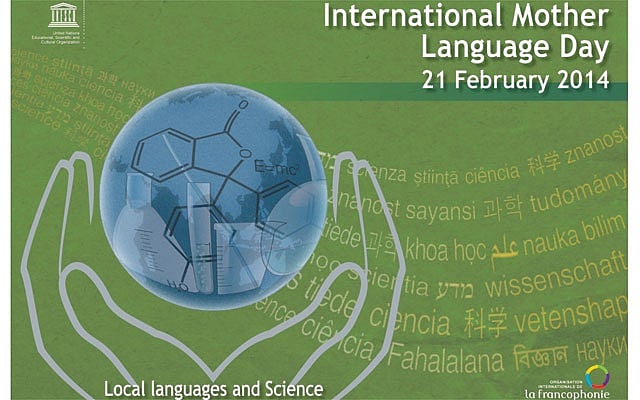
The slogan for 2014 is - 'Local languages for global citizenship: spotlight on science'.
Feb 21 is the day on which Bengalis sacrificed their lives for the recognition of Bangla as the national language of Pakistan in 1952.
In Nov 1999, the General Conference of the United Nations Educational, Scientific and Cultural Organization (UNESCO) proclaimed Feb 21 as International Mother Language Day in recognition of the sacrifices made for the sake of the mother tongue.
Since then, the 21st of February has been observed every year to promote linguistic and cultural diversity and multilingualism.
“The theme this year spotlights the vital role of local languages in advancing science,” said UN Secretary General Ban Ki-Moon in a message.
“As the late President Nelson Mandela once said,”Ban recalled, "if you talk to a man in a language he understands, that goes to his head. If you talk to him in his language, that goes to his heart".
He stressed the role of local languages in spreading knowledge and felt it will “ensure that the latest scientific knowledge is more widely shared”.
USECO has organized activities, conferences, concerts and seminars around the world to highlight the importance of linguistic diversity and multilingualism said Director General Irina Bokova.
She said, “Contrary to popular wisdom, local languages are perfectly capable of transmitting the most modern scientific knowledge in mathematics, physics, technology and so on.”
Almost 6,000 languages are at the risk of being extinct before the end of this century according to the ‘Atlas of the World Languages in Danger’, recently published by the UNESCO.
Diversity can encourage dialogue, mutual understanding, innovation and creativity which in turn can help build more just and inclusive societies, said Ban while urging all to join forces to promote linguistic diversity and multilingualism.
Also Read:
'Make Bangla language of science'