


Published : 17 Feb 2010, 06:13 AM
Updated : 10 Aug 2022, 09:14 PM


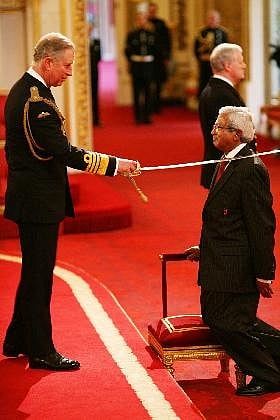
On behalf of Queen Elizabeth II, Prince Charles conferred the prestigious knighthood on Fazle Hasan Abed amid ceremonies in the Palace.
Knighthood conferred on Fazle Hasan Abed
Sir FH Abed's new title will be Knight Commander of the Order of St Michael and St George, KMCG.
While receiving the United Kingdom's sixth highest honour in Buckingham, Abed was accompanied by his wife Sarawat Abed and their two children.
Abed was conferred the honour in recognition of his outstanding contribution to poverty alleviation and empowerment of the poor in Bangladesh and abroad.
BRAC, the NGO he organised originally in Bangladesh, now operates in eight Asian and African countries.
After being knighted, Abed said at a view exchange assembly held at The Red Fort, a Bangladeshi owned restaurant, "I have been working with BRAC for the last 37 years. We are now carrying the BRAC success models to other countries."
"The sole goal of my life has been eradication of Bangladesh's poverty. I'll be happy if Bangladesh practises democratic governance all through. BRAC will always contribute to establishing good governance," asserted Abed, clearly indicating that he cherishes no desire to join politics.
Asked if fundamentalists pose any hindrance to implementing the BRAC development models in Bangladesh, he said, "BRAC has been working braving all obstacles all through. We have been assisted by the governments in our journey all through."
When asked to comment on the disagreements emerging between Bangladesh government and donor groups over control of climate change funds, the BRAC chairman said, "Perhaps the discord arises from Bangladesh's apprehensions about the World Bank exercising exclusive control of the funds."
"To me, it doesn't really matter who controls the funds; one must ensure that the envisaged goal is attained in the end."
He highlighted the successes of various BRAC programmes being implemented in 482 upazilas of 64 districts of Bangladesh—the focus of all efforts being poverty eradication.
BRAC provides free primary education, essential healthcare, agricultural support, legal services to promote human rights, as well as micro-credit and assistance in enterprise development.
BRAC employs some 1,19,259 workers; of them 81,062 are women. BRAC also operates in Afghanistan, Sri Lanka, Pakistan, Tanzania, Uganda, Sudan, Sierra Leone and Liberia.













