Published :
09 May 2013, 09:51 AM
Updated :
09 Aug 2022, 10:38 AM
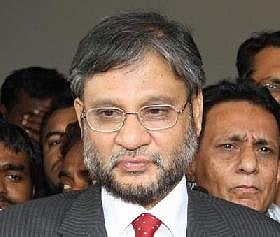
Speaking to the press at his lakeside residence in Dhanmondi, Jamaat’s chief defence counsel Abdur Razzaq said he found it difficult to believe that a teenager, as Kamaruzzaman was during the 1971 war, was being punished for crimes against humanity.
“Not a single war crimes tribunal till date has convicted a 19-year old.”
Also an assistant secretary general of Jamaat, Razzaq said he would certainly appeal against this verdict.
The senior lawyer told journalists after the judgement was passed that the defence had successfully discredited prosecution witnesses and moreover those witnesses also gave contradictory statements at the court.

He (Kamaruzzaman) was merely a youth of 18 or 19 years during the war. But the prosecution is saying he used to order around the military units of the area and headed the Al-Badr unit in Mymensingh. “It is simply beyond comprehension.”
Jamaat-e-Islami assistant secretary general Mohammad Kamaruzzaman was found guilty in five of the seven charges. He got the death penalty for two charges, life for another two, 10 years in prison for one.
Mohammad Kamaruzzaman’s trial began with the framing of charges against him on Jun 4, 2012. A total of 18 witnesses, including the investigating officer for the case, testified for the prosecution. Five testified on behalf of the Jamaat leader.
In this regard the senior defence counsel said that while the prosecution was allowed to produce 18 witnesses and were given a year and a half time, the defence was given only about a month and allowed to produce only five witnesses. “We were even stopped midway from cross-examining the investigation officer.”
“The one and only reason behind this verdict is that Mohammad Kamaruzzaman is an assistant secretary general of Jamaat-e-Islami,” said Abdur Razzaq who maintains that the war crimes cases are only meant to harass Jamaat leaders.
The defence counsel expressed his frustration saying that although there were two High Court judges and a district judge in thje tribunal, its standard was far below that of the Supreme Court. “It is also lower than the standards that war crimes tribunals maintain.”