INTRUSIONS AT BORDER India willing for non-lethal arms use
The Indian foreign minister wants the neighbours to work in tandem, as 'border management is the responsibility of both the governments'. Full Story
bdnews24.com News Service
bdnews24.com
Published :
06 Jul 2011, 04:01 PM
Updated :
10 Aug 2022, 05:03 PM
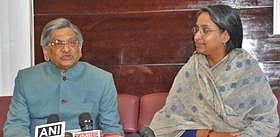
Dhaka, July 6 (bdnews24.com) – India will introduce "non-lethal weapons" to deal with border intruders from Bangladesh but expects both countries to take "responsibility" to bring killings to "zero level", the visiting external affairs minister has said.
"We'll have to deal with the border issue in a humanitarian manner," S M Krishna told a group of editors Wednesday evening. "At the same time, border management is the responsibility of both the governments."
Krishna said curfew on the Indian side "needs to be enforced" but with a more human approach.
"It is necessary to be humane in dealing with incursions," the minister said, "They should be taken into custody and brought to justice."
"The killings have come down drastically," he said, "now we need to bring it down to zero level."
The minister later told bdnews24.com that "we have introduced non-lethal weapons" in pilot projects.
"If everything goes well," he said, such weapons would be given to guards along the border with Bangladesh.
The 79-year-old Indian minister arrived on Wednesday on a three-day visit to prepare for the Sept 6-7 visit of prime minister Manmohan Singh.
"We are indeed at a momentous junction in our bilateral relationship," Krishna said in his written remarks to the Bangladesh editors.
"A stable, democratic and prosperous Bangladesh is in our mutual interest," he said, "we seek a deeper and stronger partnership".
He spoke of giving Bangladesh tariff lines "on non-reciprocal basis" but did not clearly spell out if key items such as textiles would get duty-free or concessional access to India.
Responding to "frustration" in Bangladesh about India's failure to reciprocate the Sheikh Hasina government's gestures during her Jan 2010 visit, he said such "gestation period" was needed "in a democracy that we have and that you have".
Last week, Manmohan Singh told a group of Indian newspaper editors in New Delhi that Sheikh Hasina had "gone out of the way" to help India.
"There is absolutely no reservation in India—within the government or among the people—about the kind of relationship we want to have with Bangladesh."
Krishna said "the visit of the Bangabandhu" (in 1974) and that of Sheikh Hasina are "constant reminders" for India to reciprocate.
Indian has long been blamed for failing to implement much of the 1974 Mujib-Indira accord, especially settling decades-old disputes along 4000-km-border.
Several editors pointed out that two-and-a-half-years into the Hasina government, which they said had faced intense criticism from opponents for giving away too much to India without getting anything in return, it would amount to giving her too little time ahead of the elections in Bangladesh as some of the deals were still being finalised.
Krishna said the Congress government was keen to return the favours and that prime minister Singh was particularly eager to respond.
The minister referred to the billion-dollar line of credit (LoC) and the 12 projects that received joint approval, 24-hour access through the Tin Bigha corridors to the two Bangladeshi enclaves, development of railways and "close cooperation" in security.
"A lot of work has been done in power sector which is of highest priority for Bangladesh."
To one specific query, he said the much-awaited power purchase agreement was "close to being signed".
High commissioner Rajeet Mitter, sitting on his right, added that the 20-year agreement, being a long-term one, needed a lot of legal and technical scrutiny.
The deal has delayed signing of a funding agreement with the Asian Development Bank.
Mitter said connecting the two power grids was "broadly on schedule" and should be done by 2012-end or early 2013.
Editors Anwar Hossain Manju of Ittefaq, Moazzem Hossain of Financial Express, Matiur Rahman of Prothom Alo, Mahfuz Anam of The Daily Star, Mahbubul Alam of The Independent, Syed Anwar Hossain of The Sun, Golam Sarwar of Shamokal, Matiur Rahman Chowdhury of Manabzamin, Shyamol Dutta of Bhorer Kagoj,Toufique Imrose Khalidi of bdnews24.com, former editor of Kaler Kantha Abed Khan, Altamas Kabir of Sangbad, Desh TV managing director Asaduzzaman Noor of and Channel I head of news Shykh Seraj attended the meeting.
bdnews24.com/nir/2345h