Published :
07 Sep 2013, 10:17 AM
Updated :
09 Aug 2022, 11:05 AM
The Indian Supreme Court has passed an order calling for immediate disqualification of sitting lawmakers in national parliament, state legislative assemblies and councils if any of their offence attracts a sentence of two years or more.
"Sitting Members of Parliament and state legislators are no longer protected by clause 4 of Section 8 of the Representation of People Act," a decree issued by the SC said, spelling the end of the law which allowed convicted lawmakers to hold on to their seats during pendency of their appeals.
The Indian government is now sending out instructions to state government to enforce the Supreme Court order with immediate effect.
Many feel this is the high point of Indian judicial activism ahead of the country's upcoming national parliament polls next year.
The tainted legislators have more reason for concern as the BJP has refused to endorse protection for tainted lawmakers during pendency of appeal in Parliament.

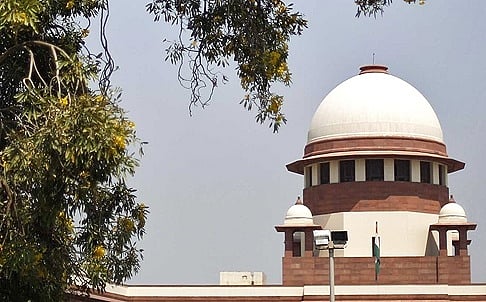
Indian Supreme Court (File Photo)
Indian Supreme Court (File Photo)
This means that any lawmaker convicted from now for an offence punishable with a sentence of two years or more will be immediately unseated, and will be barred from contesting elections for at least six years. This could be longer, depending on the term of the sentence awarded.
In fact, the sting could be sharper for convicted MPs, MLAs (Members of Legislative Assembly) and MLCs (Members of Legislative Council).
For, while they lose their elected post on conviction, they will get no compensation for the years lost if they are acquitted.
Further, those who get convicted closer to election may have to sit out more than one election, given the slow pace of judiciary.
Public censure made parties change tune
The scuttling of the RP Act amendment is a second setback to the political class in as many days, says the 'Times of India'.
On Thursday, amendments to the Right to Information Act designed to exclude political parties from the ambit of the transparency law had to be referred to a standing committee in the face of similar political opposition.
Just as in the case of the amendment to the RP Act crafted to nullify the SC order for disqualification of convicted lawmakers, the amendment to the RTI Act had seemed set to go through when the fear of popular opprobrium unravelled the consensus for preserving the status quo.
Congress circles claimed that besides resistance from the opposition, Congress Vice-President Rahul Gandhi's reservations were also a factor.
The re-think 24 hours ago and the reluctance on Friday to pursue the RP Act amendments reflect a new sensitivity to concerns that political parties have often dismissed as elitist, and limited to activists.
The proposed amendment to the RP Act fell through on Friday morning amid considerable drama as BJP said the proposal was bad in law and constitutionally invalid.
BJP leaders said the party — which fancies its prospects among the urbanized classes — does did not think it prudent to support amendments that risked being seen as a self-centred effort of the political class to protect criminals in its ranks.
The party stuck to its position despite feverish lobbying by at least one senior politician who is apprehensive of the outcome of his trial in a famous graft case.
BJP leader Arun Jaitley argued that disqualification of a legislator was provided for under Article 102 of the Constitution and any move to merely change the RP Act would not do.
Law Minister Kapil Sibal said the BJP decision introduced a new calculus in arguments dealing with the SC order that went against a broad agreement that prevailed in Parliament.
But faced with BJP's determined opposition, with other parties like BJD also expressing doubts, the government had no option but to put aside its plans to move the amendment to the RP Act.
The government's decision reflects a hesitation to push against both the political opposition and the wider perception that UPA-2 has been lethargic in acting against corruption.
Congress managers are wary of seeming impervious to popular sentiment at a time when the party is combating the fallout of a series of scams ranging from Commonwealth, 2G and Coalgate, the 'Times of India' said.