


Published : 14 May 2021, 12:28 AM
Updated : 14 Oct 2022, 06:51 PM


But their trip was different and more difficult than any other Rana had ever taken. In 2020, the pandemic put a halt to his usual Eid trip. This time, he was determined that he must spend this Eid with his mother anxiously waiting at home.
Usually, he would go from Dhaka to Jashore through Mawa, a regular route for southern and southwestern journeys, but this year he took the Bangabandhu Bridge after an unsuccessful river crossing.
He tried and failed to cross the Padma River by ferry from Paturia, another popular route. Eventually, he turned his car around. But now he and his wife were accompanied by another passenger – a stranger. He was one of the many people left waiting at the ferry pier after they failed to find transport. Rana offered him a ride.
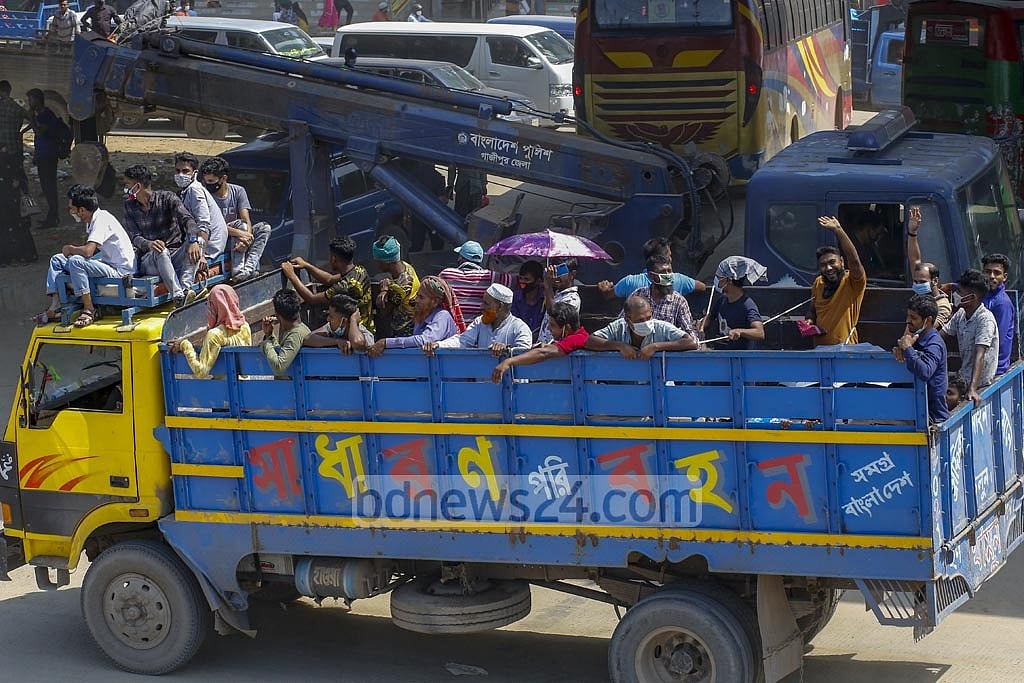
People risk their lives by riding on trucks in Gazipur’s Chandra on Wednesday, May 12, 2021 as they travel home for Eid-ul-Fitr amid a shutdown of long-haul bus services over a coronavirus outbreak. Photo: Mahmud Zaman Ovi
Five people died on Wednesday in a crush of passengers on board an overcrowded ferry from Shimulia to Banglabazar. The government suspended long-haul bus services to curb infections, but people were still drawn inexorably towards home.
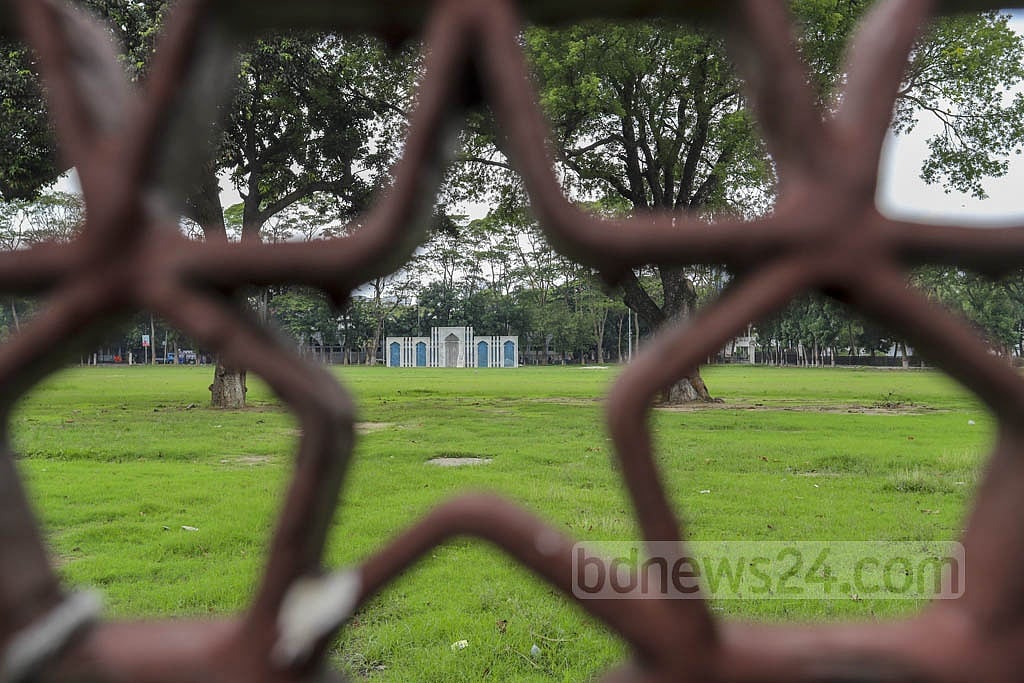
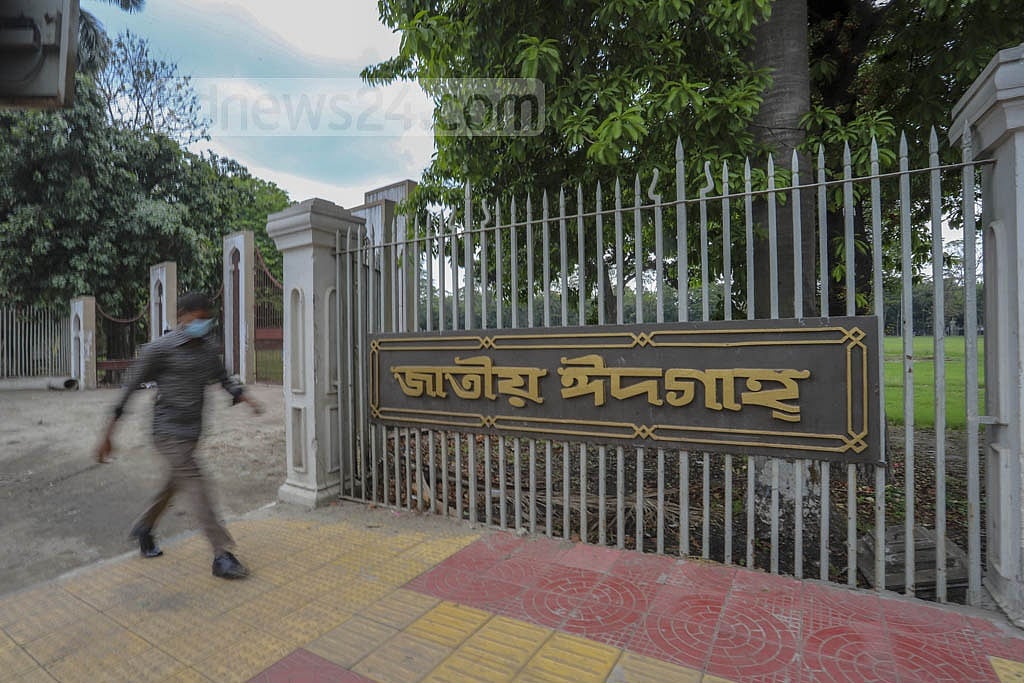
Like last year, there will be no Eid congregation at the National Eidgah ground due to the coronavirus restrictions. Photo: Asif Mahmud Ove
“I couldn’t go home last year,” said Rana, 47. “My elderly mother is there. I saw her before Eid, but she grows restless if she cannot celebrate it with us. We're taking on the risk of making the trip because we've our own car.”
Instead of his usual 200km trip, Rana said he had to make a roundabout journey of over 330km.
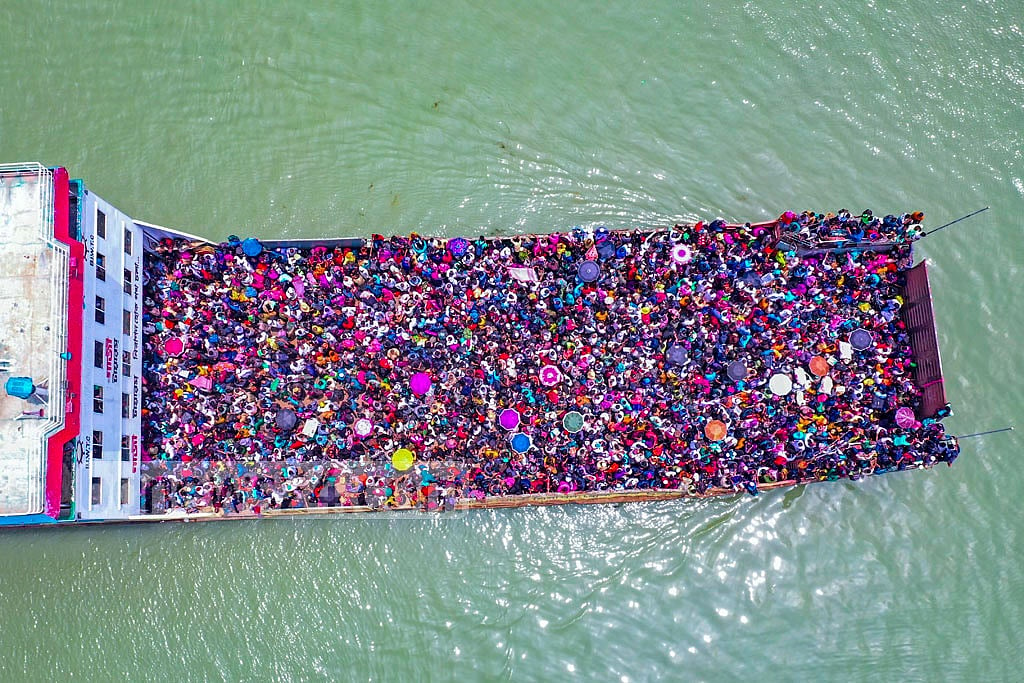
The ferry leaves Shimulia without any vehicle onboard after waiting until 12:30pm.
“Many people are taking a risk by going home.”
Then there is Farzana Saki, a resident of Dhaka’s Mohammadpur, who is not as lucky or brave as Rana. Before the pandemic days, she used to spend one Eid at her in-laws’ house in Joypurhat and the next at her parents’ in Bogura. But she spent both of last year’s Eid holidays with her husband in Dhaka. This year was the same as last year.
“After seeing the situation, I couldn’t muster the courage to go home,” said Farzana, a bank executive. “I'm sad. I couldn’t go last time either. But there's no point in going when the crowds are so heavy and the virus is spreading. If we got infected on the way there, we wouldn’t be able to tell. Many people could get infected because of us.”
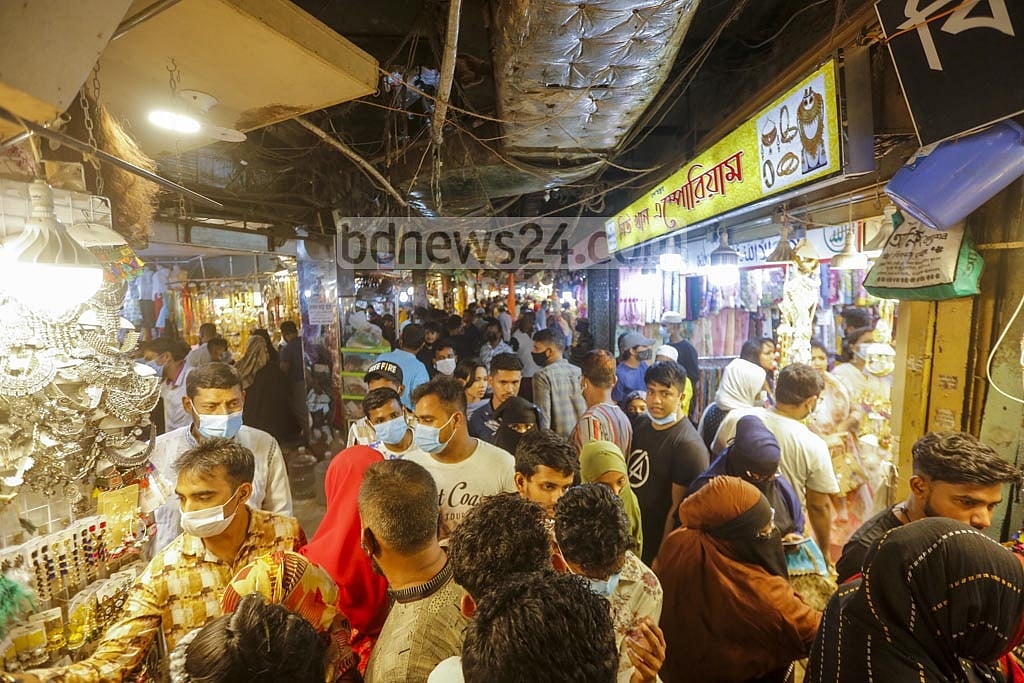
In Bangladesh, Eid-ul-Fitr, the largest Muslim celebration in the world, came on Friday amid anxiety and limitations brought on by the coronavirus pandemic. Bangladesh on Thursday registered 31 new fatalities from the coronavirus in a day, taking the death toll to 12,076. The caseload rose by 1,290 in a 24-hour count to 778,687, according to the latest government data.
PRAYERS AMID COVID AND CONFLICT
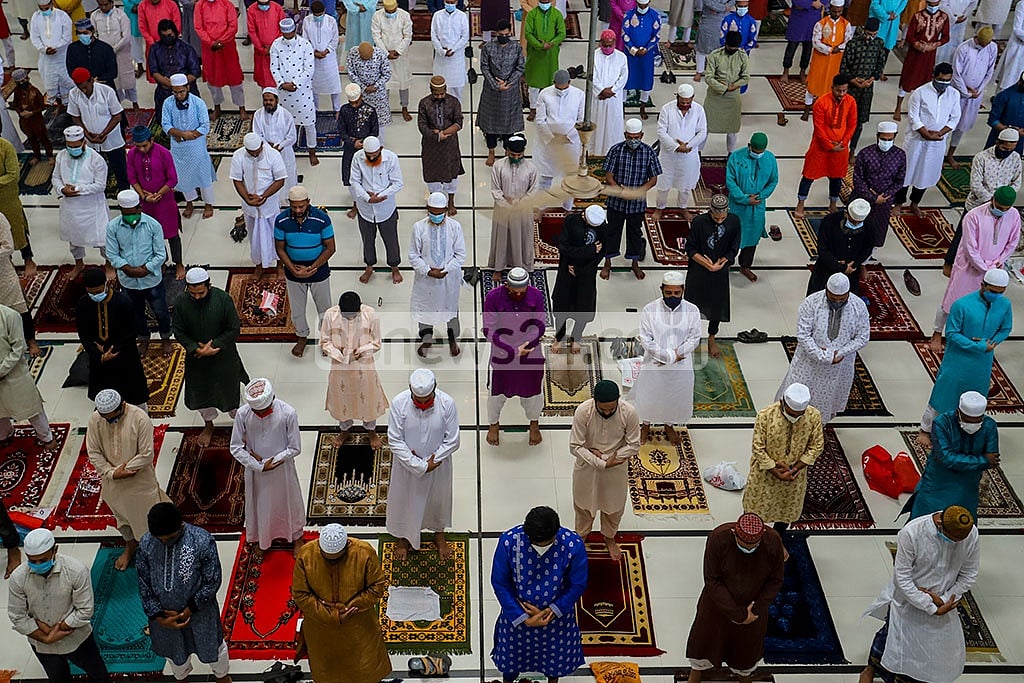
Eid means joy, but, as it was last year, happiness is not the emotion foremost in the minds of Muslims. Once again, they will have to abide by health restrictions during their Eid prayers, which means there will be no traditional exchange of hugs among fellow devotees.
Everyone has to perform the traditional Wudhu washing or ablution at home and put on a mask before they can go to the mosque. There they will have to maintain social distancing during the service. The government has imposed a nationwide ‘lockdown’, instructing everyone to remain near their places of employment during the holidays.
President Abdul Hamid and Prime Minister Sheikh Hasina have both called on the people to follow health regulations in order to prevent further spikes in infections.
“The pandemic has put our lives and livelihoods at risk,” said Hamid after wishing everyone a joyous Eid. “I call upon the well-to-do in our society to stand by the poor at this difficult time. And, at the same time, I call upon every resident of our country to celebrate Eid while following the proper regulations, maintaining social distancing and remaining on high alert.”
“Eid gives us an unparalleled education in peace, compassion and brotherhood,” Hasina said in her address. “People forget hate, animosity and violence and come together in equality, friendship and harmony.”
The coronavirus has brought the entire world to a halt, disrupting regular travel and pushing people to the brink of death. From Indonesia to Bangladesh, governments have imposed restrictions to contain the spread of the virus during Eid, which marks the end of the Muslim fasting month of Ramadan.
Indonesia has banned domestic travel until May 17, while Malaysia imposed a new national lockdown on Monday ahead of the festival. Pakistan last month announced an extended holiday around Eid and extra safety restrictions aimed at reducing mass travel during the celebrations.
In India, celebrations were muted with nearly two thirds of the country under some sort or movement restrictions due to the acute COVID-19 crisis there. In New Delhi and other cities, Eid prayer services at major mosques will be limited to between five and 10 clerics and staff and will not be open to the general public, Reuters reports. Some smaller mosques will shut altogether, with clerics asking the faithful to pray from home.
Many Muslims around the world also marked Eid under the shadow of conflict, past and present.
In Gaza, the usual excitement of Eid turned to mourning for some after a heavy night of Israeli airstrikes during the fiercest flare-up in years. Medics have put the death toll in the enclave at 83 so far this week, according to a Reuters report.
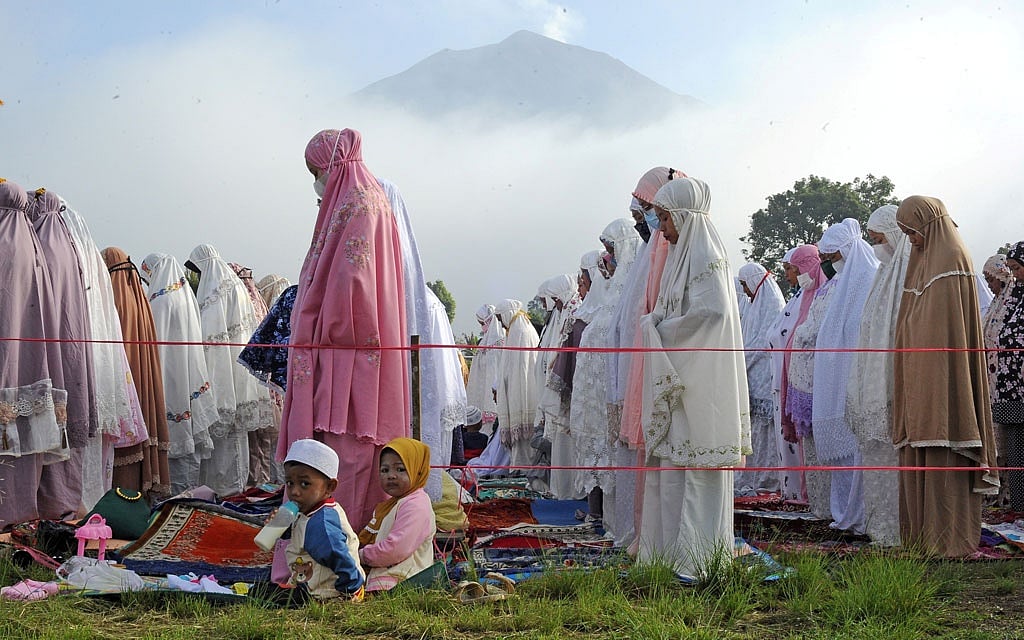
Indonesian Muslims attend a mass prayer session at Gunung Labu field as Mount Kerinci Volcano is seen in the background during Eid al-Fitr, marking the end of the holy fasting month of Ramadan, in West Kayu Aro, Kerinci, Jambi province, Indonesia, May 13, 2021, in this photo taken by Antara Foto. Antara Foto/Wahdi Septiawan/ via REUTERS
In Afghanistan, the Taliban declared a three-day ceasefire for Eid just days after a bombing that killed 80 people, most of them schoolgirls.
In Bangladesh, the government urged the Muslims to celebrate the festival with only family members indoors instead of visiting relatives. The religious affairs ministry called for the devotees to pray at their nearest mosques instead of the Eidgah and open spaces. It also suggested disinfecting mosques before the congregations and put curbs on rolling out carpets on the floors for prayers.
“We’re celebrating this Eid in extraordinary circumstances. We are forced to be patient and stay in our own homes so as not to catch the disease or spread it to others,” said Leader of the Opposition Raushon Ershad.
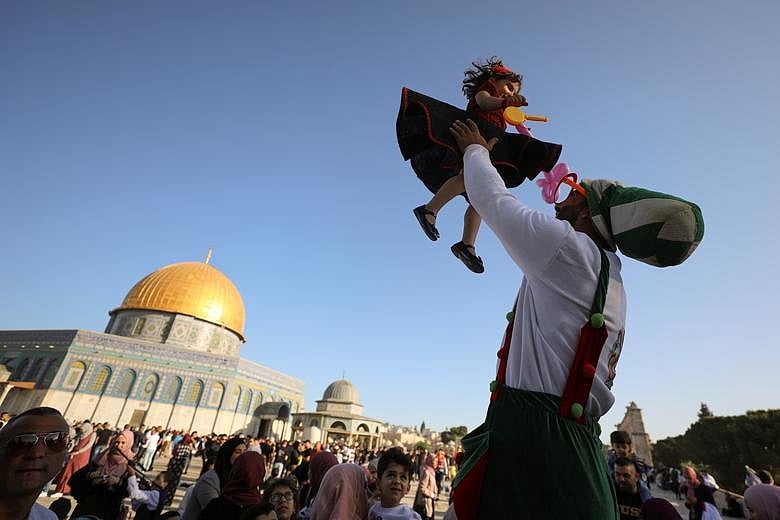
A clown plays with a young girl during Eid al-Fitr prayers, which mark the end of the holy fasting month of Ramadan, at the compound that houses al-Aqsa mosque, known to Muslims as Noble Sanctuary and to Jews as Temple Mount, in Jerusalem's Old City, amid Israel-Gaza fighting May 13, 2021. Reuters
Despite the pallor of a global pandemic, the spirit of Eid is still robust among some people.
Rifat Hossain, who works at a biriyani restaurant on the bustling Satmasjid Road in Dhaka, plans to spend Eid at his home in the southern district of Barishal. But he is not leaving until Eid day, as he will get paid after selling his food late into the night.
Asked how he would get home, he said: “You can still get a bus. I’ll head home tomorrow after I receive my pay.”
“I need money. I have my mother and wife at home. I’ll need money if I go home,” said Rifat, 22.
“It's Eid after all!”
[With details from Reuters]













