Published :
10 Apr 2013, 11:02 AM
Updated :
09 Aug 2022, 10:29 AM
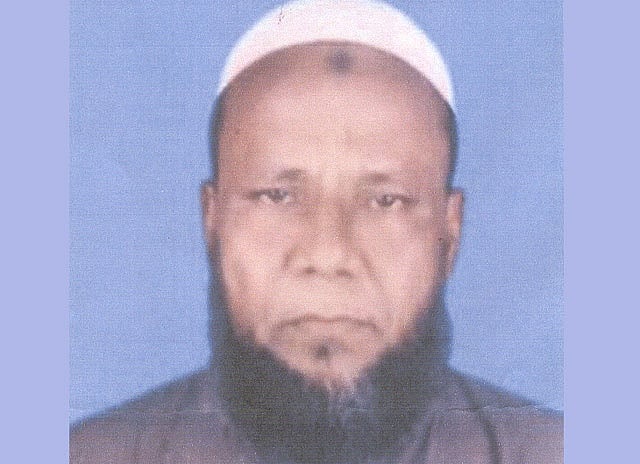
Allegedly a former member of Jamaat-e-Islami and said to have joined the ruling Awami League later on, 62 year old Mobarak Hossain, from Akhaura of Brahmanbaria, is also accused of genocide in the locality.

Prosecutor Syed Haider Ali presented the allegations and took the first war crimes tribunal of Bangladesh through some of the witness statements substantiating the charges on Wednesday.
The three-judge International Crimes Tribunal – 1, set up to try crimes against humanity during the 1971 Liberation War, heard the prosecution present its five charges that also include genocide.
Tribunal chairman Justice A T M Fazle Kabir told the prosecutor that compared to genocide, proving crimes against humanity was easier. “But proving genocide is rather difficult.”
Justice Kabir said that the targeted groups must be stable ones, referring to the charges that mention ‘Awami League followers’ as a political group who were targeted for genocide.
Tribunal member Justice Anwarul Haque pointed out that a person could switch groups and sometimes parties merge or even cease to exist.
“But a Muslim stays a Muslim, a Hindu stays a Hindu,” said Justice Kabir.
The prosecutor explained that he was only concerned with the affiliation and association of individuals during the war. “There were only two groups really. Those for Liberation and those against it.”
As such, the prosecutor said the groups remained stable during the war. “And furthermore, they are included in our law.”
The tribunal agreed but pointed out that the international statutes did not recognise political groups to constitute a stable group that might be targeted for mass murder.
Charges against Mobarak Hossain include one where he tricked about 130 of a village in Akhaura to gather at one place on Aug 22, 1971. They were then abducted to a nearby army camp where 33 were made to dig a ditch. They were then executed and buried in the ditch.
Another allegation has Mobarak shoot a student by the name of Ashuranjan in the leg on Oct 24, 1971. The student was then taken to a nearby Razakar camp tortured. He was shot dead four days later.
On Nov 11, 1971 Mobarak was involved in the torture and execution of one Abdul Khalek. Khalek’s body was thereafter mutilated by bayonets.
Although initially granted bail by the High Court, Mobarak was taken into custody by a Brahmanbaria court as he was told to surrender on Oct 19, 2011. His case was then transferred to the tribunal.
Mobarak was given bail on Jul 16 that year after being in custody for almost nine months during which time there had been no investigation against him.
On Mar 12, the tribunal fixed Apr 4 for charge-framing arguments, which was later shifted to Apr 10.
Mobarak’s defence counsel will begin his arguments on Thursday.