


Published : 18 Jul 2019, 08:27 PM
Updated : 08 Apr 2022, 02:16 PM


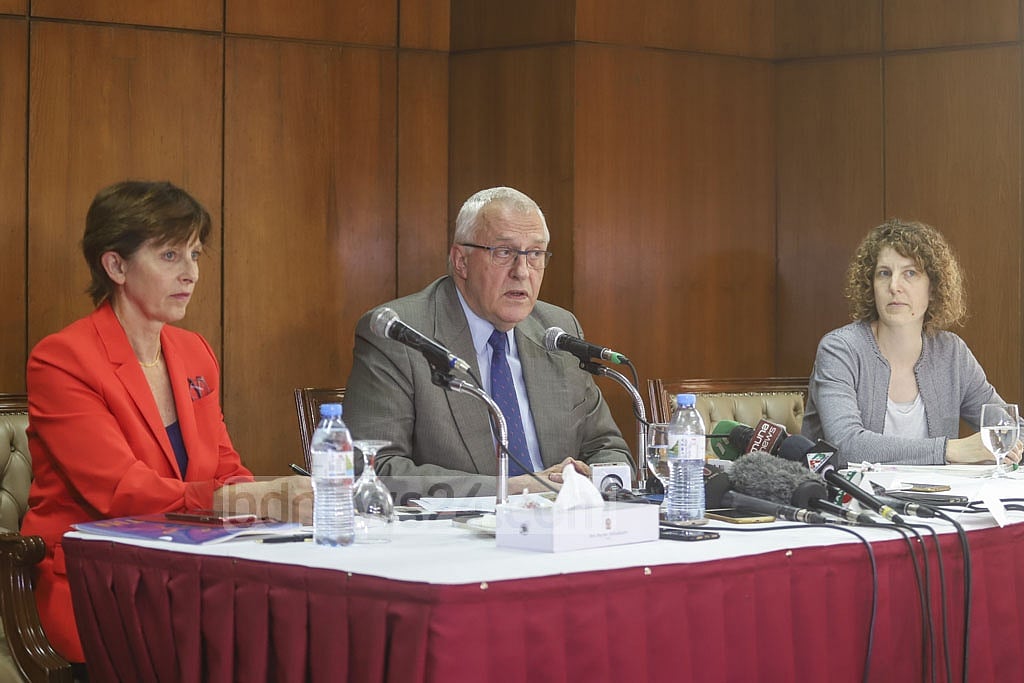
Victims of the alleged persecution have been given until Oct 31 to make their submissions to the free trial court or the prosecutor’s office, ICC Deputy Prosecutor James Stewart said at a press briefing in Dhaka on Thursday.
After that, the prosecutors hope the authorisation to investigate the crimes against humanity will come "as quickly as possible".
Stewart is visiting Bangladesh following ICC prosecutor Fatou Bensouda's request on July 4 to the judges to authorise a probe into the alleged crimes against humanity committed against the Rohingya people in Myanmar.
Over 700,000 Rohingyas took refuge in Bangladesh after escaping the 'ethnic cleansing' in their homeland in late August, 2017.
The panel of prosecutors as part of its "normal practice" to work in a country is in the process of signing a MoU with the Bangladesh government to press ahead with the investigation.
"We are preparing the way for the investigation. We are not investigating now," Stewart said. "The judges will decide whether to grant authorisation to investigate."
"We are here to engage with the government and other relevant stakeholders including in affected areas, to explain and answer questions on the ICC process, and where we are currently in the judicial proceedings."
He said, the team expects the Bangladesh government to offer "basic cooperation", including security, if they are allowed to look into the issue.
Asked about the lengthy process of starting the investigation and the subsequent trial, Steward said, they understand the pain and anguish of the victims of alleged crimes, but they have to work within the legal mandate given by the Rome Statute
"It may be frustrating for some that the process takes the time it does, but we hope the wait will be worthy," he said, adding that they will be ready to start the probe as soon as they get the permission.
The ICC was established to deal with war crimes, crimes against humanity and genocide committed after July 1, 2002, and the crime of aggression after July 17, 2018, on the territory of a party state.
"We are a court of last resort, however, and can only act where these crimes are not being investigated and prosecuted by the national authorities," the deputy prosecutor said.
Myanmar is not a state that is party to the court but Bangladesh is.
"So any potential investigation could only focus on crimes allegedly committed in part on the territory of Bangladesh."
But the crimes have been committed in Myanmar.
Replying to that question, he said, following Prosecutor Bensouda's analysis, she determined that there is a reasonable basis to believe that at least 700,000 Rohingyas people were deported from Myanmar to Bangladesh through a range of coercive acts and that great suffering or serious injury has been inflicted on the Rohingya through violating their right of return to their state of origin.
"In addition, there is a reasonable basis to believe that the Rohingya people have suffered persecution as a result of these alleged crimes. Investigating deportation and the other alleged crimes would mean, of course, taking a close look at the alleged violence which left the Rohingya no option but to flee Myanmar.
"Our mandate is purely legal. The ICC and the office of the Prosecutor have no political role to play," he said.
Deputy Prosecutor Stewart will travel to Cox’s Bazar on Friday.













