


Published : 22 Nov 2016, 04:40 PM
Updated : 19 Oct 2022, 05:34 PM


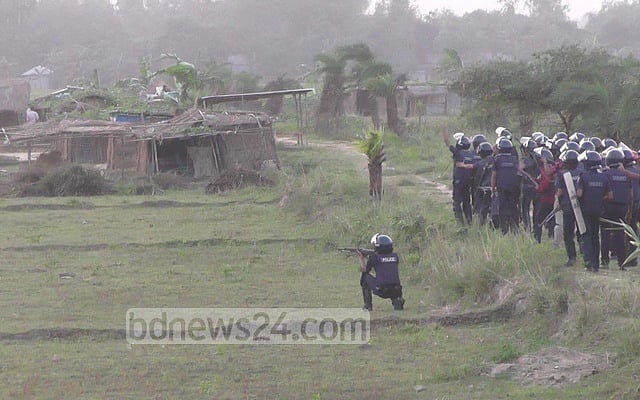

It has sought explanation on why the incidents of assault, firing, loot and arson to evict the members of the tribal community will not be declared illegal.
A bench of Justices Obaidul Hassan and Krishna Debnath passed a rule on Tuesday after hearing a writ petition seeking a judicial enquiry into the mayhem at Gaibandha’s Gobindganj over evicting Santals from a land acquired by the Rangpur Sugar Mills.
Twelve respondents including four secretaries and the local MP have been asked to respond to the rule within two weeks.
Lawyers Rafiqur Rahman and Jyotirmpoy Barua represented the two who had filed the writ petition.
Deputy Attorney General Motahar Hossain Saju represented the state.
“We have called for the formation of a Judicial Commission to investigate the attacks on Santals,” Jyotirmoy Badua told reporters.
“The court issued the order after a hearing of the petition.”
Badua filed a write petition on behalf of Olivia Hambrom and Rumila Kishkur, the wives of Santal residents Dijon Tudo and Ganesh Murmo, who were injured in the attacks.
The writ petition asked the court to order the Law Secretary and Home Secretary to submit a court report after the proposed commission finished its investigation.
Jyotirmoy Badua said he had filed a legal notice with the administration on Nov 15 asking on what authority the Santals had been evicted from the disputed land.
The notice also asked what steps were being taken by the administration to bring those involved in the ‘attacks’, ‘looting and arson’ and ‘murders’ to justice.
He said he had filed the writ petition with the High Court after the administration failed to respond.
According to him, the writ asks why the ‘looting, arson, shooting and murder’ of Santals has not been declared unlawful.
The writ also asks for a ruling as to why instructions have not been given to charge those involved in these incidents under the penal code.
In 1962, the Rangpur Sugar Mill authority acquired 1840.30 acres of land from Santals and Bangalis in 18 villages for sugarcane farming. Santals claim the sugar mill has used the land to grow rice and tobacco, in violation of the agreement, and have occupied the land and launched protests.
Earlier this year, Santals built several hundred houses on the disputed land and began living there.
Clashes broke out on Nov 6 after the sugar mill authorities attempted to reclaim the land. Santal homes were looted during the clashes.
After some homes were burnt down, tractors levelled the ground on orders from the sugar mill authority.
Police opened fire at one point during the clashes. Three Santal residents were killed in the firing and many others were wounded.
The shooting has given rise to much discussion across the country. Protests have broken out in many areas, including the capital.
According to the government the land does not belong to the Santals.
The government said ‘land grabbers’ are using the Santals to occupy the land so that they can later acquire it for themselves.
Santal residents, on the other hand, have said that they want the ‘land of their forefathers’ returned to them.
The evicted Santals had cultivated rice on 100 acres of disputed land and pulses, mustard and jute on another 800 acres.
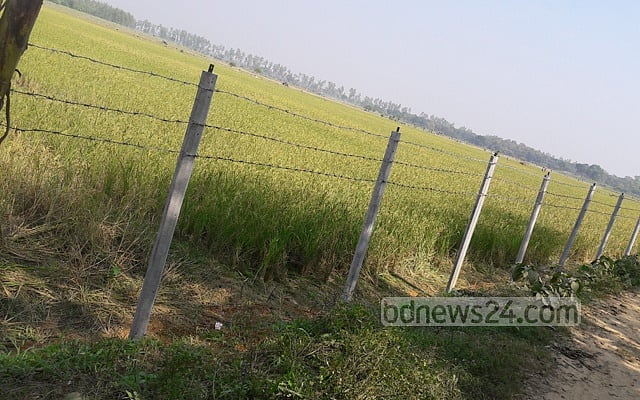
The pulse, mustard and jute crops had been looted alongside the mayhem at Santal houses during the eviction. Though the rice paddies remained mostly unharmed, the sugar mill authority erected barb wire fences around the crops.
The same court bench had previously ordered the sugar mill authority to allow Santals to harvest their paddy or arrange for them to get the paddy in some other way after hearing a separate petition on Wednesday.










