


Published : 08 Jan 2015, 11:36 PM
Updated : 19 Oct 2022, 06:33 PM


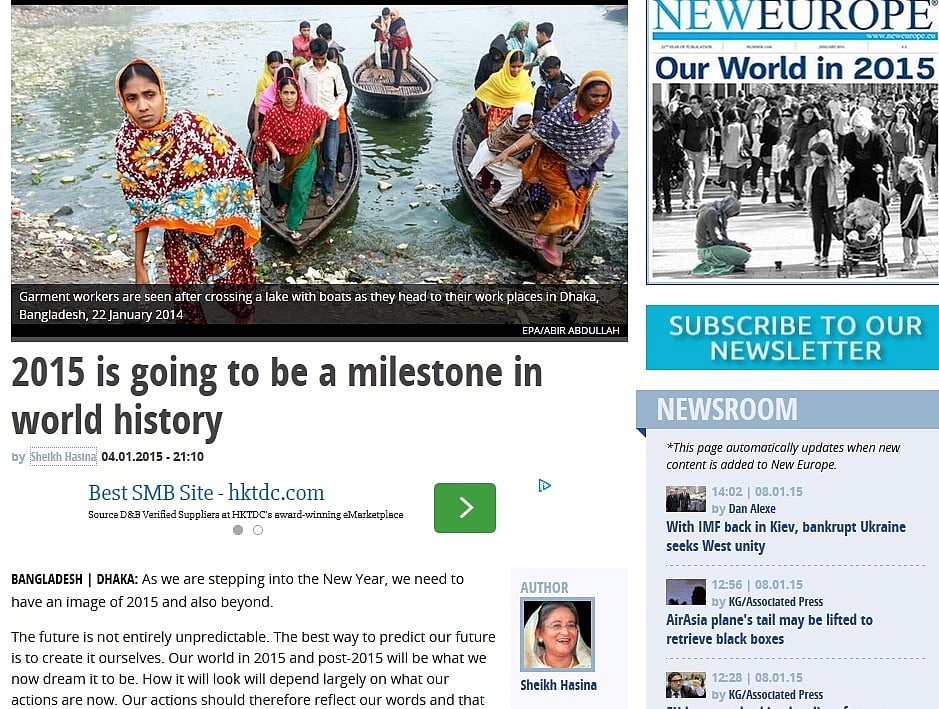
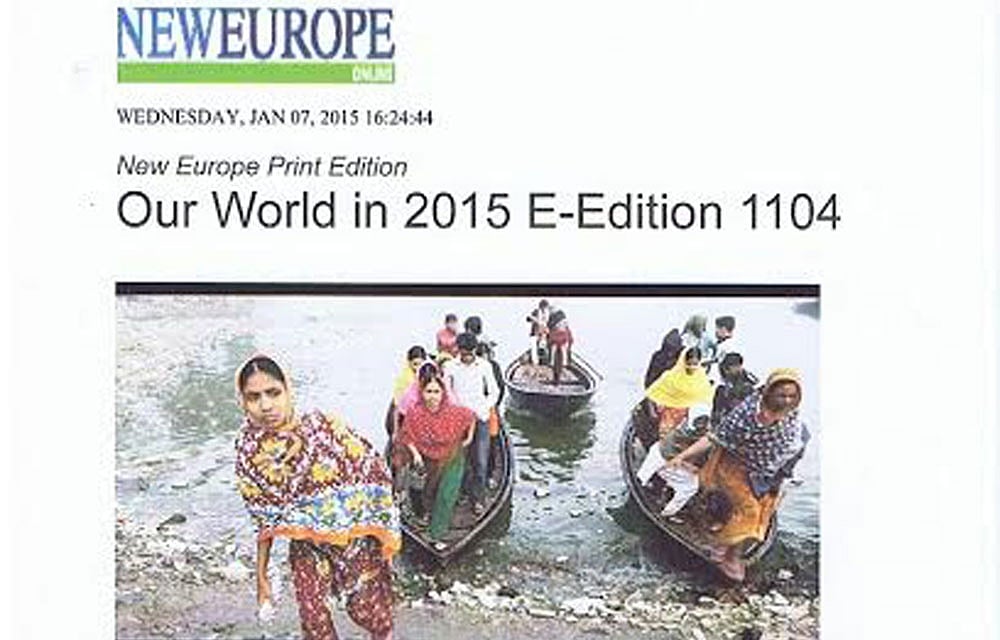
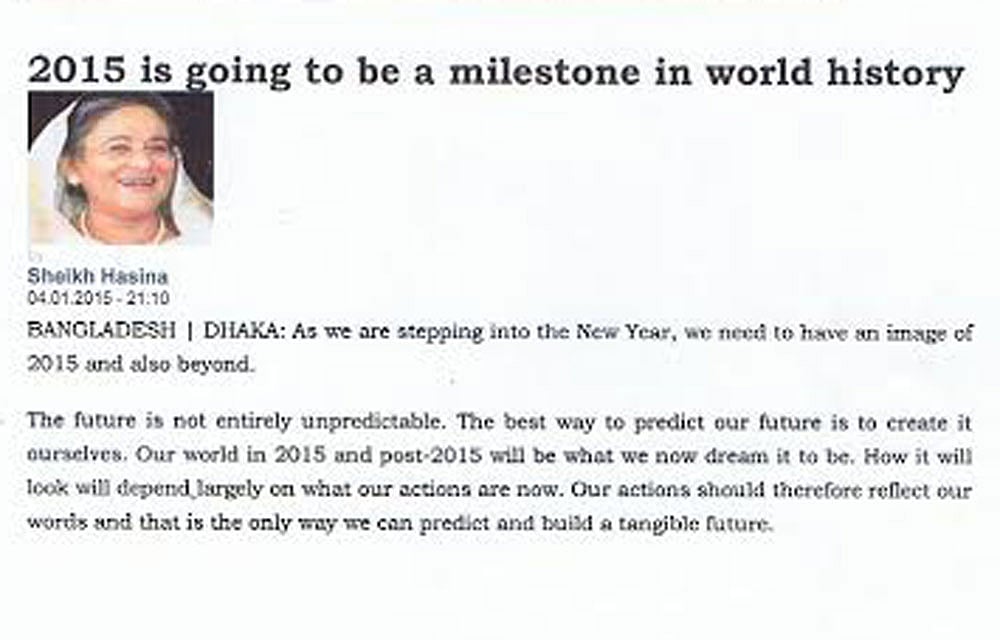
Titled ‘2015 is going to be a milestone in world history’, the write-up found a place in this widely circulated English weekly along with those by over 75 leading politicians, statespersons, analysts and thinkers of the world.
The writers include the president of European Commission, US secretary of state, deputy prime minister and foreign minister of Belgium, prime minister of Latvia, ministers of Norway and Georgia, and former UN secretary general.
In the about 800-word article, Hasina said that as the world was stepping into the New Year, “we need to have an image of 2015 and also beyond”.
“The future is not entirely unpredictable. The best way to predict our future is to create it ourselves,” she said in the article in which she portrayed Bangladesh’s development particularly in education, women empowerment and MDGs achievement.
She wrote: “We learn from our past experiences and at times from mistakes. Our past makes us stronger”.
“Let us keep in mind the lessons taught by our past and build our future based on what we have learned”.
“Let us keep in mind that all that is ever important is the “now” in which we live in and all that is going to be important is the “tomorrow” that we leave for our children,” she wrote.
The 20-year old magazine, New Europe, is a European political newspaper that mainly publishes and discusses news concerning EU politics and issues.
It is widely circulated within the European Commission and the European Parliament, said a foreign ministry spokesperson.
She said the realisation of these visions “depends on every human being of this world, public and government alike”.
“Poverty and ignorance are the greatest impediments to development and therefore eradication of poverty and access to education should remain at the very heart of contemporary development debate of the Post-2015 Development Agenda,” she said.
She mentioned how her government had integrated the MDGs into the national five-year plans and also in the ‘Vision-2021’ by which time Bangladesh wants to be a middle-income country.
“This people-centric vision aspires to transform Bangladesh into a knowledge-based, technology-driven Middle Income Country by 2021,” she said.
“We have already met or are on track to meet MDG-1, 2, 3, 4, 5 and 6”.
She said poverty alleviation should be the cornerstone of the Post-2015 Agenda.
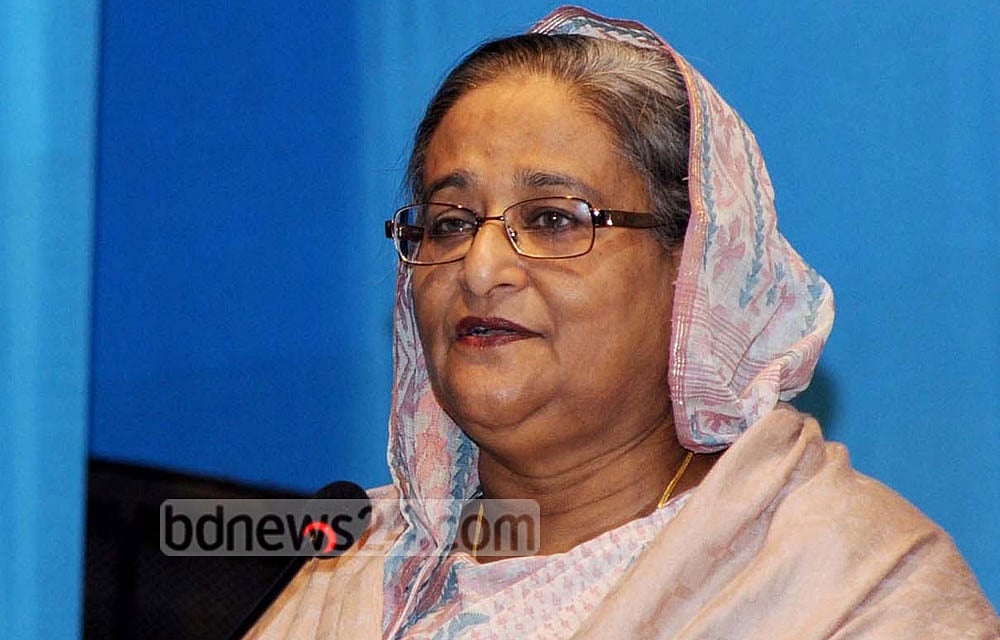
“We made education free for our girls up to Grade Twelve and have plans to take it to graduate levels,” she said.
She also mentioned the growing percentage of women joining in all professions in Bangladesh including politics, civil service, judiciary, armed forces, technical profession, aviation (pilots), sports, including cricket, football and even mountaineering.
“Bangladesh today is perhaps the only country in the world that has to its credit a female prime minister, female speaker of the parliament, female leader of the opposition and a female leader and deputy leader of the parliament,” she wrote.
“Many western societies may not be able to match this."
She also mentioned an increase in the female work force to 36 percent from 24 percent in the last three years that contributed to the 6.2 percent growth rate.
One commented under her article in the website that “if there is one leader under whom such values as women's education and emancipation in Bangladesh are secure, that is Sheikh Hasina”.
“Her uncompromising stance on empowering women has so far brought forth a revolution in women breaking the clutches of repression, ignorance and subservience.
“Hope she can take the women of this country to full equality, in all aspects of society,” read the comment.







