


Published : 16 Dec 2020, 10:06 PM
Updated : 17 Oct 2022, 11:17 AM


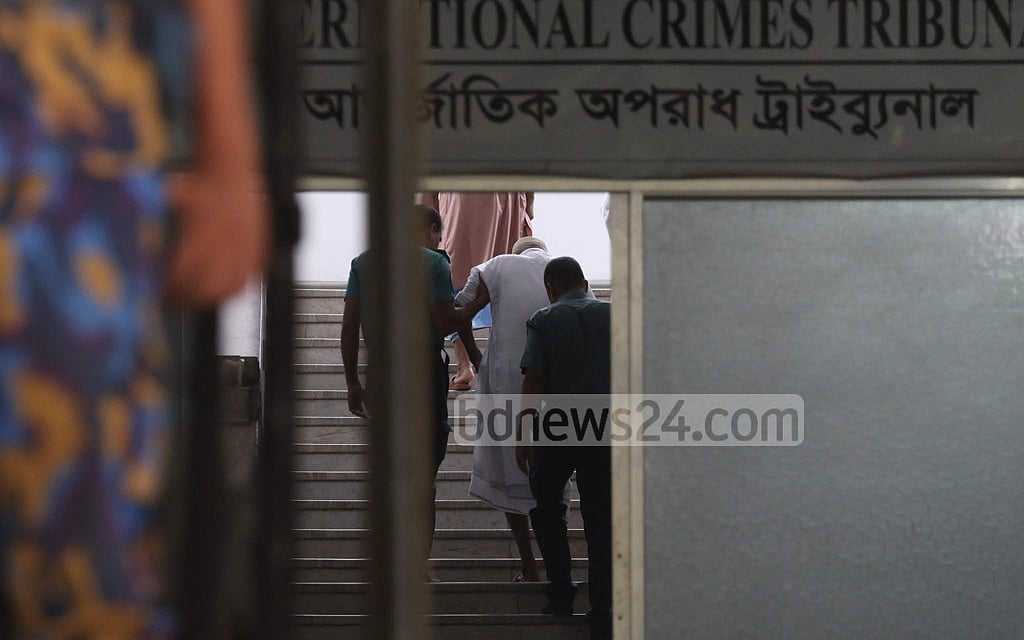
The Awami League promised to constitute the tribunal and hold war crimes trials in the manifesto of the ninth general election in 2009, and formed the International Crimes Tribunal or ICT the following year.
The tribunal has delivered verdicts in 41 cases of crimes against humanity and convicted 95 of the 105 accused. Of the 69 death-row convicts, 35 are on the run and one other died as a fugitive. Life terms were handed down to 24 of the accused, but 12 of them are currently absconding.
The 35 death-row convicts can be executed immediately after arrest as they did not appeal against the verdicts to the High Court within the specified time, according to the prosecutors.
In this case, the tribunal’s verdict is final and there are legal obligations to bring them from countries that do not support death penalty to carry out their executions. Similarly, fugitives who were sentenced to jail for life would spend the rest of their lives behind bars upon arrest as well.
The state-appointed lawyers for the fugitives in their absence allowing the tribunal to settle their cases.
Rana Dasgupta, a prosecutor of the ICT, told bdnews24.com, “The tribunal has no further responsibility if the case is settled through the judicial process. The responsibility to carry out the sentences will then fall on the home ministry and the law ministry.”
“The foreign ministry’s duty will be to bring in the fugitives from abroad to execute the verdict, like in the Bangabandhu assassination case. These three ministries need to play an important role in executing the sentences of fugitives convicted for crimes against humanity in 1971.”
“None of those sentenced to death will get the opportunity to appeal once arrested. But anyone can seek presidential pardon after the death reference is issued.”
Apart from the fugitives, 47 others have been delivered sentences with different terms -- 33 of them given death penalties, 12 handed jail term for life and another given 20-year rigorous prison sentence.
Ghulam Azam and Abdul Alim died while serving life sentences while Abdul Quddus died while serving a 20-year rigorous prison sentence.
The tribunal executed death penalties of six convicts -- Jamaat-e-Islami leaders Abdul Quader Molla, Md Kamaruzzaman, Ali Ahsan Muhammad Mujahid, Mir Quasem Ali, Motiur Rahman Nizami and BNP leader Salauddin Quader Chowdhury,
The tribunal issued a death reference against Jatiya Party leader and former state minister Syed Mohammed Kaiser In October this year and the warrant of ATM Azharul Islam in March.
Death-row war crimes convict Mahbubur Rahman died in Kashimpur Jail on Oct 16. The remaining 24 convicts lodged appeals against their death penalties and await decisions from the top court.
The government did not comment on where the 47 fugitives were or whether any steps were taken to execute the sentences of these war criminals on its behalf.
Neither Home Minister Asaduzzaman Khan Kamal nor Public Security Secretary Mostafa Kamal Uddin answered calls for comment. Law Minister Anisul Huq was also unavailable for comment.
Advocate Dasgupta said, “I think many of the convicts are residing in Bangladesh as those who died were later found at home. A large section of the law-enforcement agencies were not sincere about arresting them while they were alive.”
“Those in charge of law and justice, and the administration, who were supposed to speak out, are not doing so.”
“The policeman who lied saying none of the fugitives were in the country… he should’ve been brought to justice, but it was not done."
Shahriar Kabir, president of the Ekattorer Ghatak Dalal Nirmul Committee, said they have information that three of the convicts had fled to Europe.
“Prisoner swap deals need to be done to bring them back to the country from there. Although the government took the initiative several years ago, it was not carried through.
35 DEATH-ROW FUGITIVES
The tribunal in its first verdict on Jan 21, 2013 sentenced to death Abul Kalam Azad alias Bachchu Razakar, a former Rukon of the Jamaat-e-Islami. He could not file an appeal challenging the verdict as he was absent during the trial.
Al-Badr leaders Ashrafuzzaman Khan alias Nayeb Ali from Feni’s Daganbhuiyan and Chowdhury Mueen-Uddin from Gopalganj’s Muksudpur were sentenced to death on Nov 3, 2013.
BNP leader Md Jahid Hossain Khokan from Faridpur’s Nagarkanda who was sentenced to death on Nov 13, 2014 is also on the run.
Another fugitive war criminal, Syed Hasan Ali from Brahmanbaria, got the death penalty on Jun 9, 2015. The tribunal said the government can execute him at a firing squad.
On May 3, 2016, the tribunal sentenced four war criminals of Kishoreganj’s Kamirganj to death and another to life in prison. Three of the death-row convicts, Razakar commander Gazi Abdul Mannan, Nasir Uddin Ahmed alias Captain ATM Nasir and Md Hafiz Uddin, are absconding.
The tribunal convicted eight accused of Jamalpur on Jul 18 the same year. Three of the death-row convicts among them – Abdul Mannan, Ashraf Hossain and Abdul Bari – could not be arrested.
The following year, on Apr 19, the tribunal sentenced two from Kishoreganj’s Nikli to death. One of them, Syed Mohammad Hossain alias Hossain, is absconding.
The tribunal sentenced six members of Razakar from Gaibandha’s Sundarganj to death on Nov 22 the same year. Five of them are on the run. They are Abu Saleh Muhammad Abdul Aziz alias Ghoramara Aziz, Ruhul Amin, Abu Muslim Mohammad Ali, Nazmul Huda and Abdur Rahim Mia.
The tribunal delivered the verdict against five war criminals of Moulvibazar’s Rajnagar on Jan 10, 2018, sentencing four to death and another to prison until death. Two of the death-row convicts, Nesar Ali and Mobarak Mia, are fugitives.
Five war criminals of Noakhali’s Sudharam were sentenced on Mar 13 the same year. One of them, death-row convict Abul Kalam alias AKM Mansur is on the run.
Four members of Razakar in Moulvibazar received the death penalty on Jul 17, 2018. Two of them – Abdun Noor Talukder and Abdul Mosabbir Mia – are fugitives. Another fugitive death-row convict, Md Anis Mia, died two months after the verdict.
Razakar members Liakat Ali of Habiganj’s Lakhai and Aminul Islam of Kishoreganj, who were sentenced to death on Nov 5, 2018, are both fugitives.
Seven members of Razakar from Netrakona’s Purbodhola got the death penalty on Mar 28, 2019. Two of them died while undergoing treatment at the Dhaka Medical College Hospital under the supervision of the prison authorities. The five others are on the run. They are Abdul Mazid alias Mazid Maulana, Abdul Khaleque Talukder, Kabir Khan, Abdus Salam Beg and Nur Uddin alias Raddin.
Hedayet Ullah Anju, one of the two war criminals from Netrakona’s Atpara who were awarded the death penalty on Apr 24 last year, is fugitive.
Abdul Jabbar Mandal, Jachhichar Rahman alias Khoka, Abdul Wahed Mandal and Mamataz Ali Bepari, four of the five war criminals from Gaibandha Sadar who were sentenced to death on Oct 15, 2019, are absconding.
The tribunal has sentenced 12 fugitive war criminals to prison until death.
One of them, Md Abdul Jabbar Engineer from Pirojpur’s Mathbaria, died in the US in August, according to media reports.
The others are Md Ajharul Islam of Kishoreganj’s Karimganj, Abul Hashem, Professor Sharif and Md Harun of Jamalpur, Jazi Ohidur Islam alias Kazi Wahidus Salam, Abdul Aziz Sarder, Abdul Khaleque Morol, Sheikh Mohammad Mujibur Rahman alias Mujibur Rahman, Ibrahim Hossain alias Rungur Ibrahim of Jashore’s Keshabpur, and Shamsul Hossain Tarafder of Moulvibazar Rajnagar.













