


Published : 27 Nov 2017, 11:35 PM
Updated : 19 Oct 2022, 03:51 PM


“The High Court did not slide away much from the lower court’s verdicts which were driven by a few or no witnesses at all. We did not expect this,” said defence lawyer Aminul Islam on Monday.
“Even the State did not probably have expected such a verdict.”
The decision on moving the Appellate Division will come be made consultation with the clients and after the full verdict of the High Court is available, he said.
“I strongly believe that they will get justice there (Supreme Court). The High Court verdict has not served them justice, to be honest,” said the lawyer.
Khandker Mahbub Hossain, Abdul Baset Majumder, Mohsin Rashid, SM Shahjahan, ASM Abdul Mubin, Daudur Rahman Mina, Shamim Sarder and Hasna Begum, who had been appointed by the State, argued for those accused.
Attorney General Mahbubey Alam said: “The death-row convicts can move the Appellate Division as per the Constitution.”
When asked if he was happy with the verdict, the country’s top legal officer said: “I cannot make any comment before seeing the full verdict. Much of it has not been released yet.”
Additional Attorney General Murad Reza, Momtaz Uddin Fakir, Mosharraf Hossain Kajal, Deputy Attorney General Mosharraf Hossain Sarder, Sheikh Baharul Islam and Jahid Sarwar Kajal also represented the State in the hearing.
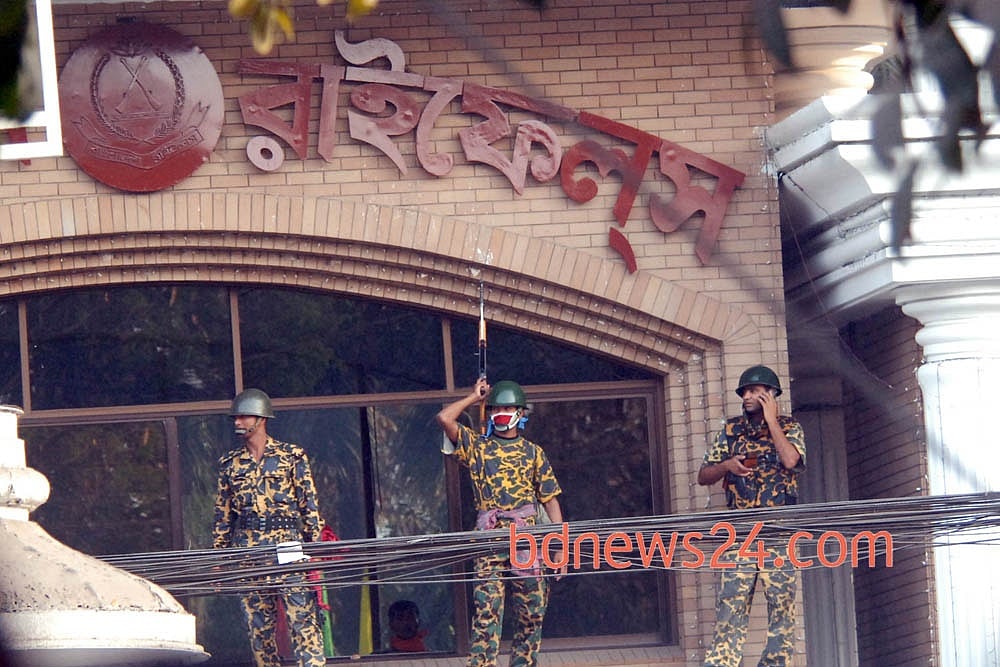
The High Court has upheld death sentences for 139 people for their roles in the country’s bloodiest mutiny at the border guards’ headquarters in Dhaka eight years ago.
Seventy-four people, including 57 army officers, were murdered by mutineers on Feb 25-26 in 2009 inside the erstwhile Bangladesh Rifles headquarters in the capital’s Peelkhana.
The three-member bench led by Justice Md Shawkat Hossain on Monday handed down the sentences, capping two days of the verdict pronouncement.
After hearing the death references and appeals against the trial court’s verdict, the High Court sentenced 185 convicts to life in prison and announced various prison terms for 228 others. A total of 288 people were acquitted.
The remaining six, out of the 846 people who were tried in the trial court, have died.










