Published : 06 Jun 2013, 04:56 PM
Updated : 20 Oct 2022, 03:36 PM


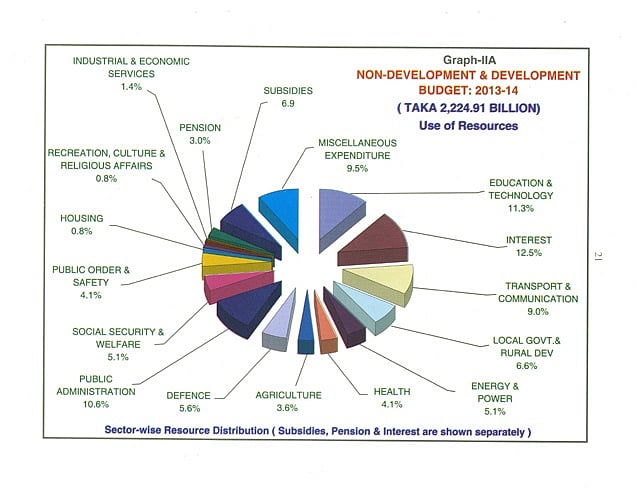
The budget for the 2013-14 fiscal stresses the curbing of inflation, encouraging private investments and rebuffing political pressures to achieve the target.
This is the last budget of the present Awami League-led Grand Alliance government, which does not have a full fiscal year ahead to carry through its proposals.
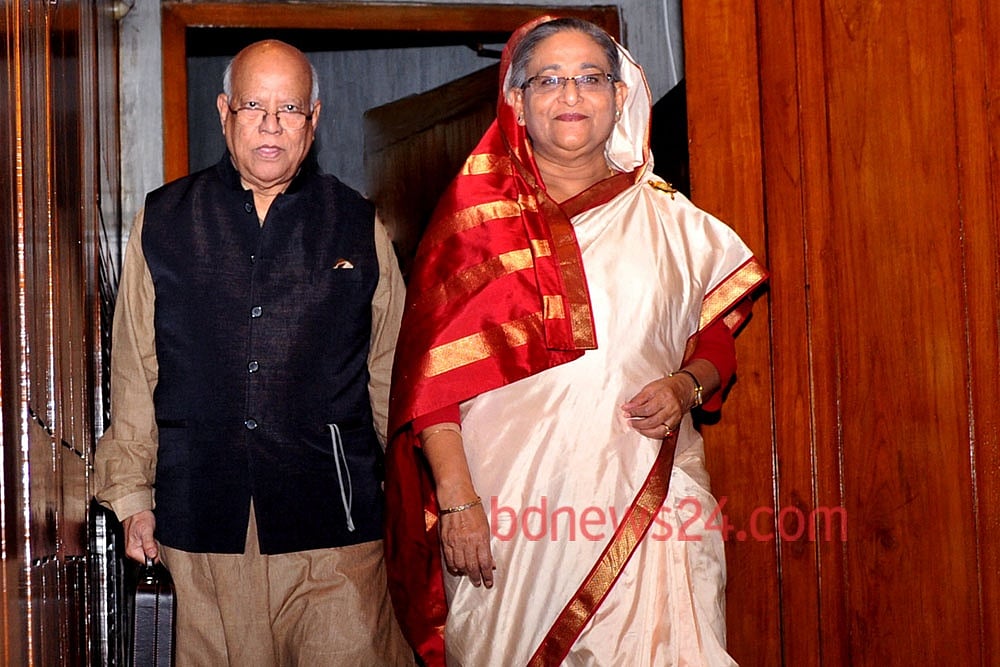
Muhith placed a Tk 2224.91 billion (or 2.22 trillion) national budget for the next fiscal year (2013-14) in Parliament on Thursday around 3:30pm.
The Cabinet had approved it in a special meeting an hour before it was placed.
Main opposition party BNP stayed away from House when the document was placed, taking ahead its legacy of absence during past presentations.
Like in the past three years, Muhith placed the budget in a digital format through a power-point presentation in the House.
The Tk 2.22 trillion national budget appeared to have been tailored for a feel-good feel apparently with an eye on the upcoming election.
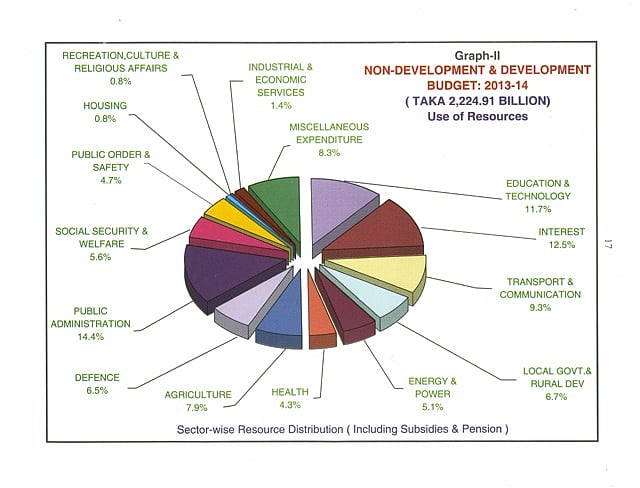
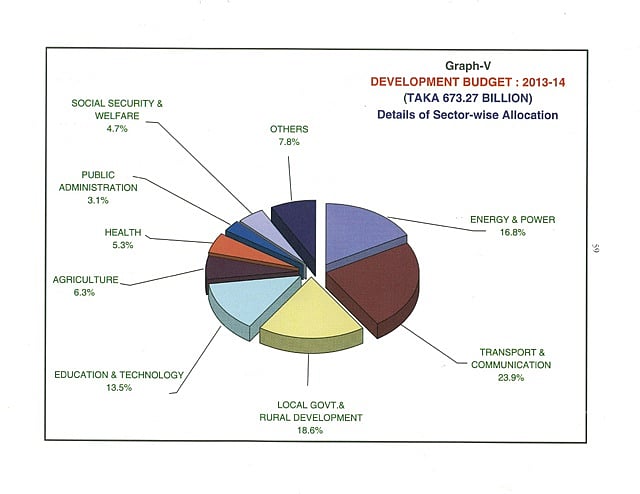
The allocation for expenditure in the development sector has been estimated at Tk 722.75 billion.
The expenditure for the government’s annual development programme (ADP) has been estimated at Tk 658.70 billion.
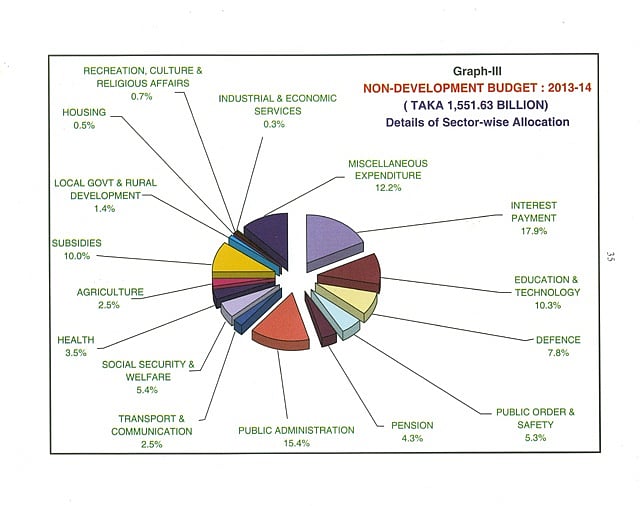
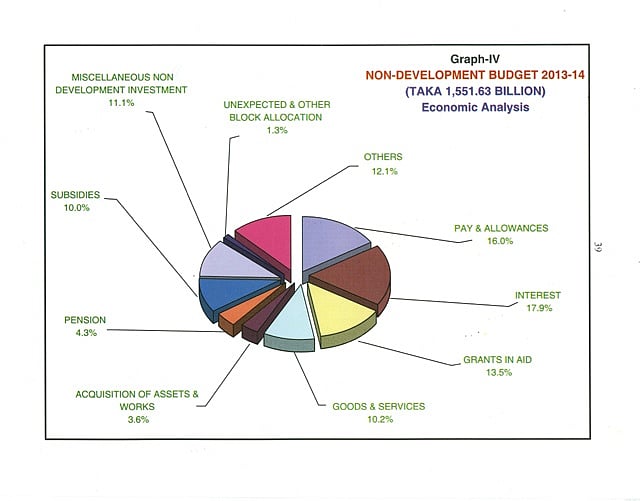
This year, the allocation for non-development and other expenditure has been put at Tk 1346.21 billion. A major part of it will go towards paying the salaries, allowances and pension of government employees.
Interests on foreign borrowings will also be paid out of this allocation.
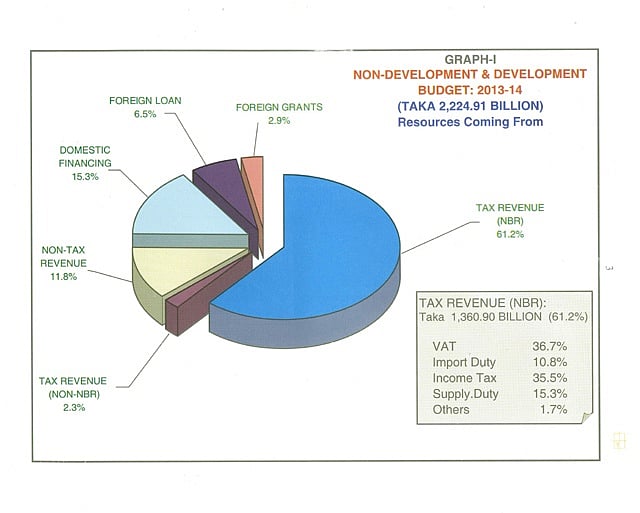
The Finance Minister hoped that total revenue earnings during the coming fiscal would be Tk 1674.49 billion or Tk 1.67 trillion.
The National Board of Revenue (NBR) itself is expected to generate Tk 1360.90 billion from income tax, import duty and value added tax (VAT).
Of the remaining revenue estimate, Tk 262.40 billion is expected to come from non-NBR sources, while non-tax revenue will be Tk 51.30 billion.
The overall budget deficit was pegged at Tk. 550.32 billion, which is 4.6 percent of the GDP.
The domestic borrowing target has been fixed at Tk 483.62 billion, which is 4 percent of the GDP.
The budget shortfall will be met through foreign borrowings, sale of savings certificates and borrowings from internal banks.
To meet the budget deficit, the government plans to generate Tk 237.29 billion from foreign sources, Tk 339.64 billion from local sources, including borrowing Tk 259.93 billion from the banking sector, Tk 79.71 billion from the non-banking sector, and Tk 49.71 billion from savings certificates.
Muhith told bdnews24.com on Wednesday, a day before the budget was placed in Parliament, that he aimed at ‘high growth and high development’. “The philosophy is: attaining a higher growth rate by increasing investment,” he said.
“I have repeatedly said the main problem of our economy is investment. In the current budget (2012-13), we wanted a gain in investment by 30 percent… couldn’t do it. This budget will be investment-friendly.”
The new budget proposes to attract both private and public sector investors. Besides, allocations for the power, energy, and infrastructure have also been increased.