


Published : 18 May 2015, 10:18 AM
Updated : 19 Oct 2022, 06:46 PM


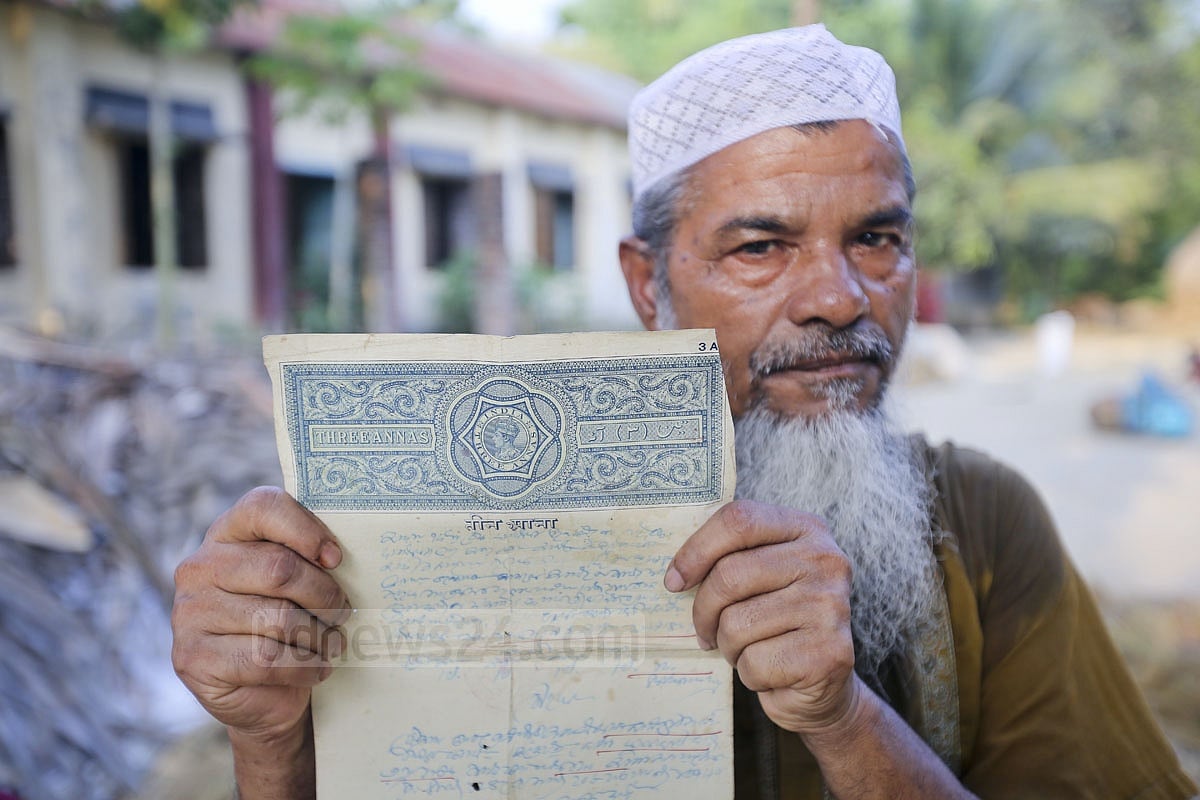
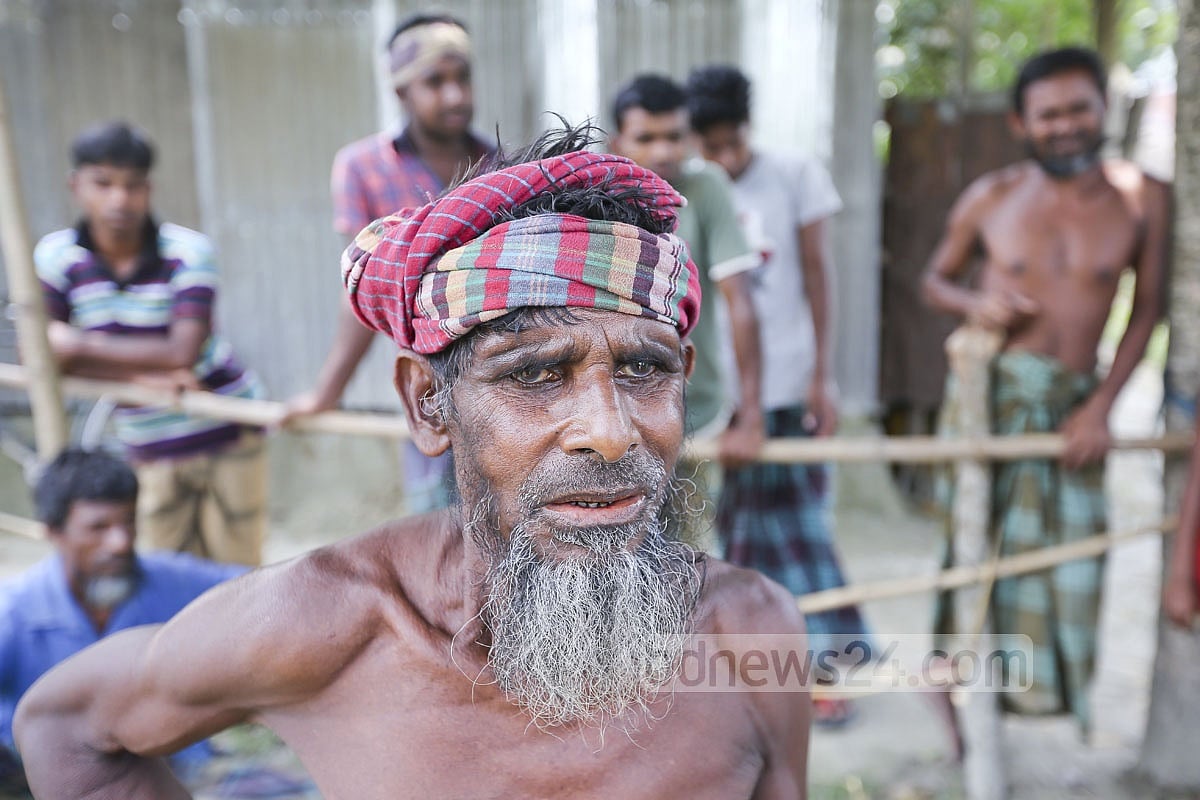
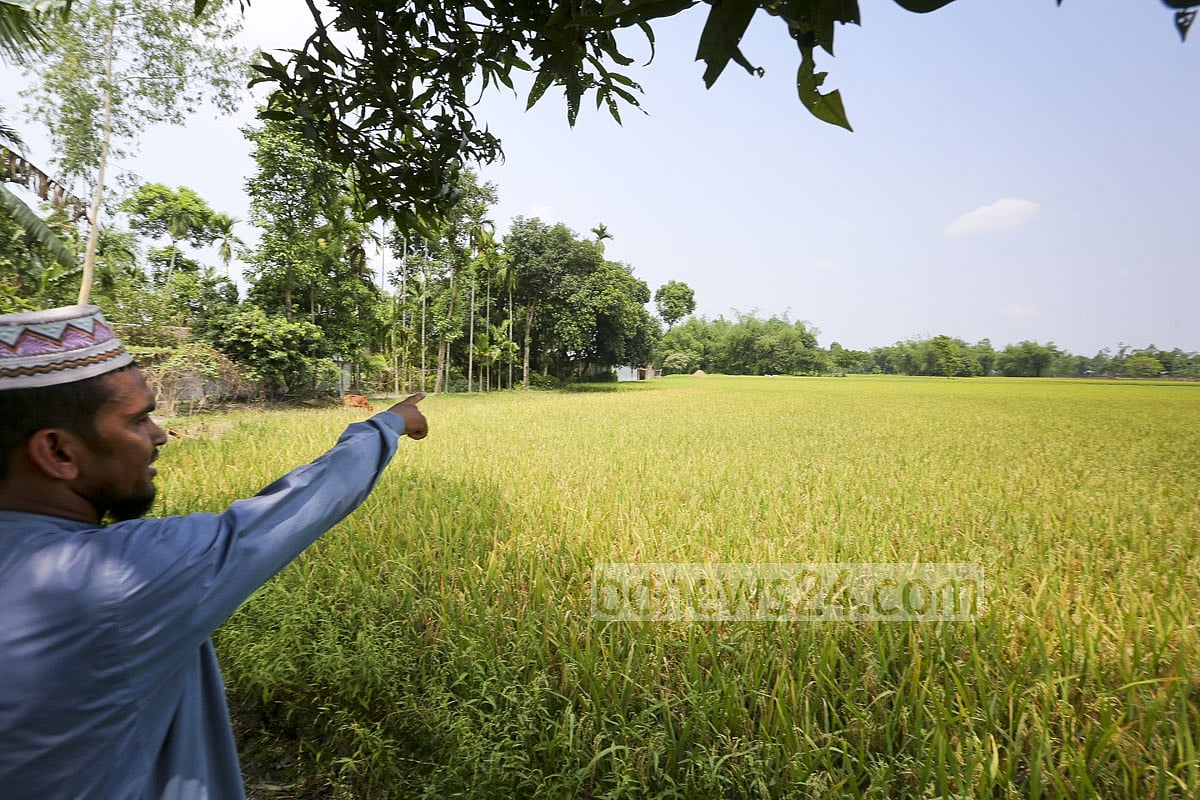
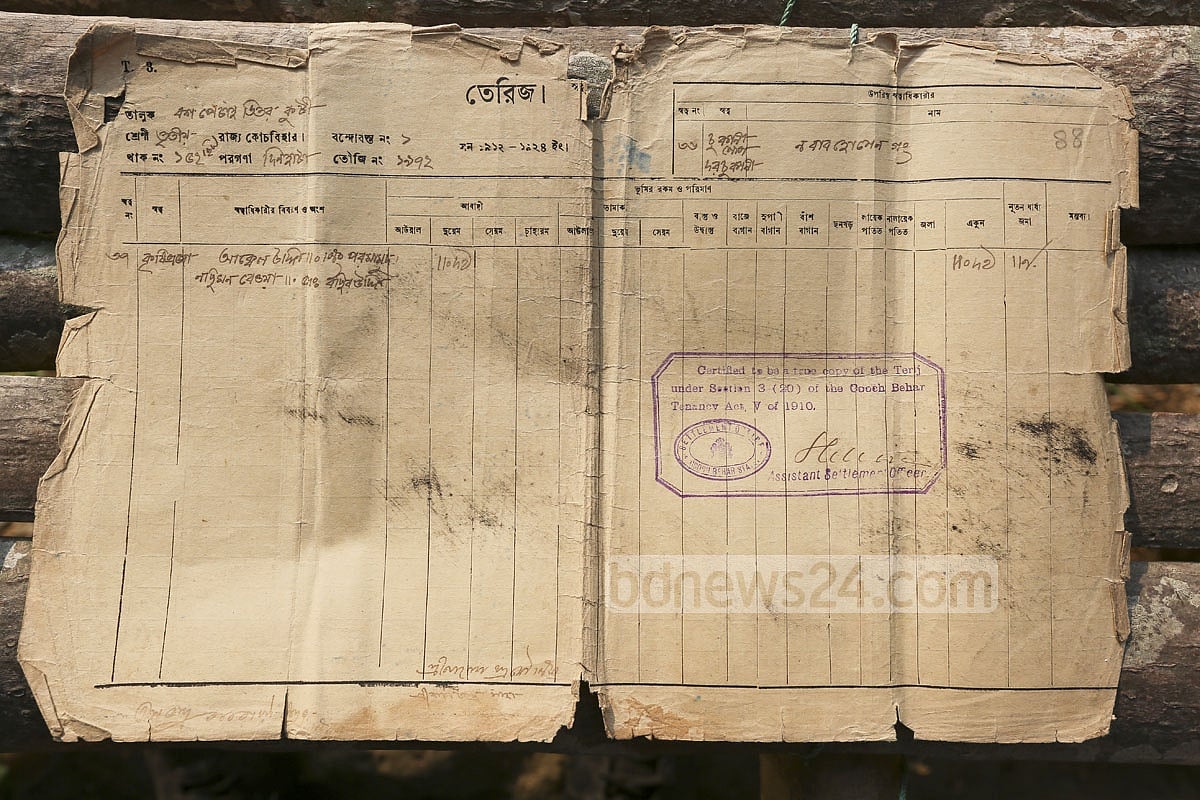

“In 1947, most lands here were sold off by the Hindus as they moved to the Indian mainland. We bought and used them for cultivation,” Md Alim Uddin, a resident of Chhoto Garholjorha-2 enclave in Kurigram’s Bhurungamari Upazila, told bdnews24.com.
Alim, a resident of India’s ‘Goyabarhi’ before 1947, moved to ‘Ajbarhi’ in Bangladesh.
“We bought this land from Bangladeshis at one point. But while the original Hindu owners had registered their sale in India, we could not register our purchase as Bangladeshis cannot go to India," said Alim.
"There were no other documents. We bought it on word of faith.
“Many we bought the land from have died. Their children are here. If they claim the land after this becomes Bangladesh, what would we do?” said Alim.
His neighbour, Md Mohiuddin says: “Many say we would have to buy the same land all over again when this becomes Bangladesh.”
They maintained possession of the land by paying taxes to the Maharajah’s estate and later to the Indian government. But that was discontinued after border complications.
“If you do not pay taxes regularly, you lose ownership of the land. We paid taxes regularly. After the Bangladesh’s liberation, my uncle was going to pay taxes. But he was detained by the BSF at the border and sent to prison.”
Islam said their family stopped paying taxes after their uncle spent three months in prison. “Recent cases like that led other enclave residents to stop paying taxes.”
“Many of us have all the old documents. But the taxes are pending. Many of these lands have also changed hands, with only agreements signed on government stamp paper.”
It was a little different for Dulal Hossain, a resident of Upenchouki enclave in Lalmonirhat’s Patgram. He was born during the 1971 Liberation War and his father died soon after.
“When my parents and uncles were alive, we had 10-12 bigha of land. My father died when I was young, my brother left for India. All our land was grabbed.”
Repeated enquiries about who grabbed their land did not elicit a clear reply.
“What’s the use of talking about it now? There are no papers. After I grew up, the elders told me that we used to own those lands.”
Dulal told bdnews24.com he would remain in Bangladesh when the enclaves are exchanged. “But I am worried about not having papers for the land.
"I dont know if I will face new problems. Most of us in the enclave have no papers.”
Matiar Rahman, a resident of the enclave right on the Indian border, says all sale and purchase of land was done on good faith but not on paper.
Mohammed Altaf Hossain heads the Dasiarcherra unit of India-Bangladesh enclave exchange committee.
" Our ancestors were all farming the lands of the Cooch Bihar Maharaja . That is how we got to possess these lands," Hossain told bdnews24.com.
He said none of their lands were registered in India after 2005. All lands sold and purchased after that were done on Bangladeshi stamp paper with local elders as witnesses.
But Abdur Rashid, a resident of Khagrabari enclave, told bdnews24.com that after 1947, that when they exchanged their ancestral lands with the Hindus, everythying was formalised. " We registered our documents properly."
Mainul Huq, chairperson of the Bangladesh unit of the committee for swap of enclaves, claimed that their committee had worked hard to ensure all those selling and buying land in the enclaves had 'some papers'.
Diptiman Sengupta, who heads the Indian part of the joint committee on swap of enclaves, says it is not true that land owners do not have any documents to prove ownership.
"Most land owners have some document or the other . Much information exists the Head Counting Reports," he said. "I don't think there will be a huge problem after the exchange of enclaves for the residents."
When asked what guidelines will be followed for land settlement in the enclaves, Kurigram district magistrate A B M Azad said they were receive definite guidelines.
"It is too early to comment on this issue now. We have not yet received any guidelines . Many other issues are linked," he said.
Normally, land owners without appropriate documents, would not be able to retain possession.
"But these enclaves are a very different kind of an area. So we cannot go just by what we are used to elsewhere. The government will surely have a special policy considering the realities here," says district magistrate Azad.













