Published : 06 Feb 2026, 09:11 AM
Updated : 21 Aug 2026, 04:33 PM


The International Crimes Tribunal has sentenced six people, including former MP Saiful Islam, to death for crimes against humanity over the shooting and burning of protesters in Ashulia, Savar, during the July Uprising.
A three-member bench of International Crimes Tribunal-2, led by Justice Nozrul Islam Chowdhury, delivered its verdict in the case on Thursday.
The other two members of the tribunal are Justice Md Manjurul Bashid and Justice Nur Mohammad Shahriar Kabir.
Of the 16 suspects in the case, another seven suspects were sentenced to life in prison, and two more to seven years in prison each.
One suspect -- Sub Inspector Sheikh Abzalul Haque -- turned state’s witness in the case and was pardoned by the tribunal.
At the time of the verdict, Abdullahil Kafi, Shahidul Islam, Arafat Hossain, Malek, Arafat Uddin, Kamrul Hasan, Sheikh Abzalul Haque and Mukul Chokder were produced before the court from jail.
Saiful Islam, Syed Nurul Islam, Md Asaduzzaman Ripon, AFM Sayed, Mohammad Masudur Rahman, Nirmal Kumar Das, Bishwajit Saha and Roni Bhuiyan were shown as absconding, and the trial continued in their absence.
Following the verdict, prosecutor Mizanul Islam said the tribunal had ordered the confiscation of all assets belonging to Saiful Islam.
“The court has directed that his assets be sold and the proceeds handed over to the families of the victims,” he said.
Several of the convicts have also been fined, with penalties ranging from Tk 5,000 to Tk 100,000.
WHAT HAPPENED IN ASHULIA
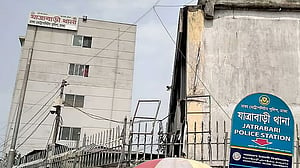
According to the case dossier, police opened fire on protesters outside Ashulia Police Station in Savar on Aug 5, 2024 -- the day the Sheikh Hasina government fell amid a mass uprising.
Seven people -- Sajjad Hossain Sajal, As Sabur, Tanzil Mahmud Sujoy, Bayezid Bustami, Abul Hossain, Omar Faruk and Mohammad Shahabul Islam -- were killed.
The charges state that after the shooting, the bodies were piled into a van, along with at least one critically injured person who was still alive. Petrol was then poured on the vehicle and it was set ablaze.
Quoting the tribunal’s observations, prosecutor Mizanul Islam said the crime was marked by “exceptional brutality”.
“This kind of cruelty has been rare since Hitler’s gas chambers,” he said.
“People were killed and then their bodies were burned under the leadership of law-enforcing officials and an MP.”
He said the bodies were so badly mutilated that relatives could not identify them or conduct burials on time.
“One victim was alive when he was thrown into the fire. This was done to conceal the murders and atrocities.”
Mizanul credited local journalists and modern technology for bringing the crime to light.
“Because videos were published, we were able to uncover the truth and bring the perpetrators to justice,” he said, adding that further killings in the area remain under investigation.
Another prosecutor, Gazi MH Tamim, said the tribunal had declined to apply mitigating provisions under Section 5(2) of the ICT Act.
“Those sentenced to death are not eligible for mitigation,” he said.
“None of them showed any restraint or reluctance in organising or carrying out the crime.”
Responding to questions about senior police officers receiving life sentences, Mizanul Islam said the prosecution would review the full judgment before deciding its next steps.
“It appears the tribunal may have considered whether those officers were physically present at the scene during the burning of the bodies,” he said.
“We proved their involvement and the court accepted that. We will study the judgment and decide accordingly.”
On the pardon granted to Sheikh Abzalul Haque, the prosecutor said it was conditional.
“He was released because he made a true and complete disclosure of the incident, as required by the tribunal,” he said.
CASE SUMMARY
A case over crimes against humanity linked to the Ashulia incident was filed with the ICT on Sept 11, 2024.
The prosecution submitted formal charges against 16 suspects on Jul 2, 2025, along with 313 pages of documents, 168 pages of documentary evidence, and two pen drives, naming 53 witnesses.
After accepting the case, the tribunal issued arrest warrants for eight absconding accused and ordered notices to be published for their appearance.
Charges were framed on Aug 21, and the trial began with the opening statement of Chief Prosecutor Mohammad Tajul Islam on Sept 14.
Testimony started the following day, with relatives of victims appearing as the first witnesses.
In total, 24 witnesses, including the investigation officer, testified over 22 working days, with hearings concluding on Jan 12 this year.
Sub-Inspector Sheikh Abzalul Haque later testified as a prosecution witness after pleading guilty, while another accused, Arafat Hossain, appeared as a defence witness.
After arguments and counter-arguments concluded on Jan 20, the case was kept pending for verdict, which Tribunal-2 announced on Feb 5 -- its first verdict since formation.