


Published : 10 Apr 2013, 10:38 AM
Updated : 09 Aug 2022, 10:29 AM


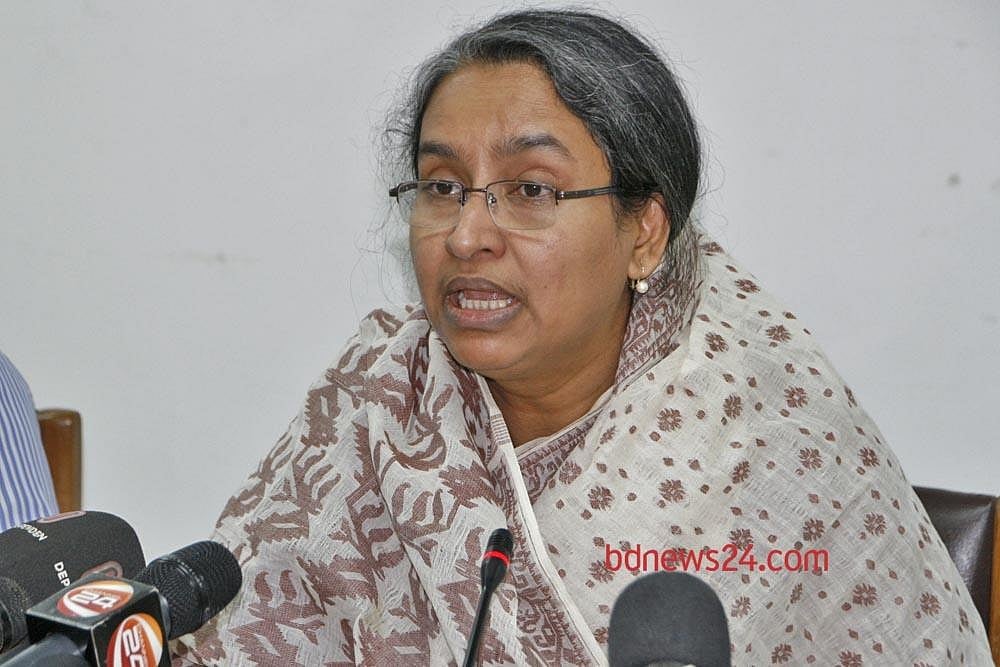
Foreign Minister Dipu Moni briefs the press at her office on Friday. Photo: asaduzzaman pramanik/ bdnews24.com/ Dhaka, October 19, 2012
Her briefing has been scheduled in the backdrop of growing concerns over escalating violence and disruptions caused by an endless series of opposition strikes and the surfacing of the little-known fundamentalist group Hifazat-e Islam.
Last month she briefed foreign diplomats after the second verdict of international crimes tribunal handed down a life sentence to Jamaat leader Abdul Quader Molla for crimes against humanity during 1971 War of Independence.
The verdict upset many who felt Molla deserved a harsher punishment.
Jamaat activists also resorted to much violence demanding abolition of the war crimes trials.
The Foreign Minister briefed the diplomats with videos of Jamaat violence.
The diplomats were keen to know whether government planned to ban Jamaat, whether there were plans to deploy the army to control the violence and the funding of violent activities.
The Foreign Minister told them the government was looking into the financing behind violence and also considering the ban on the Jamaat-e-Islami.
Moni hoped that the international community would take ‘a holistic perspective’ about the ongoing trials and its significance for Bangladesh , rather than take a legal view of the issue.
As the violence and shutdowns continue, many ambassadors in Dhaka have expressed their concerns, the latest being the one representing the European Union.
After the Chittagong-based Hifazat has demanded banning women appearing in public with men, a halt to setting up of statues and punishing those they describe as atheist bloggers, the diplomats are keen to figure out whether there's a possibility of a revival of Islamic fundamentalism and how the government proposes to handle it.
Japanese ambassador Shiro Sadoshima also issued a media statement expressing his concerns.
Dipu Moni's briefing will be held at Hotel Ruposhi Bangla.







