


Published : 15 Mar 2015, 08:07 PM
Updated : 19 Oct 2022, 06:38 PM


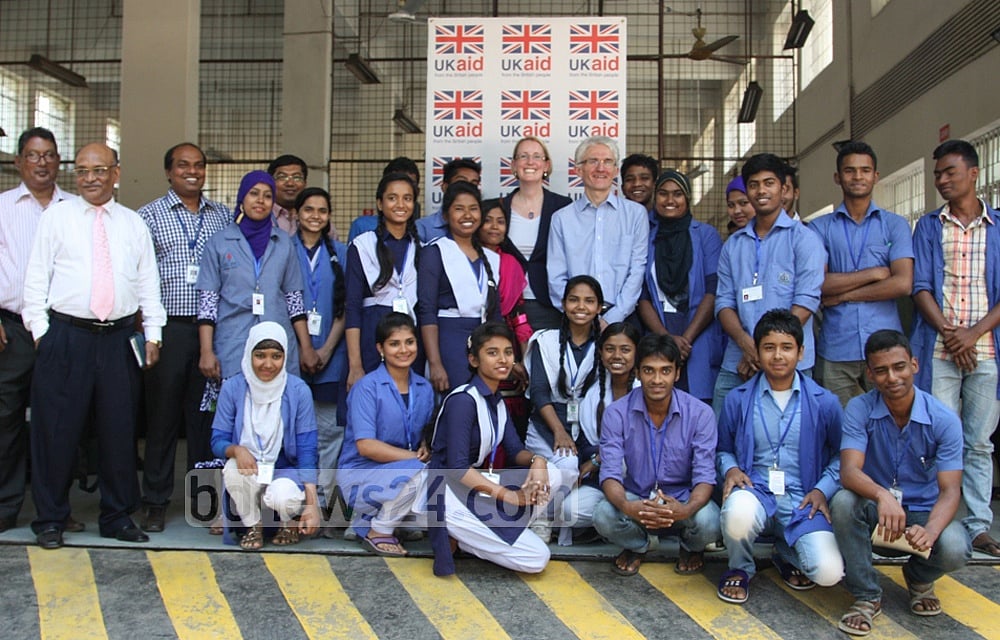
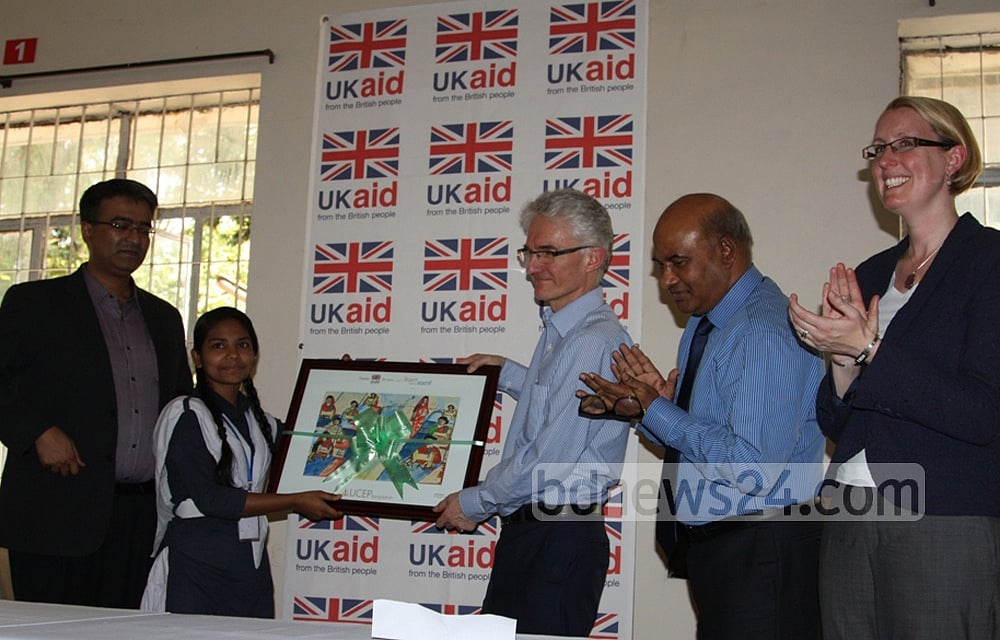
Swapna Akhter who lost her parents at the age of three had finally ended up in this Underprivileged Children’s Educational Programs’ (UCEP-Bangladesh) technical education centre at Dhaka’s Mirpur.
She looked confident on Sunday when she told the visiting Permanent Secretary of the UK’s Department for International Development (DFID) Mark Lowcock that she would pursue diploma engineering even after completing her one-year vocational training at UCEP.
Lowcock was “encouraged” to see Akhter and many others like her during the visit, first after he arrived in Dhaka on a two-day visit on Sunday.
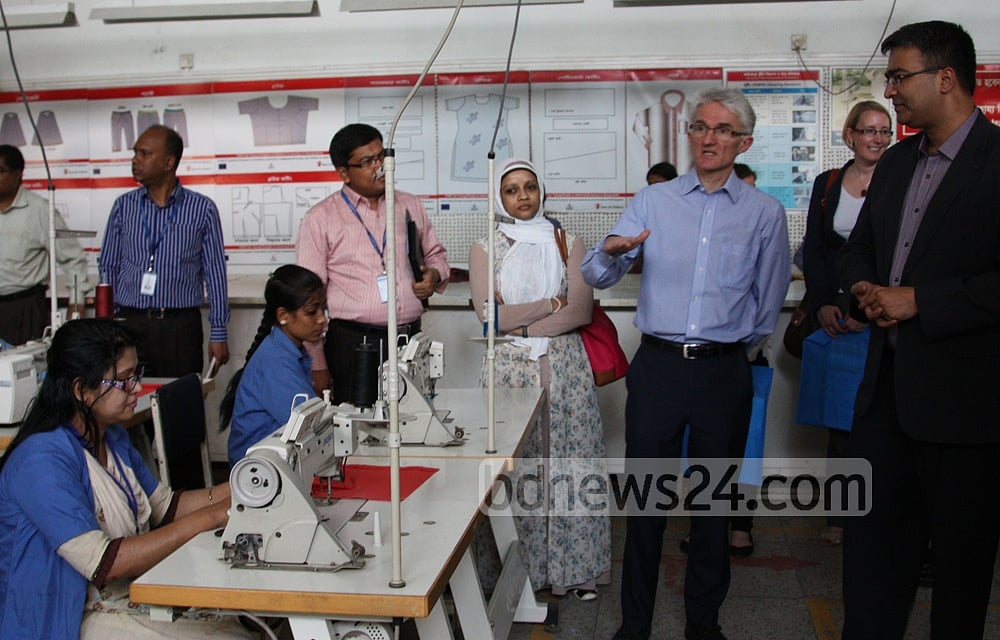
The UCEP, which has now expanded across Bangladesh, is teaching and training more than 40,000 students from its 63 schools including 10 vocational training schools based in divisional towns.
It received £20 million from the British government for five years.
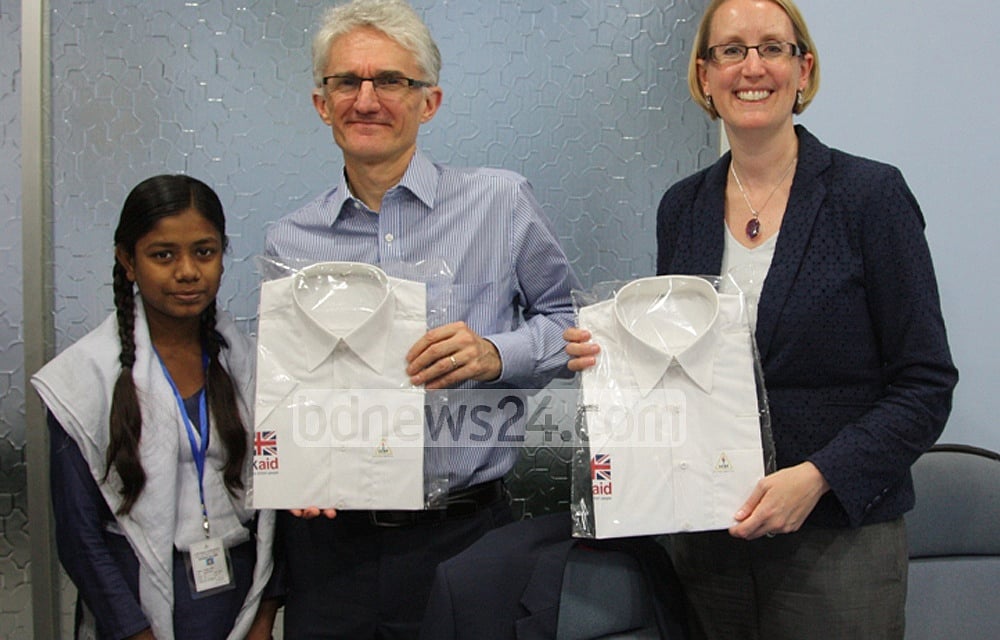
“UK government is very proud and privileged to support UCEP,” Lowcock, the most senior civil servant in the department, said.
They are learning to make a living and support their families, he said after talking with the students.
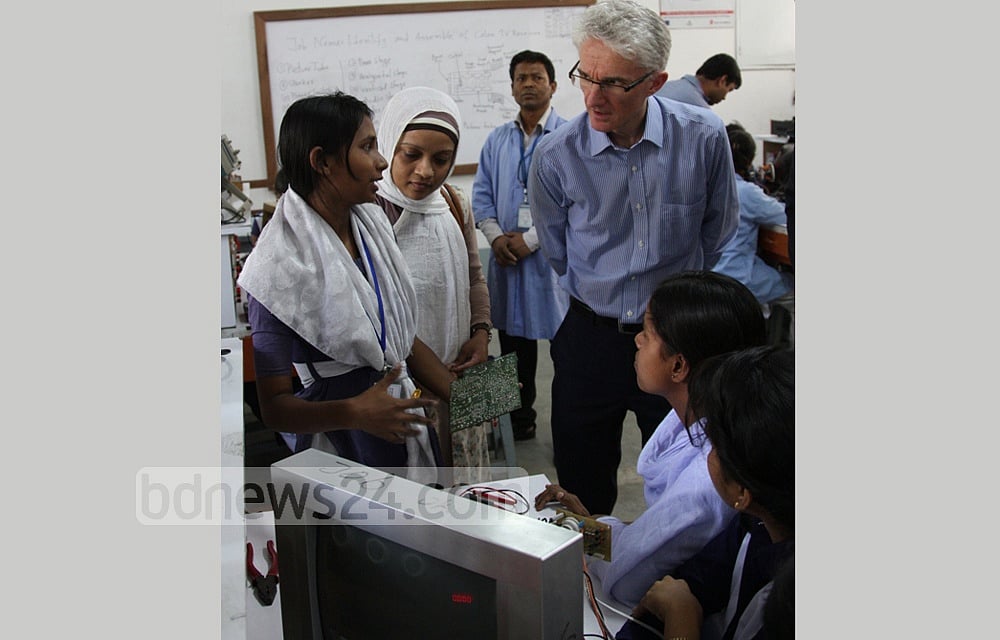
Tania Akhter was working with a television at a lab with a group of her classmates.
Her instructor Fency Chakma told bnews24.com that they were learning how to repair and assemble televisions.
“They come here after completing class VIII from our (UCEP) general schools and then have an one year training. They get very good jobs in different companies,” she said.
Chairman and Managing Director of Nippon Group Mohabbat Ullah told the British secretary that he had employed many from this school to his own businesses.
“They are trained. I have provided them (with jobs) to many other organizations when I was a president of Bangladesh TV Manufacturers Association,” he said.
Mohammad Jubaer Hossain, Managing Director of Felix Controls Limited that offers building management system to fire detection and protection system to security system, also said that he was “comfortable” to employ students trained by the UCEP.
“It is difficult to get technically skilled people. Anytime I need them, I get from here. It takes two months for them to understand our job,” he said.
The DFID Permanent Secretary said Bangladesh would “have very bright future if large number of young people can be trained”.
The UK is the largest donor in Bangladesh with its focus on education, health, poverty alleviation and climate change.
As the world is set to embrace a new set of development goals in Sep this year when the MDGs will end, the Permanent Secretary said the UK’s focus would continue to be the same: “we want to ensure that nobody left behind”.










