



Published : 17 Sep 2013, 09:21 PM
Updated : 09 Aug 2022, 11:07 AM


Bangladesh’s defence sector faces a ‘very high risk’ of corruption due to lack of parliamentary oversights, says a report of the Transparency International’s UK chapter.
The study, a first of its kind, analysed 82 countries that accounted for 94 percent of the world's defence budget.
It grades countries by potential risk of corruption (called 'corruption risk bands') after detailed assessments of seven areas in which it says parliaments can play a vital anti-corruption role.
It says two-thirds of parliament and legislatures fail to exercise sufficient control over their Ministry of Defence and the armed forces.
Twenty-one countries including China, Malaysia, Pakistan, Singapore, Turkey have been placed in the ‘very high risk’ category with Bangladesh.
India has been placed at ‘high risk’ category just above Bangladesh.
It has been rocked by huge defence purchase scandals in recent years and even a former air chief is facing indictment for his role in securing kickbacks for his relatives in a helicopter purchase deal.
Fourteen countries – Algeria, Angola, Cameroon, Cote D'Ivoire, Democratic Republic of Congo, Egypt, Eritrea, Iran, Libya, Qatar, Sri Lanka, Saudi Arabia, Syria, and Yemen – were placed at the bottom of the corruption risk bands.
Only four nations—Australia, Germany, Norway, and the United Kingdom—were amongst the top performers, with very low levels of corruption risk, followed by twelve countries which are at low risk due to better performance by their parliaments.
This includes the United States.
It estimates the global cost of corruption in the defence sector to be at least $ 20 billion per year.
“It did not say corruption is going on. The report relates lack of monitoring and the risk of being corrupt,” Iftekharuzzaman, Executive Director of TI’s Bangladesh chapter told bdnews24.com.
He said in a democracy, the defence sector should be ultimately under full control of the parliament.
He said Bangladesh was considered as “very high risk” mainly due to its lack of oversight in budgetary process, auditing and purchase.
“We always see defence budget occupies the smallest paragraph of the budget document. You will not find details. Lawmakers do not debate on defence issues.
“There is also lack of openness. They do their own audit, but there is no provision of external audit”.
He said every country had ‘a secret budget’ particularly for the defence sector, but parliaments had full control over it.
“Bangladesh scored zero in this (secret budget) area,” he said.
“Our defence purchase also bagged low score”.
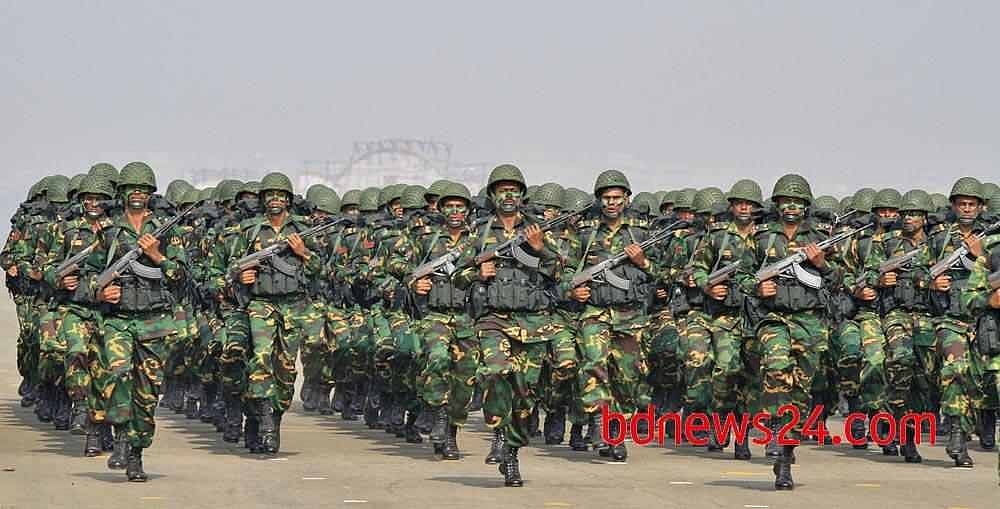
File Photo













