Published : 06 Sep 2026, 07:31 AM
Updated : 16 Sep 2026, 11:48 AM


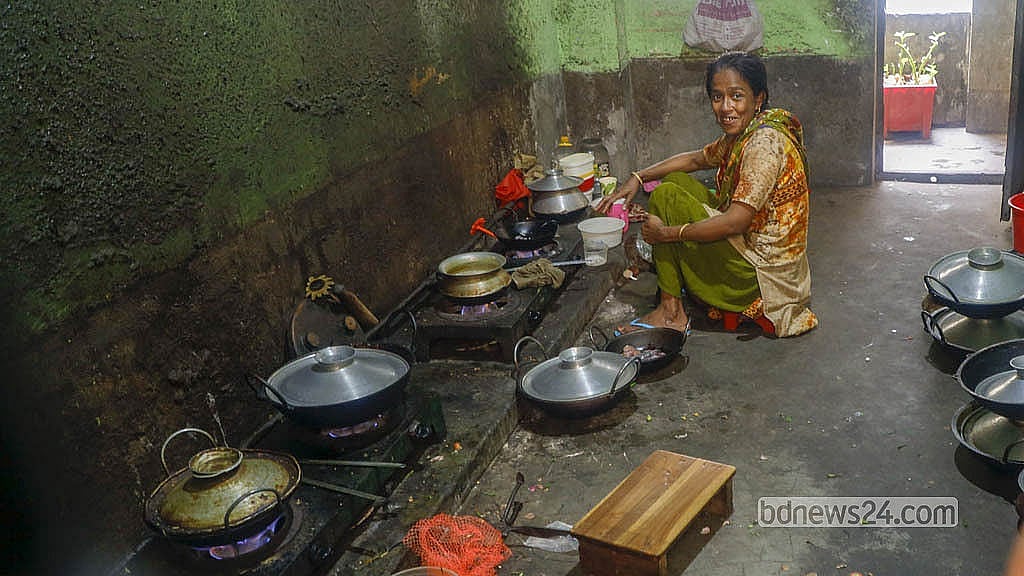
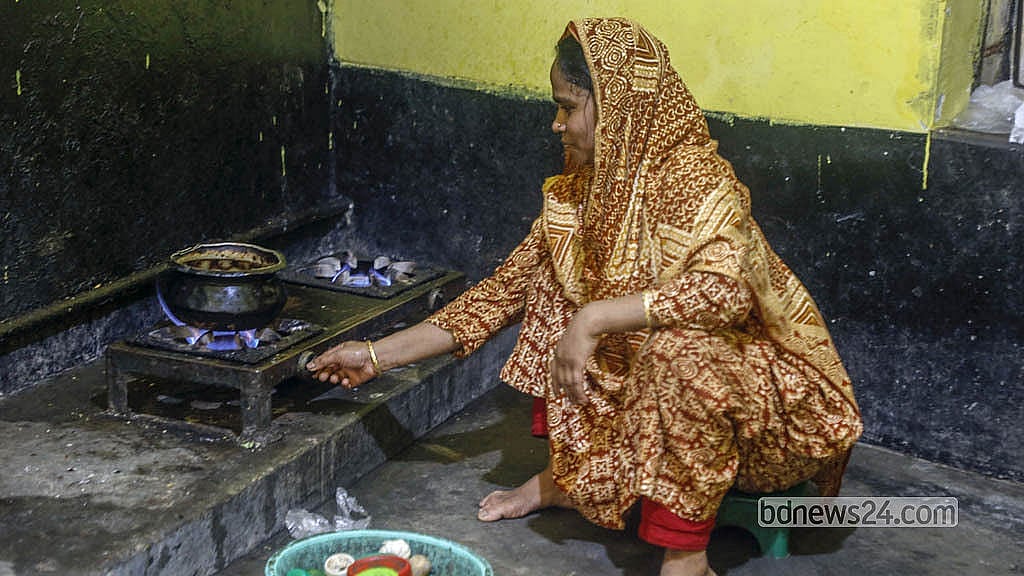
As people struggle through another spell of punishing heat, Shila spends about 10 hours a day cooking in other people’s homes.
The heat of late summer is oppressive enough. Standing over a stove makes it worse.
But stopping work is not an option. Shila, who identified herself with a single name, needs the income to support her family. After cooking all day in the homes where she works, she returns at night to prepare food for her husband and children.
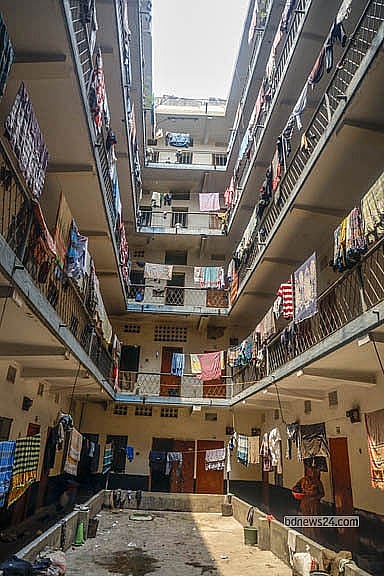
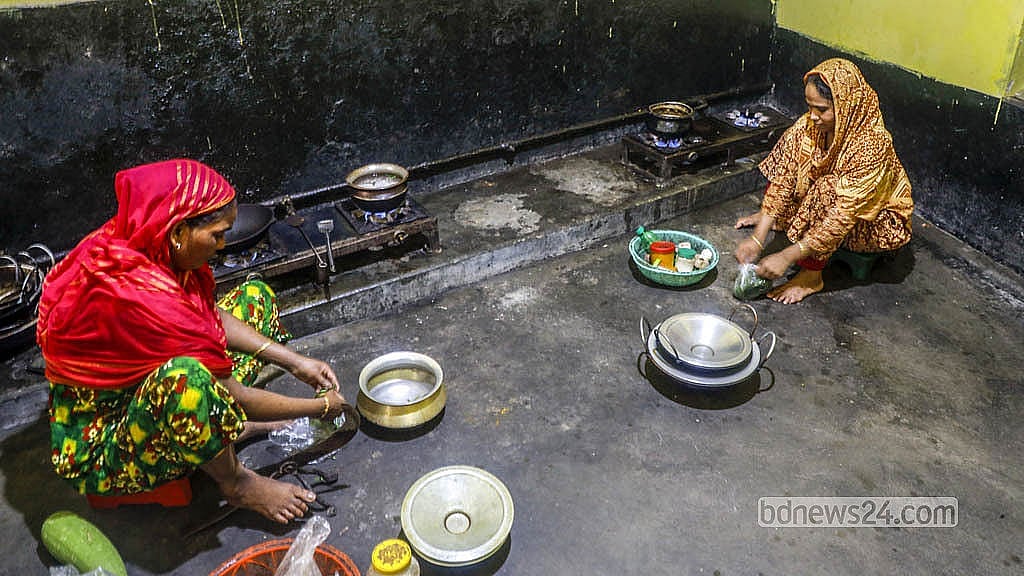
She lives in a rented house at Rayerbazar in West Dhanmondi, where seven or eight families share a single kitchen.
The rooms are separate, but the cooking space is communal. Families take turns, meaning the stove is in use for much of the day. The small room can feel like a kiln.
“The kitchen has a gas stove, but the window is tiny. It’s so small that hardly any air gets in,” Shila told bdnews24.com.
“Outside it’s hot, then there’s the stove. Sometimes it feels as hot as hell.
“I cook in other people’s houses all day and then cook again in this little kitchen at night. When I go to bed my body feels as if it is burning. The heat makes me dizzy and sometimes I get a fever.
“But what can I do? I have to work.”
For millions of women in Bangladesh, the kitchen is becoming an overlooked front line in the country’s struggle with rising temperatures.
The danger is not only smoke.
Heat radiating directly from a flame or hot metal surface, and the hot air generated by cooking, can put additional strain on the body. During a heatwave, that exposure comes on top of already extreme temperatures.
Health specialists say prolonged exposure can contribute to dehydration, heat rash, dizziness and fluctuations in blood pressure, while pregnant women may face additional risks.
Naushin Mouli, who works at the BRAC James P Grant School of Public Health, says her grandmother died from lung cancer in 2008 after years of cooking over a traditional wood-burning stove.
“Doctors told us that long-term exposure to the intense heat and smoke from the stove had caused her lung cancer,” she said.
Mouli believes the wider problem receives too little attention.
“Women may become ill or even die from exposure to smoke and heat without understanding the underlying cause,” she said.
“People do talk to some extent about the health risks from smoke. But the danger posed by intense stove heat combined with heatwaves is still ignored, even within families.”
What Should a Kitchen Look Like?
The problem begins with design.
In cities and villages alike, kitchens are often small and poorly ventilated. Some have thin tin or tiled roofs that trap heat. In Dhaka’s slums, several households may share tin-roofed cooking spaces where stoves operate almost continuously.
Even in conventional homes and flats, chimneys, extractor systems and stoves designed to reduce heat build-up are far from universal.
A World Bank report, "Bangladesh: Healthier Homes through Improved Cookstoves", says improved cooking stoves can cut harmful fine-particle pollution inside kitchens by more than 20 percent and carbon monoxide by as much as 90 percent.
The report cites World Health Organization estimates linking household cooking pollution to millions of deaths worldwide each year, including a substantial burden in Bangladesh.
It also found that conventional stoves can waste between 85 and 95 percent of the heat they produce, adding further warmth to already hot kitchens. More efficient stoves can reduce that waste.
Bangladesh’s National Building Code sets minimum standards for kitchens.
For a two-room home with a separate kitchen, the space should measure at least 3.25 square metres and be at least 1.6 metres wide. The minimum height should be 2.15 metres.
But architect Anup Kumar Basak of the firm Framework says many modern flats in Dhaka compromise heavily on kitchen space.
Most mid-sized flats of around 1,100 to 1,200 sq ft have kitchens measuring only about 5ft by 7ft or 7ft by 9ft, he said, with limited window space.
A properly designed kitchen in such a flat should be large enough for two or three people to work at the same time, he argues.
“In a flat of that size, a kitchen of about 9ft by 11ft, with a large window, would be more appropriate,” he said.
Basak says older houses often had better ventilation.
“Buildings from 20 years ago were less likely to compromise on the basic structure,” he said. “Kitchens had open windows that allowed heat and smoke to escape.
“Now Thai-style glass windows are common, but half the openings remains blocked. A grille can allow much more hot air to escape.”
He says kitchen orientation also matters.
During summer, prevailing winds generally come from the south-east, so placing a kitchen towards the north-west of a building can help warm air move out naturally.
Open-plan kitchens can also improve air circulation in single-family homes, he said.
Where possible, kitchens should have chimneys, extractor fans and induction or other lower-heat cooking systems, while maintaining some visual and physical connection with the rest of the home.
Research by BRAC’s Research and Evaluation Division has similarly found that improved cookstoves fitted with chimneys, together with better kitchen layouts, can make cooking more comfortable by directing heat and hot gases outside.
Greater efficiency in fuel combustion and heat transfer also reduces the excess warmth trapped indoors.
The ‘Invisible Heat Zone’
The burden falls disproportionately on women because they spend far more time doing unpaid household work.
The Bangladesh Bureau of Statistics data from the 2021 Time Use Survey show women spend about seven hours a day on unpaid work, with cooking and food preparation among the main tasks.
Their unpaid workload is several times greater than men’s.
Research by the Bangladesh Institute of Development Studies has estimated the economic value of unpaid household work at about 15 per cent of gross domestic product.
But its physical cost remains largely invisible.
Farzana Misha, an associate professor at BRAC James P Grant School of Public Health, describes kitchens as “invisible heat zones”.
Women, she says, are caught between increasingly severe heatwaves driven by climate change and the additional heat generated by cooking.
“As soon as a stove is lit, the air quality in the kitchen starts deteriorating,” she said.
“Women then have to sit or stand in that environment for hours while they cook.”
The problem exists whether families use wood-burning stoves, natural gas or LPG, she said.
One response has been the introduction of improved “Bondhu Chula” stoves, designed to keep smoke away from the person cooking and reduce pollution.
But the scale of the challenge remains much larger than any single intervention.
Impact on Women’s Health
Temperatures in Bangladesh have risen sharply in recent years, and specialists say heatwaves are compounding the effects of kitchen heat.
One experimental study examining temperature, humidity and carbon monoxide and carbon dioxide levels during different cooking methods found that temperatures around a stove could rise by about 10C while food was being prepared.
During a heatwave, that means someone cooking may be exposed to temperatures substantially higher than those outside.
Dr Kamrul Hasan, head of medicine at the Government Employees Hospital, says heat-related health complaints among women have increased significantly in recent years.
Some symptoms appear quickly.
They include dizziness, nausea, fainting, excessive sweating, a racing heartbeat, headaches, weakness, burning sensations in the body and red eyes. Heat can also worsen complications from diabetes.
Other problems develop more slowly, he said, including breathing difficulties, lung infections, eye problems, kidney disease, urinary tract infections, cardiovascular disease and other chronic conditions.
Pregnant women may be particularly vulnerable.
“When severe heat causes dehydration in pregnant women, the level of amniotic fluid can fall, which can create complications during childbirth,” Hasan said.
He said women may also experience hot flushes and disruption to their menstrual cycle during extreme heat, together with severe exhaustion and, in prolonged cases, mental distress.
For women who spend much of the day cooking, exposure is repeated rather than occasional.
A domestic worker such as Shila may cook in several kitchens before returning to another stove at home.
The risk is particularly acute where ventilation is poor and rest breaks are limited.
What Can Be Done?
Dr Raka Mustari Khan, a specialist in breast, colorectal and laparoscopic surgery at the National Institute of Burn and Plastic Surgery, says extreme heat can also affect breastfeeding mothers.
Heavy sweating while cooking near a hot stove can contribute to dehydration and potentially reduce breast milk production, she said, increasing the risk that a baby does not receive enough milk.
She says both urban gas stoves and traditional clay stoves used in villages can expose women to significant health risks.
Her advice is straightforward: open kitchen windows, improve airflow and use fans or extractor systems where possible.
She also recommends light, loose clothing, cool showers and using damp cloths or lightly wet clothing to help bring body temperature down.
Regular hydration is essential, she said, suggesting frequent water intake throughout the day and a daily total of at least two to three litres for most people, depending on individual circumstances.
But specialists say the issue cannot be left to individuals alone.
Dr Mushtuq Husain, an advisor at the Institute of Epidemiology, Disease Control and Research, says the impact of climate change on women’s health needs much greater policy attention.
Bangladesh’s National Guideline on Heat-Related Illness, published in 2024, calls for the health system to be prepared for heat-related disease, with particular protection for vulnerable groups and access to emergency care.
But Dr Husain says he is unaware of substantial policies addressing women’s occupational exposure to extreme heat, including specific provisions for heat-related leave or protection for workers.
“Women and men may be roughly equal in population, but women remain much further behind in access to healthcare,” he said.
Health decisions within households are also still often controlled by men, he added, while women themselves frequently suppress or ignore their own symptoms.
That combination makes women particularly vulnerable to climate-related health risks.
“The attention being given at present is not enough,” Dr Husain said.
“We need more positive, women-friendly initiatives.”
For Shila, however, the problem is immediate.
Tomorrow will bring another day of cooking in other people’s homes, another evening in the cramped communal kitchen in Rayerbazar — and another round of heat she cannot afford to avoid.