


Published : 18 Dec 2012, 04:40 AM
Updated : 09 Aug 2022, 04:36 PM


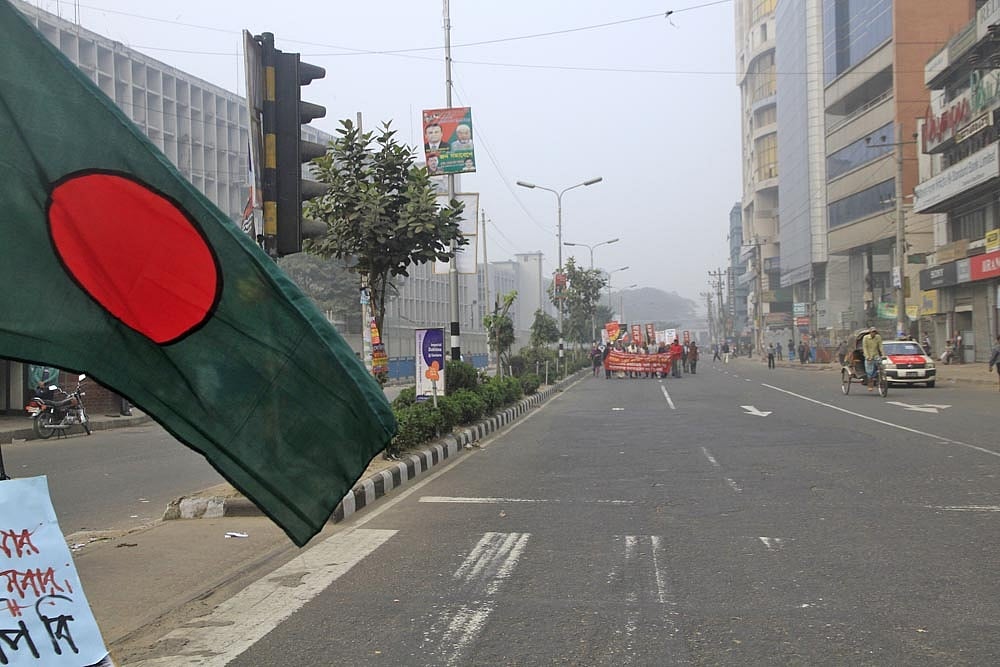
The daylong shutdown called on by Communist Party of Bangladesh (CPB) and Bangladesher Shamajtantrik Dal (BSD) demanding a ban on ‘all communal political parties’ including Jamaat-e-Islami begun peacefully on Tuesday.
The Gonotantrik Baam Morcha, a combine of the left-leaning parties, has also backed the shutdown on the same issues.
CPB and BSD activists could be seen in occasional processions in the capital since morning, national flags in hand.
Traffic in the capital was thin. Office-goers were seen waiting for transport. CNG autorickshaws and hand-pulled rickshaws were seen plying in the streets.
Police, deployed at key points, were diverting vehicles from Paltan, the Rupashi Bangla and some intersections.
There was no report of violence so far.
Apart from the demand for a ban on religious parties, the Leftists were pressing for a speedy disposal of war crimes trial and they wanted freedom fighters to back that up.
There were seven other demands -- punishement after arrest of the owner of Tazreen Fashions Limited and other government officials responsible for the tragedy, ensuring workplace safety in all garment units, ensuring workers rights on pay and trade unions, and reducing prices of power and transport fare.
Eight top-ranking Jamaat leaders are facing trial at the two war crimes tribunals. Hearing in some of the cases are nearing their end.
The Jamaat enforced a daylong shutdown on Dec 4 to press for the release of their leaders.
"Only Razakars will try to drive their cars and keep their shutters open during the shutdown. The liberation-loving nation cannot but support this shutdown enforced over a national issue," CPB General Secretary Syed Abu Jaffar Ahmmad has said.
He said the Left was "not attacking religion but the use of religion in politics".
Journalists were told that transport workers' organisations extended their supports to the shutdown.
The Bam Gonotantrik Morcha is also backing the shutdown, demanding rescinding the decision to hike price of oil, power and gas, ensuring workplace safety at garment factories, arrest of owners and staff of factories where the workers died, speedy completion of the war crimes trial and an end to use of religion in politics, cancellation of Rampal power plant, expulsion of Asia Energy from Bangladesh, and implementation of Phulbari deal.













