


Published : 09 Jul 2013, 07:29 AM
Updated : 09 Aug 2022, 10:53 AM


The report is part of the international study by Transparency International, the Berlin-based global non-profit group which studies corruption around the world.
The ‘Global Corruption Barometer 2012’, released globally on Tuesday, put political parties on top of the corruption list followed by the police and judiciary. The anti-graft watchdog surveyed 114,270 people across 107 countries for the report.
In Bangladesh, they carried out the study across 1,822 Thanas from Feb 13 to Mar 15 this year.
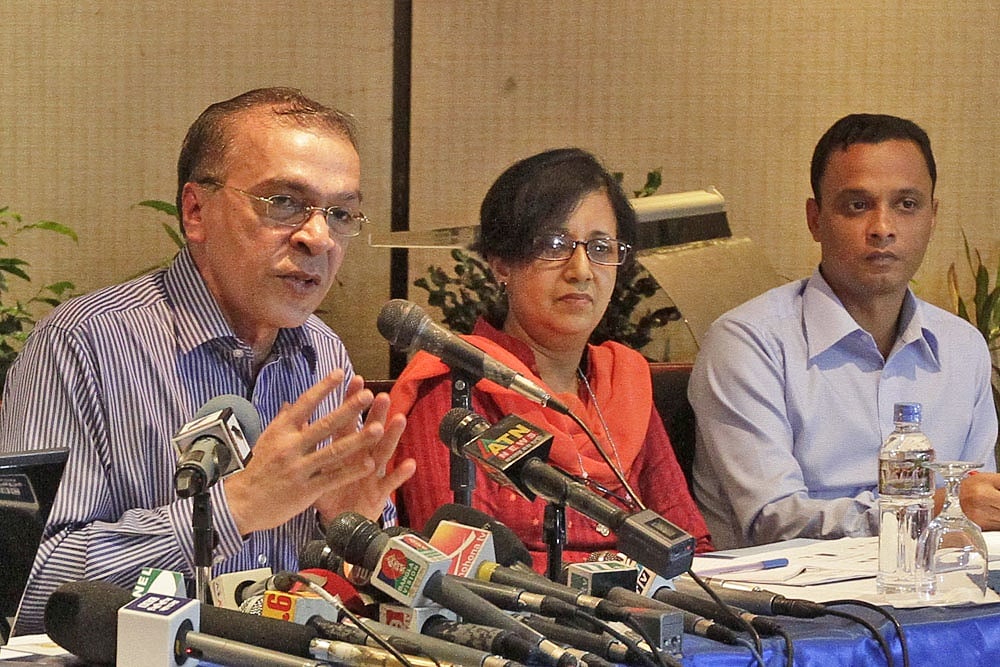
The contents of the report were disclosed at a press conference at the BRAC Centre Inn in Dhaka. It said 60 percent of people interviewed in Bangladesh thought that corruption increased over 2011-12.
However, the respondents told from their personal experience that exchange of bribes had decreased in eight sectors compared to that of 2010.
These sectors include police, judiciary, land, registration and permit, health and treatment, education, and service and tax sectors.
The Transparency International’s Bangladesh chapter observed that the people were willing to combat corruption.
“But they are not getting any response from the government,” TIB Executive Director Iftekharuzzaman said.
Ninety-three percent of Bangladeshi interviewees thought that police were the most prone to bribery, judiciary second with 63 percent and land services third with 44 percent.
Fifty-eight percent thought that bribe was mandatory to obtain services.
Those surveyed said in comparison to 2010, 2012 saw lesser rate of bribes.
Seventy-six percent of the respondents thought that corruption in the public sectors was the major problem while 40 percent thought personal relationships were very important in public services.
On the other hand, 90 percent of them thought that the government was prone to influence by special quarters, or political parties or special business groups.
Ninety-two percent of the interviewees thought that the general people can contribute against corruption and most of them were eager to play a part.
Thirty-one percent thought that it was best to complain to the public representatives about corruption. And 18.8 percent trusted anti-corruption institutions while 11.4 percent favoured informing Anti Corruption Commission about corruption.
Thirty-two percent thought that a government intervention in corruption would be ineffective.
However, in the 2010 survey, 50 percent had thought government actions were effective against corruption – indicating a lack in trust in the government.
The 2012 survey observed that 26 percent of the respondents lacked trust in government steps.










