


Published : 17 Nov 2018, 03:48 PM
Updated : 19 Oct 2022, 02:23 PM


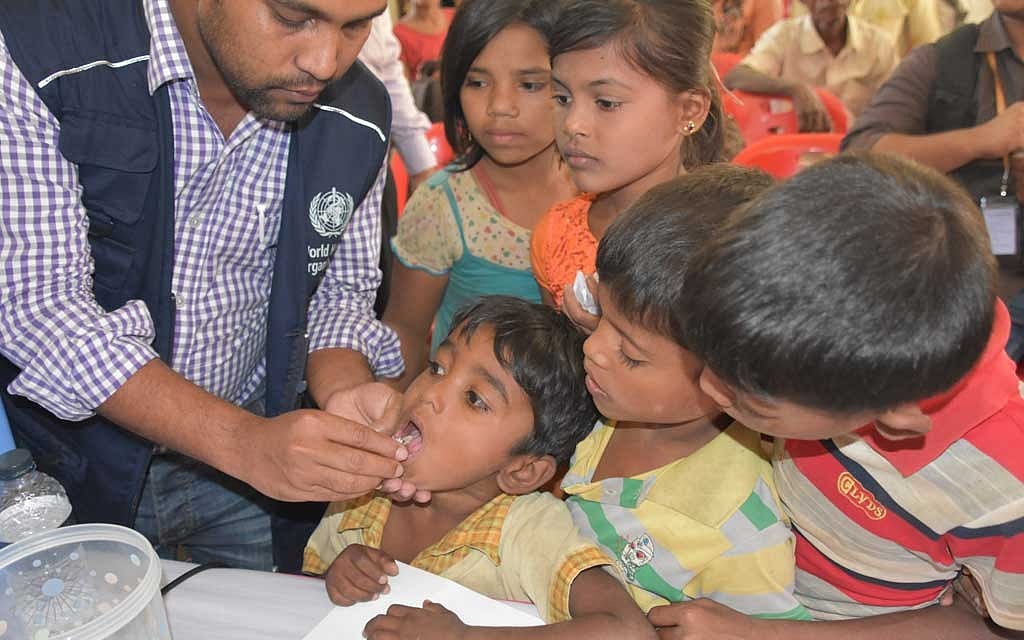
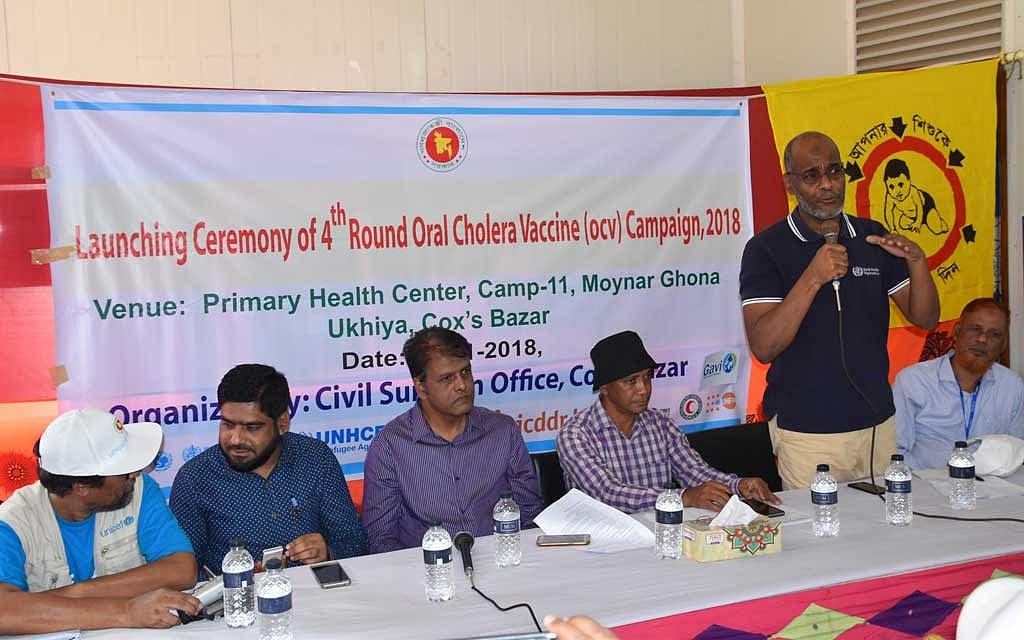
Led by the Ministry of Health and Family Welfare, with support of the World Health Organization, UNICEF, and partners such as Gavi, the vaccine alliance, the campaign aims to reach people who missed some or all previous cholera vaccination opportunities and protect them from the deadly disease, according to a media statement by the UNICEF and WHO.
“Oral cholera vaccination is the most effective way to protect such a large section and reduce the risk of disease outbreak,” says Dr Bardan Jung Rana, WHO Representative in Bangladesh.
Nearly 2.2 million doses of oral cholera vaccines have been dispensed among Rohingya refugees and their host population through three massive vaccination campaigns since November 2017.
“Cholera is an extremely virulent disease that can cause severe acute watery diarrhea. It is extremely important to ensure that those who missed their first or second dose during previous campaigns are now covered,” says Edouard Beigbeder, UNICEF Representative in Bangladesh.
“The Government is committed to take all possible measures to keep the deadly disease at bay,” says Prof Dr Abul Kalam Azad, Director General of Health Services (DGHS), Ministry of Health and Family Welfare, Government of Bangladesh.
Efforts are being made with the support of UNICEF to improve access to clean water and sanitation and promote hygiene to control the transmission of cholera and other waterborne diseases.
The World Health Organization has launched an early warning, and emergency surveillance system, including monitoring of diseases reported to the health facilities.
Both WHO and UNICEF have prepositioned life-saving medical supplies to ensure a rapid response to any cholera outbreak.













