


Published : 21 Aug 2013, 03:37 PM
Updated : 09 Aug 2022, 11:02 AM


The International Crimes Tribunal-1, led by Justice ATM Fazle Kabir, fixed the date after the hearing on framing charges on Wednesday.
During the hearing, Sultan Mahmud Simon and Tapos Kanti Bol represented the state.
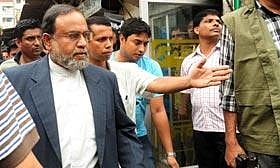
Earlier in the day, the Jamaat leader was presented before the court amid tight security.
The counsels of the defendant opposed the framing of charges against their client on Aug 18.
Police arrested Mir Quasem from the Naya Diganta newspaper office on Jun 17 last year in less than two hours of the tribunal issuing a warrant of arrest.
Mir Quasem is a director of the Islami Bank, a member of Ibn Sina Trust, and director of the non-government organization, Rabita al-Alam al-Islami.
The Jamaat leader was allegedly the Chittagong unit commander of Al-Badr, a vigilante outfit created by the Jamaat-e-Islami in 1971.
He was the third senior most leader in outfit's command structure.
Such auxiliary forces like the Al-Badr, Al-Shams and Razakar supported the Pakistan Army to thwart the freedom struggle in 1971.
Crimes against humanity including murder, massacre, rape and loot were rampant in Chittagong and Mir Quasem is said to have played a leading role in them.
There are also allegations that he ordered the massacre and murders at the Razakar camps there.
Mir Quasem, who is from Manikganj's Harirampur, was better known as 'Mintu' to the people of Chittagong during the war. He was part of the Islami Chhatra Sangha during his college days.
He is also one of those who had made the list of the intellectuals who were murdered towards the end of the Liberation War. The intellectuals were killed on Dec 14, 1971, only two days before the victory.
After independence, Mir Quasem had fled to Saudi Arabia and returned after Bangabandhu Sheikh Mujibur Rahman and most of the members of his family were brutally killed on Aug 15, 1975.







