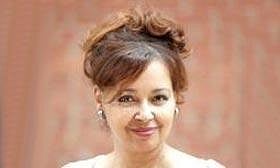
Cell phones can be a key intel: US academic
A top practitioner shares her experience in use of technology in teaching and learning
bdnews24.com News Service
bdnews24.com
Published :
20 Oct 2012, 05:57 AM
Updated :
09 Aug 2022, 04:24 PM
Dhaka Oct 20 (bdnews24.com)—While the great part of the populace stays on the dark side of the 'digital divide', cell phones can just be the handy way out, says an American educationist.
In an interview to bdnews24.com, Dr. Helen Bond of Howard University, Washington, spoke of the necessity of innovative use of existing resources "in improving teaching and learning".
"I see technology as one way to impact social change for human growth, as a tool for education and development," said Dr Bond, an expert on technology in pedagogy and collaborative learning, now in Dhaka to attend an international conference organised by the Department of English, Dhaka University.
A well-known US academic in the field of education research, Dr Bond specialises in curriculum and instructions studies; her areas of interest are eclectic, ranging from pedagogy to social media's influence in political change.
She says she sees technology "as one way to impact social change for human growth, as a tool for education and development".
"Using or adapting the technologies that the developing countries do have [is important], which is typical cell phone technologies," she said. "Using that in very innovative ways to tap into some of the open resources" is crucial.
Recipient of multiple awards, including the Inspirational Interdisciplinary Award given by Washington's Howard University (where she is an associate professor) and Fulbright-Nehru Fellowship, she is presenting the key-note speech at the Oct 20 conference on "Teaching and Learning English through Technology".
Excerpts of the interview with Assistant Features Editor
Aninda Rahman
ahead of the conference:
bdnews24.com:
You worked in many places as an educationist. You did your doctoral research in West Africa. Recently you had a project in India. So, South Asia is not new to you, is it?
Helen Bond:
I have done work in various parts back. When I became a Fulbright [a Fullbright-Nehru Awardee] in 2011, I went to India.
bdnews24.com:
Your work in India had an interesting title -
"Preparing World Class Teachers in Gandhian Style".
Helen Bond:
Yes. As I always say, I am really coming to learn. When there is lot to learn, I share what little bit I do know, but I come to learn, and I learned a lot. So, it was a great opportunity for me to visit Bangladesh.
bdnews24.com:
So this is your first visit to Dhaka.
Helen Bond:
This is my first visit, and it is a wonderful one! A very short one though, I'm afraid, when you leave so soon. But I'm packing a lot in.
bdnews24.com:
And what you sharing is …
Helen Bond:
Well, I am sharing a lot on technology, in a broader frame. I am sharing my ideas of best practices for teaching and learning with the aid of technology and without. I merely focused on technology in improving teaching and learning.
But I think technology in a broader frame. I see technology as one way to impact social change for human growth, as a tool for education and development.
bdnews24.com:
Your indications are clear. However, in a country that still struggles to take internet to its rural population, what relevance do you see for any educational programme that depends for its success on computers and internet connectivity?
Helen Bond:
Right. The connectivity issues are development issues, that something nations, governments and economies have to work on. They have to work concertedly in expanding access. That is very very important.
Governments should do something in partnerships. I will not use the term 'partnership' as it is used by people so widely for everything. But I think here's the case where this 'partnership' really matters.
Also important is using or adapting the technologies that the developing countries do have, which is typical cell phone technologies; using that in very innovative ways to tap into some of the open resources. For example, I was sharing [in the workshop], a kind of technology that can be used to enhance teaching and learning, that's totally free and secure. That's the best thing ever. We do have a certain amount of connectivity.
bdnews24.com:
There are already about 100 million mobile subscriptions in Bangladesh.
Helen Bond:
Yes, through that use, using technologies that we have, through partnerships and a special tapping into what we call the open source movement things can change.
The cell phone can be a key intel, the broad base of connectivity.
bdnews24.com:
Let us move onto some other areas of your work. You have a diverse portfolio.
Helen Bond:
I do have (laughs).
bdnews24.com:
You recently co-authored a book,
"Through Children's Eyes: President Obama and Future Generation".
Helen Bond:
I consider that my crowning … a very important work that has recently published. We are soon going to send the book to President Obama and the First Lady. We have been invited to syndicated radio shows to talk about that.
bdnews24.com:
Was that a collaborative research?
Helen Bond:
The book is based on internationally resourced study. It was a collaboration between all of us. There were Dr. Bernadine Barr of the University of Maryland, Dr. Izolda Fotiyeva from Russia and Dr. Fang Wu from China. We all covered our respective areas. For example, I went to Africa, Jamaica and the US. When we all brought back we had a bigger picture.
It started right after Barak Obama was elected president as the first person of colour, as the first non-white person to be elected as the president of the United States. Lots of people were talking everywhere about that, but no one really talked to the children, to the youth. So, what made me interested about this was the scope to think of how the youth, who not only stay in the USA but all over the world, were making meaning of this incident.
So, this book seeks to understand how children in third, seventh or eleventh grades think and feel about the election of Barack Obama. What impact all this political information, controversies had on them?
bdnews24.com:
This is intriguing, because we at bdnews24.com are going to launch a children's news service in collaboration with UNICEF. There we will facilitate children from all social strata to come up with their own reports on important sociopolitical issues.
Helen Bond:
I can say this project is fantastic if I am getting it right! If there is ever a decade of children this is it and you are founding a news service for them! So, you guys initiated it?
bdnews24.com:
Well, we are one of the biggest news publishers with a very strong nationwide network. We have already been running a kid's section. Now we are very serious about creating a platform for children who are overwhelmingly underrepresented in the media. That is where the interests of bdnews24.com and UNICEF come together.
Helen Bond:
I think it's a wonderful project. Because our book was based on the fact that children have voice that is under represented. They are not heard. People think of children as good adults as they hope them to become. They bring the children up as 'good adults'. But how the children think, feel and believe today is not valued.
I think it [children news service] goes right along with the Convention on the rights of the children. As a matter of fact in our work, we discovered it, and we discovered it through UNICEF, when I was writing a chapter on Sierra Leone. Sierra Leone had a ten years war, had a Truth and Reconciliation Committee. For the first time in history there was a truth and reconciliation report developed just for children, written for children and included children voices. Carol Bellamy, who was then the executive director of UNICEF, made a huge speech in New York about this. Never before it happened. It virtually went unnoticed. Yes, many things are started on.
bdnews24.com:
So have we.
Helen Bond:
Yes, what you are doing is right on target.