


Published : 11 Aug 2014, 02:15 PM
Updated : 19 Oct 2022, 07:36 PM


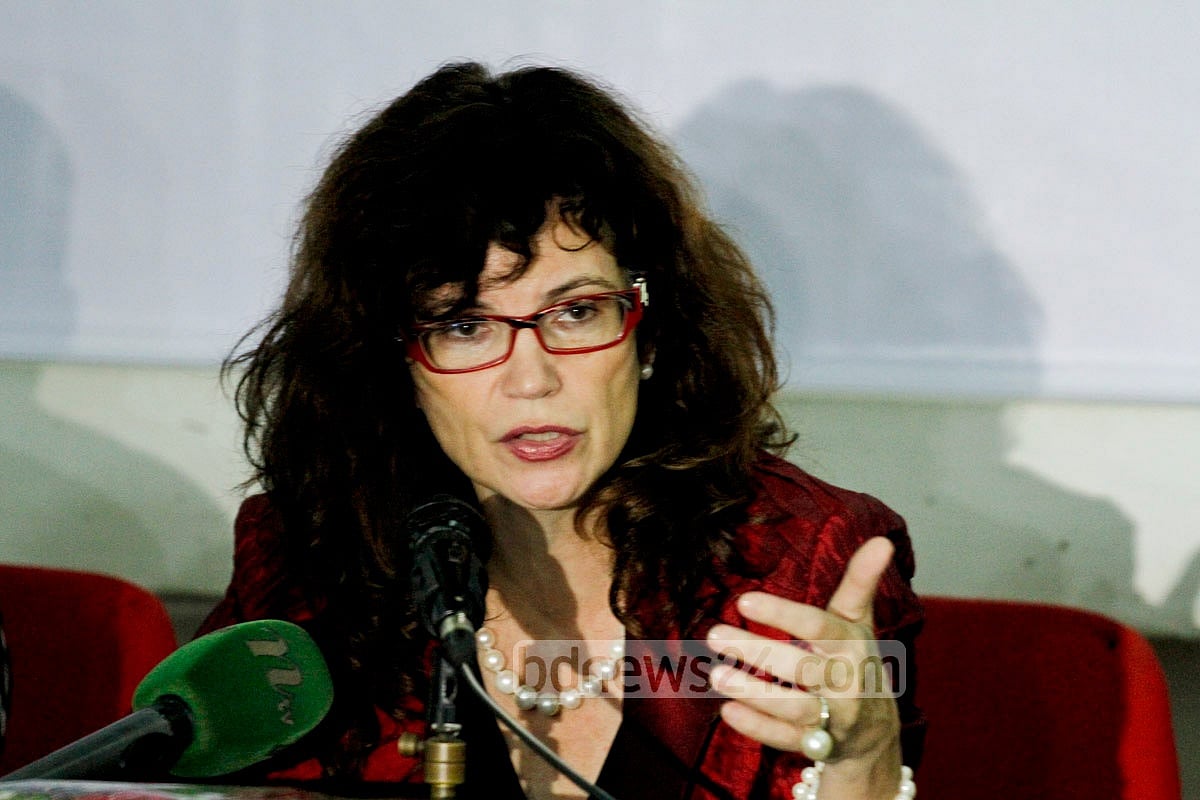
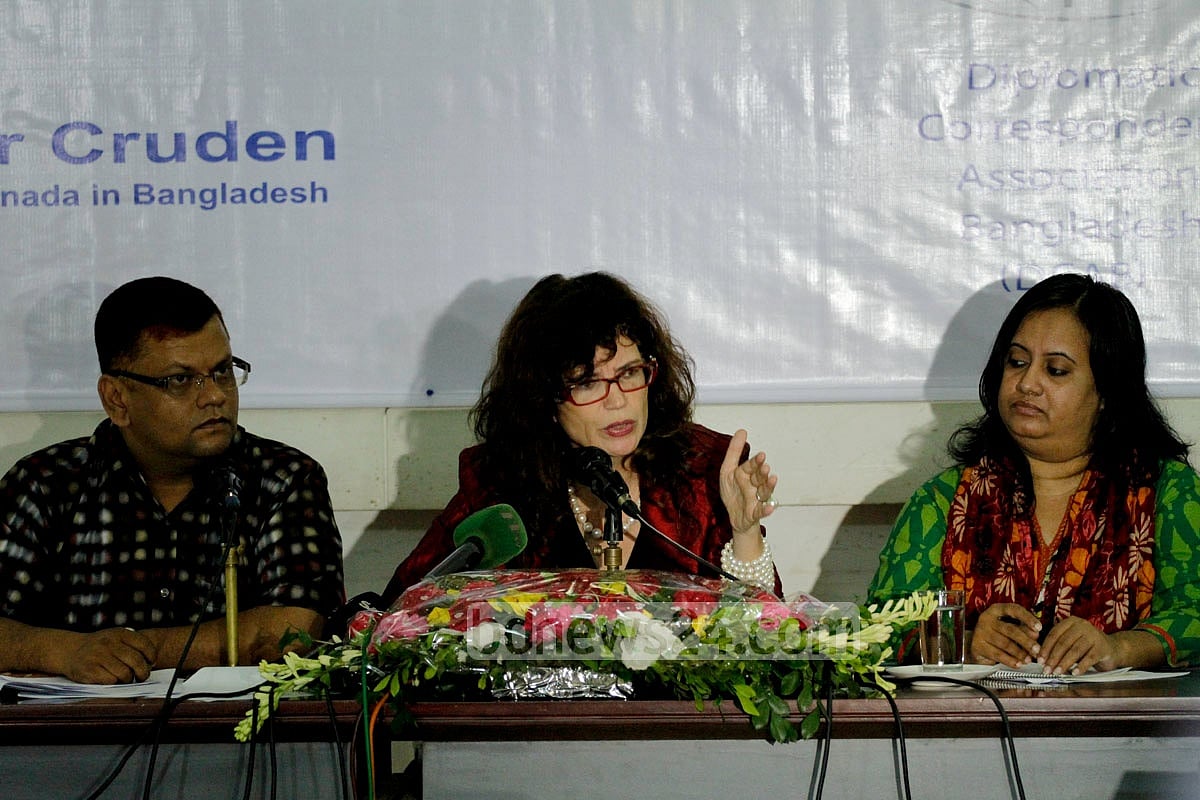
“We continue to hope that it (movement) will not be violent,” Heather Cruden said as she was “aware” of the BNP’s proposed movement.
“I think we all were extremely relieved as the violence in the run up to the election ceased after Jan 5 polling and we all hope the violence will not be starting again,” she said while meeting diplomatic correspondents in Dhaka on Monday.
She said in a democracy there should be space for protest but that should be “peaceful”.
“I stress peaceful,” she said, adding that violence was “not good” for Bangladesh and its people.
She said Canada had continued to call for dialogue and still hoped that two parties would sit at some point and talk to each other.
Diplomatic Correspondents Association of Bangladesh (DCAB) organised the meet the press with its President Mainul Alam in chair. General Secretary Angur Nahar Monty delivered welcome speech.
She spoke on a whole range of issues focusing on Canada’s foreign policy based on “peace, prosperity and freedom”.
She said tragically the suffering that comes from the lack of peace is “felt most strongly by the most vulnerable”.
The High Commissioner said Bangladesh could also see the truth looking back into its own history.
“The crimes of 1971, including the horrific sexual violence committed against imprisoned women, are scars that remain on the psyche of the world,” she said.
She said last year’s political violence had been a “distressingly regular” part of daily life in Bangladesh.
She said they had acknowledged that the election was “a constitutional”, but they were also “disappointed” as more than half of the seats returned winner uncontested.
“It is essential that the 5-year cycle of electoral violence and instability be broken,” she said, stressing for dialogue, no matter “whenever the next election might be” held.
She said she observed that every time in the electoral process “Bangladesh’s GDP suffers, people get hurt, some people die, and people can’t go to work”.
“We need to end the cycle,” she said.
She said both parties need to work together to strengthen the governance and the legitimacy of the democratic process.
She said democracy was much more than elections.
“It requires strong independent institutions, including the judiciary and the election commission.
“It requires space for media and civil society to be able to constructively criticise the government and to hold it account”.
She said she was closely watching the just introduced national broadcasting policy, but could not read it since there was no English version of the policy.
“This is an issue we continue to monitor very closely,” she said.
She also told journalists to tell stories “with professionalism, with honesty and with courage”.
“Every time you do that, you will be building a better future for your country,” she said.
The High Commissioner has been active last year, like her US colleague, in making public statements about Bangladesh’s internal politics and engaging with the politicians.
When asked whether such engagement was permissible as per diplomatic norms, she replied: “I hope I have not crossed the line when I have been here.”
She said Canada pursued peace, prosperity and freedom in its foreign policy and “when we see our friends undertaking actions which may not be consistent with the fundamental principles, sometime we engage privately and sometime publicly. It depends on the issue”.
She said Canada and Bangladesh had a long standing relationship and Canada so far provided more than $ 4 billion in aid for Bangladesh since its independence.
She said the focus of the relations which was predominantly aid based now shifted to trade based.
She also said Canada wanted to work with Bangladesh in its endeavour to be a middle-income country by 2021. “It’s in everybody’s interest”.
She said the ready-made garment sector that evoked worldwide concerns last year after Rana Plaza building collapse was “safer today than it was one year ago”.
“But much work remains to be done,” she added.
She said there was no alternative after the Rana Plaza incident.
“If Bangladesh’s garments sector continues to improve working and safety conditions then it can thrive. If it does not, it will wither,” she warned.
The two-way trade between the two countries stands at $ 1.85 billion in which, the High Commissioner said, Bangladesh exports more than $ 1 billion.
Ready-made clothes are the main export item for Bangladesh while Canada exports agri products.
She stressed on diversification of export items for both sides to increase the total export basket.
She welcomed Prime Minister Sheikh Hasina’s commitment at the Girls’ summit in London to end under-15 marriage by 2021 and all child marriage by 2041 in Bangladesh and said Canada would help in this regard.
She said her foreign minister had recently announced over $ 20 million contribution for two years towards ending early, child and forced marriage globally.
“I am very pleased to be able to say that Bangladesh is one of the six countries that will receive assistance through this programme,” she said.







