Published :
27 Jan 2013, 07:40 AM
Updated :
09 Aug 2022, 10:09 AM
Natore’s Civil Surgeon Dr Rafiqul Islam told bdnews24.com that Millat Hossain was confirmed with Nipah affliction after five days of treatment at Sadar Hospital.
Millat was shifted to RMCH on Saturday night.
Institute of Epidemiology, Disease Control and Research (IEDCR) has already confirmed the death of six people in Bangladesh with contamination of Nipah virus until now.

Earlier on Monday, Millat’s mother Ambia Begum died of ‘fever’. However, Surgeon Islam could not confirm if she had died due to Nipah virus.
Millat has been suffering from ‘fever’ from the day his mother died, said father Saiful Islam.
Nipah virus was first detected in Malaysia in 1998 but at present Bangladesh, a hotspot for infectious diseases, is the only country in the world that reports its presence.
Though public health analysts believe that border districts of India have the virus, there is no confirmation from the Indian government.
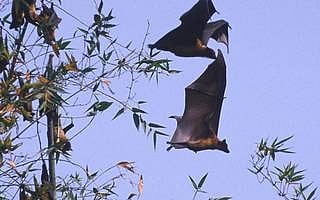
An ICDDR-B study using infrared cameras found that fruit bats perch on the jars, put up on trees to collect the sap, and try to drink the juice. They also urinate into the pot.
The Pteropus bats’ saliva and urine carry the Nipah virus. But it is destroyed if the sap is boiled. “The virus is killed in 70 degrees Celsius temperature,” Prof Rahman said.
As of 2012, the virus has killed 136 of its 176 victims in 21 districts across Bangladesh.
The virus usually prevails in winter.
The virus that infects a person only after drinking raw date sap and later can pass on to other persons through contact has become a major public health concern since 2001, as it breaks out every year between January and April.
The fatality rate is nearly 80 percent while it is fully preventable if people shun the raw date sap.
IEDR Director Prof Rahman says it usually takes seven to eight days on an average between exposure and the surfacing of symptoms.