Published :
02 Jun 2013, 09:37 AM
Updated :
09 Aug 2022, 10:44 AM
Dhaka Metropolitan Sessions Judge Mohammad Zahirul Haque gave the ruling.
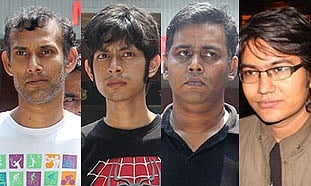
Blogger Mashiur Rahman Biplab was granted bail after the hearing. But Asif Mahiuddin's bail petition was rejected.
Earlier on May 12, two other bloggers, Subrata Adhikari Shuvo and Rasel Pervez, had been granted bail by the same judge.

Lawyer Jyotirmoy Barua, Advocate Alauddin Molla and Abdur Rashid representing the bloggers during the hearing argued their clients had not written anything abusive about Prophet Muhammad (pbuh).
The lawyers alleged that though the state could file a case directly with a court under ICT laws, they did not do it.
“The bloggers will not flee if they get bail,” the lawyers said.
Public Prosecutor (of Sessions Judge Court) Abdullah Abu, Additional PP Sazzadul Haque Shihab and Tapash Pal represented the state.
Shuvo, Biplab and Pervez were nabbed from Dhaka on Apr 1 following persistent demands by the Hifazat-e Islam.
Two days later, Asif Mahiuddin was called to detective police office and arrested.
He was later taken on remand.
Then on Apr 17, police filed two cases against the four bloggers under ICT laws -- one against Asif and another against the other three.
On Apr 21, Dhaka Chief Metropolitan Magistrates moved the case to the Session Judges Court. The latter took the complaints into cognisance and set date for hearing.
Among the four, Shuvo is a Dhaka University Bangla department student. Biplab and Rasel are former students of the same university.
Blogger Asif Mahiuddin was recently attacked, perhaps for what he posted on the internet.
He spent some time in Dhaka Medical College and Hospital with critical stab wounds. Islamist radicals were said to be behind the attack.
Dhaka University teachers and students, Ganajagaran Mancha and online activists have been demanding the release of the bloggers, alleging that the government had arrested them ‘bowing’ to the Hifazat-e Islam.
Bloggers and online activists had started a movement on Feb 5 after the ICT left Jamaat leader Abdul Quader Molla off with a life setence that many saw as "too light" considering the war crimes charges proved against him.
The movement later became popular as Ganajagaran Mancha with the participation of thousands of students and cultural activists.
Chittagong-based radical group Hifazat-e Islam came out against Ganajagaran Mancha calling it a platform for ‘atheist bloggers’.