


Published : 08 Jan 2013, 04:35 PM
Updated : 23 Apr 2022, 03:52 PM


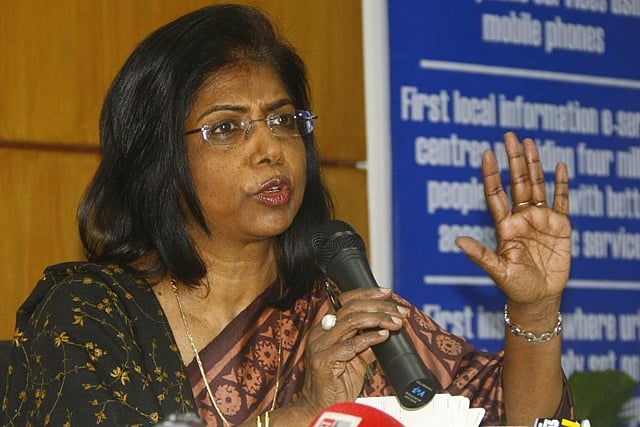
A senior UN official on Tuesday called upon countries like Bangladesh that contribute troops in peacekeeping missions 'to be aware of the changing scenario' of peacekeeping as she said the task was getting 'more complex now'.
"We are not just solely on old or the traditional peacekeeping system of the UN. The mandate that the Security Council is giving to peacekeeping missions has changed vastly," Ameerah Haq, the UN Under-Secretary General for the Department of Field Support, said.
After her three-day official visit to Dhaka, she told at a meet-the-press in Dhaka that peacekeeping was not just an UN mission now, 'it involves regional organisations' and the mandate had changed from the earlier days of just monitoring someone violating ceasefire agreement to the protection of civilians.
Haq is the first woman from Bangladesh to become the head of the Department of Field Support in June last year.
She said during her meeting with the authorities here, she had discussed the future 'collaboration and partnership' in peacekeeping operations and how Bangladesh's peacekeepers can play their role in fulfilling the changing mandate of the UN Security Council.
Haq met with the Foreign Minister Dipu Moni, among others, during her visit.
She said the mandate-giving by the Security Council was 'much more complex' and there were more partners along with UN who may be involved with the peacekeeping operations.
The UN under-secretary general said Bangladesh had a 'very much important role' in peacekeeping as it was among the largest contributors of troops, police and others in civilian capacities.
Haq declined to comment on Bangladesh's political impasse over who will oversee the next general elections even though journalists pressed her. She said she had come and met with authorities here solely to talk on peacekeeping operations.
"I have had a very good discussion on how Bangladesh can continue to keep its niche and its position in peacekeeping and how it can better prepare itself in the future," she said.
"My discussions were limited to the role of Bangladesh in peacekeeping which has been a good one and much appreciated in the UN."
Citing instances of the changing peacekeeping mandates, she said in the UN Security Council resolution for the mission in Sub Sudan, Congo and Darfur, there were many things in the mandate which relates 'first and foremost to the protection of civilians'.
In East Timor where Haq earlier worked and the UN just ended its mission after political stability returned, she said they provided support in rule of law and justice.
"In many other missions, we are looking at DDR that means disarmament, demoralisation and reintegration. In reintegration, we help combatants and ex-combatants to reintegrate into the society and to live productive lives."
The UN Under-Secretary General said earlier peacekeeping was strictly just UN peacekeeping operations. "But now if you look at the UN mission in Sudan and Darfur it is called hybrid mission as it is a mission of the African Union and UN."
She also cited instances of political mission in Syria where the UN partnered with the League of Arab States.
"The UN is now partnering with regional organisations, and in some cases subregional bodies." She said that the Security Council was considering a resolution for Mali where in addition to African Union they are talking to involve sub-regional body Ecowas.
When asked whether the global economic downturn has forced UN to squeeze its peacekeeping force, the senior UN official said, "It depends on a combination of factors."
"In Haiti after the earthquake, the UN had expanded the mission and now it's time to withdraw."
"In East Timor after a smooth transition of power and after all kinds of assessment we find there are no longer needs of peacekeeping mission.
"But there are areas where the UN prepares as the Security Council may ask for a mission," she said, referring to West African nation Mali where after a discussion in June the Security Council might deploy a mission.













