


Published : 29 May 2015, 04:06 PM
Updated : 19 Oct 2022, 06:47 PM


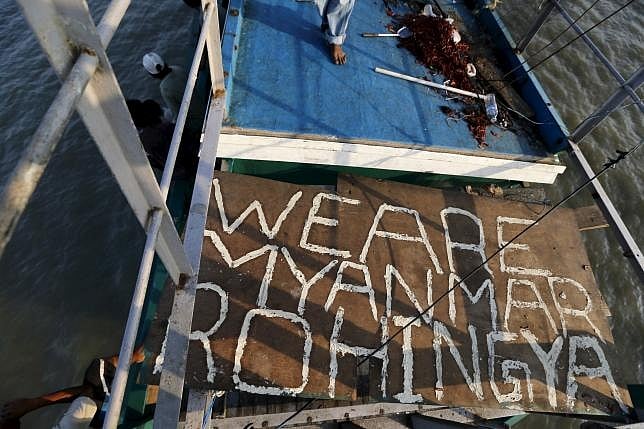
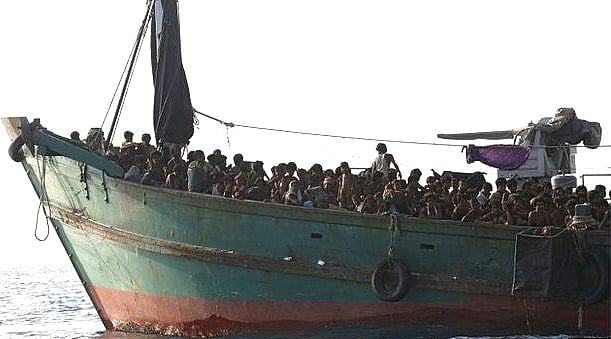
Foreign Secretary Md Shahidul Haque, who represented Bangladesh at the migrant crisis conference of the Asean in Bangkok on Friday, said Dhaka was “deeply concerned” over the unfolding humanitarian tragedy in the Indian Ocean.
Prime Minister Sheikh Hasina’s government considers this to be “a direct challenge to our ‘zero tolerance’ approach to human trafficking,” he said.
“We are determined to go all the way to stop and reverse this trend. It is perhaps time for us to say ‘enough is enough’”.
At least 17 countries from across the Association of Southeast Asian Nations (Asean) and elsewhere in Asia, along with the US, Switzerland and international organisations like UNHCR, the UN refugee agency convened in the meeting.
The meeting came in the wake of recent perilous exodus of people fleeing south by boat to Thailand, Indonesia and Malaysia.
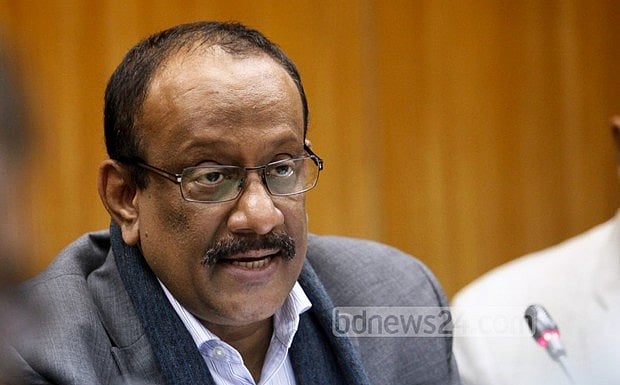
Foreign Secretary Md Shahidul Haque (File Photo)
The foreign secretary said, “No sooner had we received news of these tragedies, we asked the Bangladesh Missions to immediately rush to the ground”.
“Our envoys are personally supervising the matter.
“Let me assure you that we take the responsibility to repatriate Bangladeshi citizens in abnormal situations abroad with utmost seriousness,” he said, they would repatriate them even within a month after nationality verification.
“We are maintaining heightened surveillance, including through our law enforcement agencies and local governments, to prevent further victimisation or deception of our people by the traffickers”.
He thanked Indonesia, Malaysia and Myanmar for bringing the victims to safely and providing them necessary humanitarian assistance.
He drew attention to Bangladesh’s socio-economic progress, saying the country had made impressive gains in human development creating international headlines despite resource constraints.
“In this context, there must be other factors or forces at play beyond our immediate control that make our people vulnerable or entice them with false incentives to risk their lives at sea.
“In search of these factors, we may have to look for external factors and forces,” he said in a veiled reference to the persecution of Rohingya Muslims in their homeland Myanmar.
Burmese authorities deny they are Burmese nationals, and its representative at the Bangkok meeting on Friday warned against pointing a finger at them.
“Finger-pointing will not serve any purpose. It will take us nowhere”, said the Burmese representative at the meeting.
“If we go through the international headlines, the message seems to be writ large on the wall,” secretary Haque, also an international expert on migration, said.
“We must demonstrate the courage to deal with the underlying root causes for decisive and long-lasting solutions to the challenge before us."
The foreign secretary highlighted Bangladesh's efforts to prevent such perilous migration with the country’s “visible, contributing and responsible” engagements at the international level.
As a country of origin, transit, and destination, Bangladesh has positioned itself at the forefront of global and regional counter-trafficking initiatives, he said.
“Our persistent efforts to combat human trafficking have been reflected in Bangladesh’s graduation to Tier II in the US State Department’s Trafficking in Persons Report in 2012 that we have maintained since then”.
He said initial interviews with the victims indicated that they had been lured or enticed by the traffickers with false promises of high-paid, secure jobs abroad, often without asking for any advance payment.
Some others were reported to have been tricked and forced on to the boats by the traffickers.
“The current cases are, therefore, not irregular migration by sea. These are manifestations of a human trafficking trade at its worst. And certainly this is a recent trend, not seen in the past in Bangladesh”.
The secretary said Bangladesh had mobilised all of its law enforcement and border security agencies to patrol its maritime borders.
He, however, advocated long-term efforts such as greater deterrence and awareness to counter the lure of false promises made by traffickers.
“Within our Government, along with our civil society and NGO partners, we have begun serious introspection to identify and address the weak links in our counter-trafficking regime.”
“We have little time to wait. In fact, we are already late. While we grapple with the root causes, we cannot afford to let the traffickers win over us,” he told the international communities.
He said the present situation pitted all against an organised transnational criminal network that has “acquired the capacity to challenge our national efforts”.
“We shall succeed in dismantling this network only if we coordinate our efforts across the entire spectrum at sources, during transit, and at destinations.
“We must intensify our regional cooperation with all sincerity and determination,” he said.
Strong political desire would be needed to find an “effective, comprehensive and sustainable solution” to address all forms of irregular movements and human trafficking in the region.
He said the Bangkok meeting was “a test case of our resolve to translate this into a meaningful and far-reaching outcome”.
He, however, said the victims deserve “our compassion”.
“Our collective endeavor should be to protect their lives, alleviate their suffering and uphold their dignity,” he said, adding that Bangladesh was ready to join any regional or global effort to this end.













