


Published : 29 Jan 2019, 03:49 PM
Updated : 17 Oct 2022, 11:33 AM


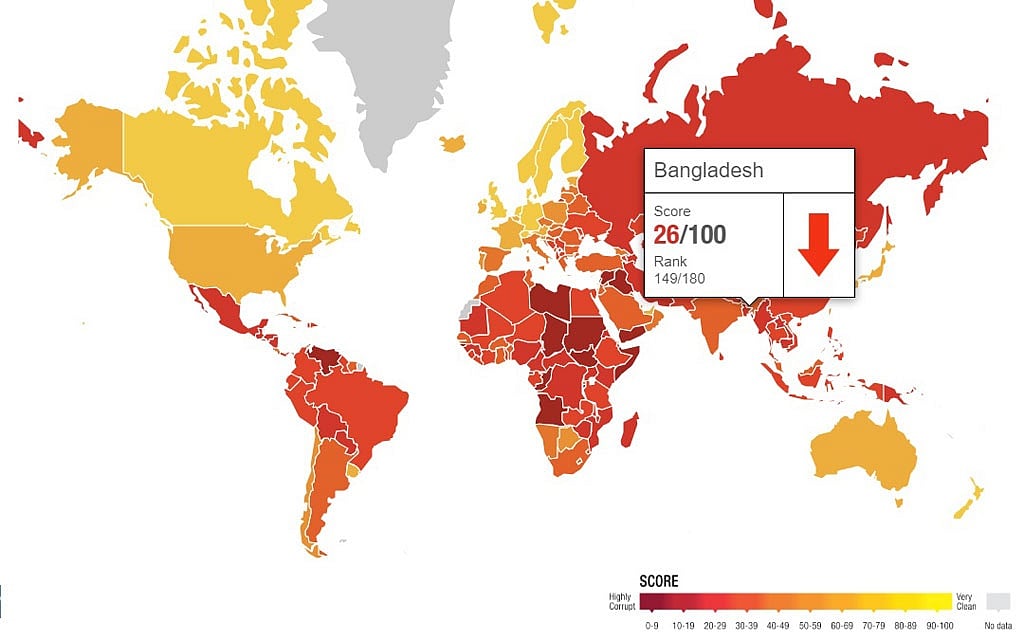
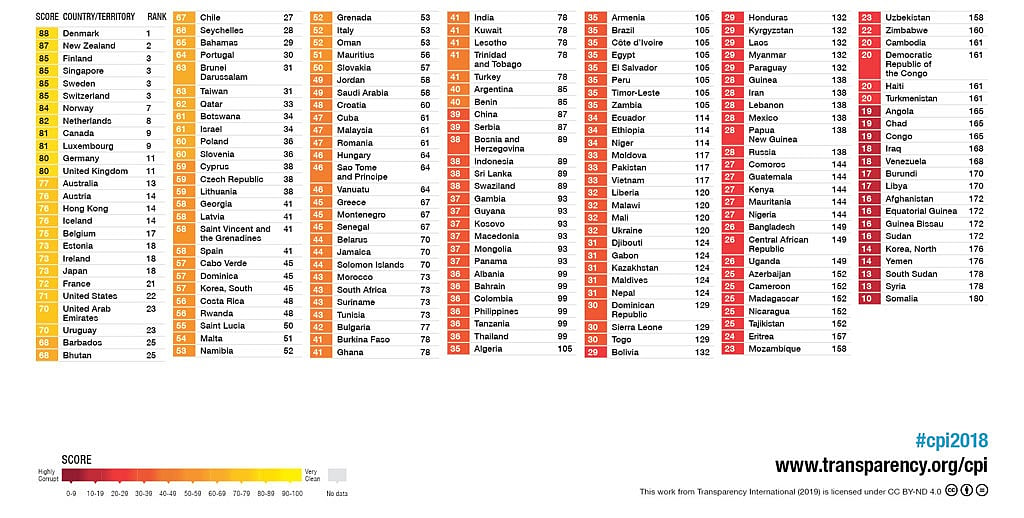
The CPI scores 180 countries and territories by their perceived levels of public sector corruption.
The index for the year 2018 was released by the Berlin-based organisation on Tuesday.
Bangladesh is positioned at 149 among 180 countries in the latest rankings, compared to 143 a year earlier.
The CPI uses a scale of 0 to 100, which means 100 is very clean and 0 is most corrupt. Bangladesh’s score in the latest CPI report is 26, down from 28 in the previous report.
Afghanistan is the only country in South Asia whose position is worse than that of Bangladesh.
Bangladesh is tied with the Central African Republic and Uganda with the CPI score of 26.
The TI report comes at a time when the ruling party, having formed the government for the third straight time, is talking about adopting a 'zero tolerance' policy against corruption.
"I know about the discomfort present in all areas of society caused by corruption. I urge the people involved in corruption to rectify themselves. Corruption will be eradicated through strict enforcement of the law," said Prime Minister Sheikh Hasina in her first address to the nation on Friday after the formation of the government.
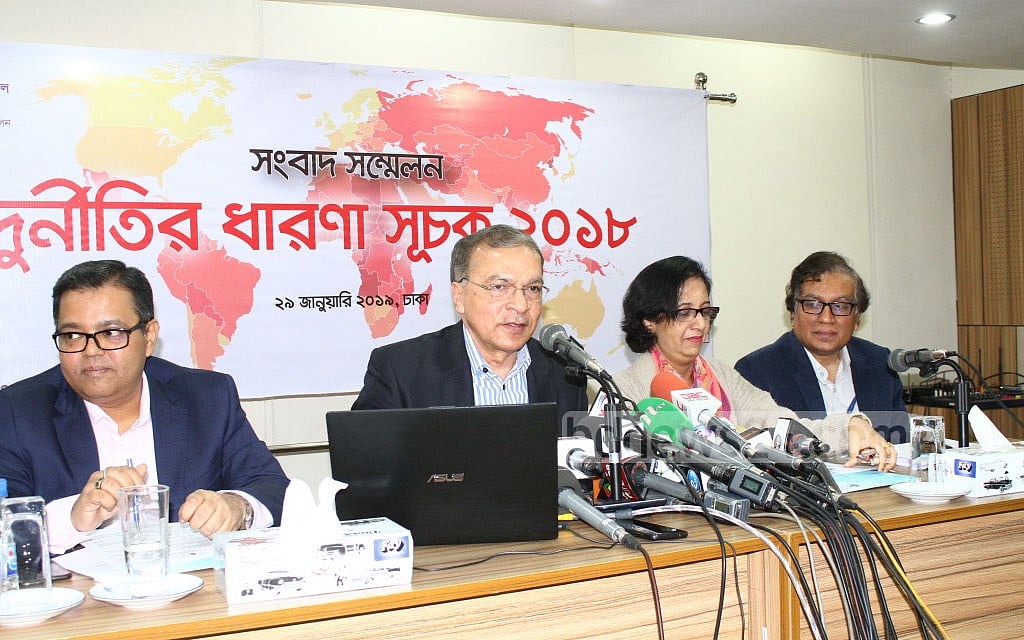
In a press conference in Dhaka on Tuesday, Iftekharuzzaman, executive director of Transparency’s Bangladesh unit, highlighted several aspects of the report and the current state of corruption in Bangladesh.
Describing the fall of Bangladesh on the index as “embarrassing,” he said: “Bangladesh has been unable to make progress as it has taken measures against corruption in the lower and middle levels by overlooking the top level corrupts.”
“Our anti-corruption campaign is limited to lower and middle levels. We need to take a look at corruption at the top. Measures need to be taken against the corrupt people by rising above their parties and identities,” he said.
He described the prime minister's announcement of “zero tolerance” policy against corruption as a positive step.
"We think that it is important to formulate an anti-corruption strategy. Such strategies should be created and it is possible to do so. If steps are not taken against corrupt people regardless of their identities and social positions, the matter of “zero tolerance” policy will be limited to the speech,” he said.
Denmark and New Zealand had the best scores on the index again in 2018, scoring 88 and 87, while Somalia, Syria and South Sudan remained at the bottom, with scores of 10, 13 and 13, TI said.
Overall, more than two-thirds of countries scored below 50 on the 2018 index, and the average was 43, said TI, which has more than 100 chapters worldwide.
The group said only 20 countries had significantly improved their scores since 2012, including Argentina and Ivory Coast. Sixteen others, including Australia, Chile and Malta, declined significantly in the same period.
The average score for EU and western European countries held steady at 66, while sub-Saharan Africa scored just 32, TI said. A score of 100 is considered "very clean", while a score of zero is highly corrupt.
TI said its analysis showed a clear link between having a healthy democracy and fighting public sector corruption, and cited declining scores for Turkey and Hungary, in connection with challenges to the rule of law and press freedoms.
Hungary's score dropped by eight points to 46 over the past five years, amid troubling developments including the forced departure of the Open Society Foundation and Central European University, founded by philanthropist George Soros, TI said.
Turkey's score dropped by nine points in the same period to a score of 41, as the country was downgraded to 'not free' on a democracy ranking, TI said.
"Corruption is much more likely to flourish where democratic foundations are weak and ... where undemocratic and populist politicians can use it to their advantage," said Delia Ferreira Rubio, who chairs the global civil society group.










