


Published : 28 Mar 2021, 02:17 AM
Updated : 14 Oct 2022, 06:30 PM


Both leaders agreed to an early operationalisation of the BBIN Motor Vehicles Agreement through expeditious signing of the Enabling MoU for Bangladesh, India, and
Nepal to commence the movement of goods and passengers, Foreign Minister AK Abdul Momen said.
The distance, time and cost for Bangladesh to send goods to Nepal will decrease and Bangladesh’s export capacity will increase if the initiative bears fruit.
Bangladesh expressed its eagerness to be a partner in the trilateral highway project of India, Myanmar and Thailand.
Dhaka also sought rail connectivity with Thimphu through the newly inaugurated Chilahati-Haldibari route to facilitate rail connectivity with Bhutan.
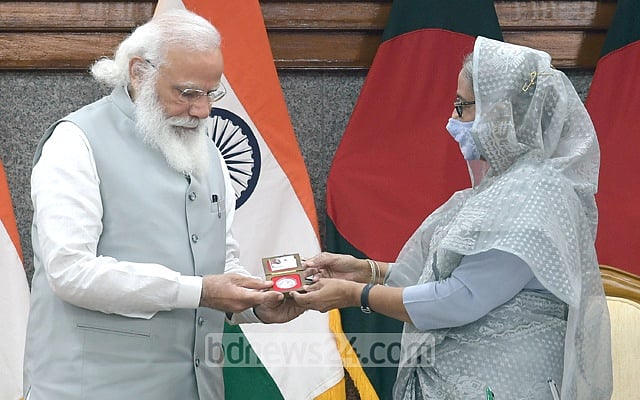
The Indian prime minister arrived in Dhaka on a two-day visit on Friday to join the celebrations of Bangabandhu Sheikh Mujibur Rahman’s birth centenary and the golden jubilee of Bangladesh’s independence.
He also visited temples in Satkhira and Gopalganj and Bangabandhu’s Mausoleum in Tungipara.
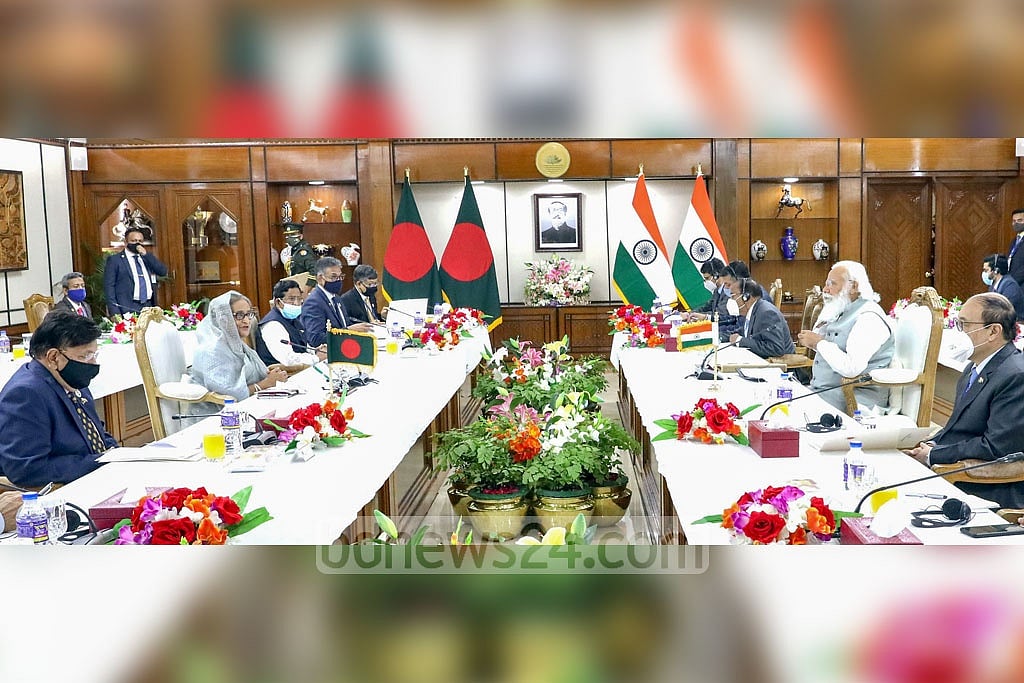
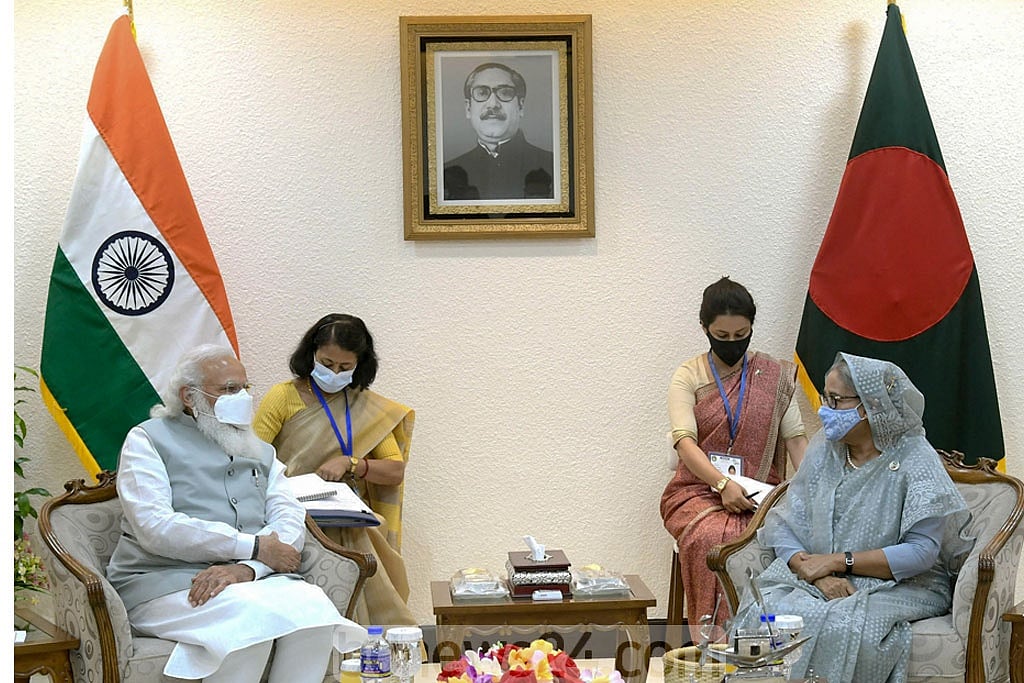
Hasina welcomed him to her office on the second day of his visit. They had a private discussion before heading their delegations in the bilateral meeting.
Five memoranda of understanding were also signed to enhance cooperation in disaster management, trade, IT and sports among other fields.
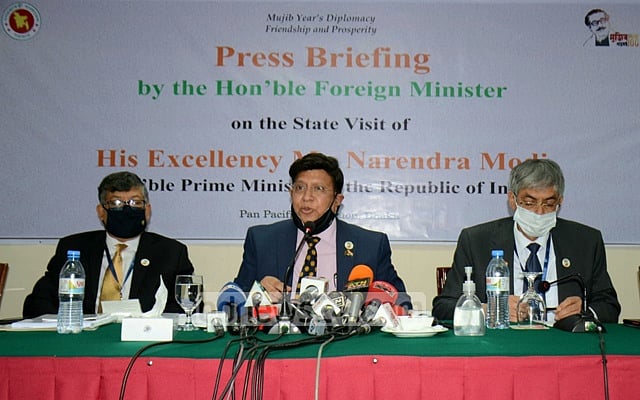
Momen said at the press briefing at Sonargaon hotel that Modi’s visit was mainly for the celebrations, but the two sides held meaningful, multidimensional and wide-ranging discussion that, he believes, will strengthen bilateral cooperation.
To enhance trade, both prime ministers underscored the need for removal of non-tariff barriers, the foreign minister said.
Dhaka asked New Delhi to withdraw the duties imposed on export of jute products from Bangladesh in 2017.
Both prime ministers stressed urgently upgrading infrastructure and facilities of the Land Customs Stations or Land Ports in a coordinated manner to facilitate trade.
It was agreed that in the spirit of liberalising trade between the two countries, Bangladesh Standards and Testing Institution or BSTI and the Bureau of Indian Standards or BIS would collaborate for the capacity building and development of testing and lab facilities.
The Bangladesh officials thanked India for sending coronavirus vaccine and requested to facilitate regular delivery of the remaining tranches of vaccine procured from the Serum Institute of India.
The Indian side announced the establishment of Bangabandhu Chair at the University of Delhi.
Bangladesh and India agreed to strengthen sub-regional cooperation, including with Nepal and Bhutan and to that end, cooperation in energy was underscored, Momen said.
Bangladesh is eager to use hydropower from Nepal and Bhutan seasonally and export power to India’s northeast, he said.
Both prime ministers emphasised effective border management to ensure a tranquil, stable and crime-free frontiers.
T
India assured Bangladesh of continuing support over the Myanmar Rohingya refugee issue.
The two nations also agreed to observe Dec 6 as the Maitri Diwas or Friendship Day. India recognised Bangladesh on that day in 1971.
Modi invited Hasina to visit India in 2022 in commemoration of the golden jubilee of the establishment of diplomatic relations.
Recalling earlier discussions, Hasina reiterated Bangladesh’s long-pending request to conclude the interim agreement on the sharing of the waters of the Teesta river.
She said, to alleviate the sufferings and save the livelihoods of millions of people dependent on the Teesta river basin, it is necessary that Bangladesh receives its fair share of the Teesta waters.
Modi reiterated India’s sincere commitment and continued efforts to conclude this agreement in consultation with the “relevant stakeholders”, Momen said.
The deal agreed in 2011 could not be signed due to the opposition of West Bengal Chief Minister Mamata Banerjee.













