Published :
04 Jul 2013, 07:32 AM
Updated :
09 Aug 2022, 10:52 AM
A Banngladesh official said in Tripura capital Agartala that Bangladesh is considering taking back the remains of those freedom fighters or atleast protect the graveyards with Indian help, the official said.
Identification of the graveyards and burial spots of the 1971 Liberation War was high on the agenda of a 2-day border zone meeting at Agartala.
West Tripura District Magistrate Kiran Gitte led the Indian team at the meeting, while the Bangladesh team was headed by Brahmanbaria district's Deputy Commissioner Nur Mohammad Majumder.

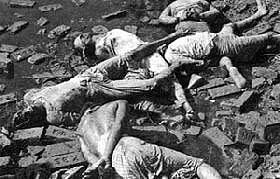
File Photo
"If Bangladesh officials give us the list of the graveyards, we would definitely try to locate those places and help them,” Gitte said, after the Bangladesh team had asked him for help in locating the graveyards.
The exercise is welcomed by India as it will surely focus on the wartime support that was provided to the cause of Bangladesh's liberation.
"The graves could become a destination for the families of the freedom fighters and will help develop people to people contact," said veteran journalist Sukharanjan Dasgupta who was recently awarded the Liberation Medal for his role during the 1971 war by the Bangladesh government.
For a small state like Tripura which suffers geographical isolation in India, this could be a source for some useful tourism.
During the nine-month long (March-December) war in 1971 whichled to the emergence of an independent Bangladesh, thousands of freedom fighters including Bengali soldiers from the undivided Pakistani army died and buried in Indian territory.
Many were buried in Tripura which housed some of the biggest Mukti Fauj camps.
The Liberation War snowballed into a full-scale India-Pakistan war, culminating in fall of Dhaka and surrender of over 93,000 Pakistani soldiers to the Indian troops in December 1971.
Tripura, where people supported the Liberation War strongly and sheltered more refugees than was the local population at that time, is the only Indian state where there is considerable popular grassroot resistance to the border fencing India is installing along the border with Bangladesh.
About 80 percent of the 856-km-long India-Bangladesh international border in Tripura has so far been fenced.
"More than 61 patches of the India-Bangladesh border with Tripura could not be fenced following objections by border villagers," a Border Security Force (BSF) spokesperson said.
"The Bangladesh government also has been objecting to the fencing at the zero line," he said.
The Tripura government asked the central government to build fences at the actual border (zero line) with Bangladesh "to keep border markets, human habitats, roads and government set-ups inside the fencing." .