


Published : 26 Mar 2016, 09:57 AM
Updated : 19 Oct 2022, 05:11 PM


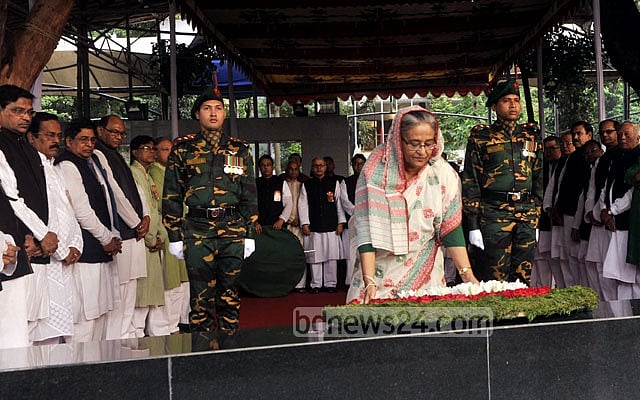
The Pakistan Army swooped down on the unarmed innocent Bengalis on the night of March 25, 1971, to smoke out their struggle for freedom.
They carried out genocide in the first hours of that night in Dhaka, codenaming the attack the ‘Operation Searchlight’.
Bengalis put up a valiant resistance and snatched victory on December 16 after nine months of Liberation War.
Bangabandhu Sheikh Mujibur Rahman, before being arrested by the Pakistani forces on that night, declared independence.
But, the undisputed leader of the Bengalis had effectively announced the nation’s independence at the historic March 7 rally at the Race Course grounds, when he thundered: “This time the struggle is for our freedom. This time the struggle is for our independence.”
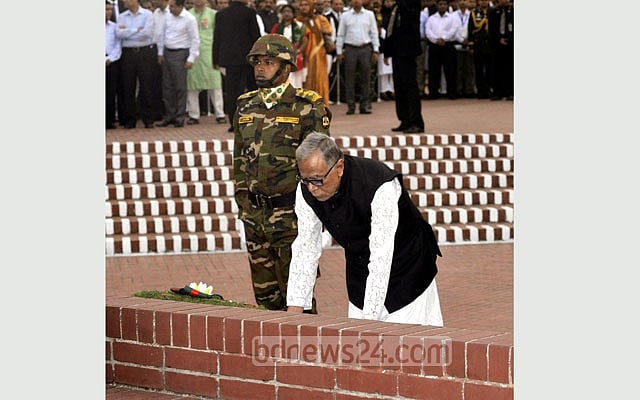
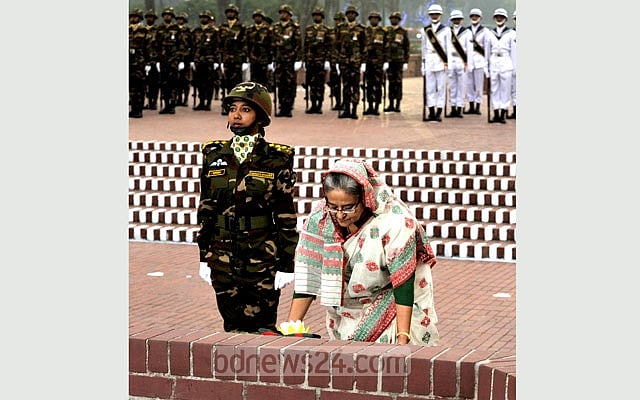
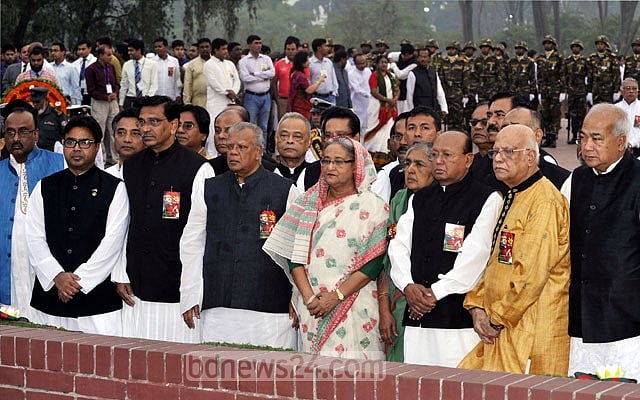
The nation is paying tribute to the martyrs of the Liberation War on the Independence Day, a national holiday.
A guard of honour presented by a smart contingent of the Armed Forces was followed by melancholic tunes played on the bugle.
After them, the speaker and deputy speaker of Parliament, Cabinet members, judges and chiefs of the three armed services and other high-level officials paid their tribute.
The memorial was then adorned with flowers and wreaths offered by political parties, social and cultural organisations, and people from all walks of life.
Children later gathered at the Bangabandhu National Stadium for a programme and parade to be attended by Hasina.
Events
The main streets of Dhaka and other parts of the country have been decorated with national and colourful flags.
All important buildings and establishments were illuminated on Friday night ahead of the Independence Day.
The national flag was hoisted at all government, semi-government, statutory and private establishments on Saturday morning.
Newspapers have published supplements to mark the day, while state-run Bangladesh Television and Bangladesh Betar, and private radio and TV stations are broadcasting special programmes.
The ministries of Liberation War affairs and cultural affairs have organised cultural programmes and discussions.
The planning ministry launched a two-day programme at the Parliament Building’s South Plaza from Friday evening to highlight the path Bangladesh has traversed since the Bangabandhu’s call for independence.
The Liberation War Museum has organised a march from Central Shaheed Minar to National Memorial.
All places of worship will hold special prayers while prisoners, patients at hospitals, orphans, and students will be served special food.
The Bangladesh embassies abroad will also organise Independence Day programmes.
In the Bangladesh deputy commission in Kolkata and mission in Agartala, flags were hoisted and events were lined up for the Day. Both these Indian cities, preponderantly Bengali, played a key role in organising the Liberation War.
Indian Prime Minister Narendra Modi on Saturday greeted people of Bangladesh on its Independence Day.
“Independence Day greetings to the people of Bangladesh...We cherish our long-standing ties and I am sure our relations will grow even further,” Modi said in a tweet.













