Published : 26 Jan 2025, 03:42 PM
Updated : 28 Aug 2026, 01:17 AM


A cohort of public servants and representatives and traders are illegally extracting sand from the clear blue waters of Lalakhal in Sylhet’s Jaintiapur without a lease.
Residents voicing concerns over this ecological assault are reportedly facing intimidation and threats from the looters.
Following rampant illegal sand and stone looting in border such as Jadukata, Piyain, and Dawki rivers, the sand pirates have now set their sights on the tourist hotspot of Lalakhal, located along the Sari River.
They are exploiting its tranquil charm while tarnishing its natural splendour.
Sand, a critical resource for concrete and glass, is a high-demand commodity.
This serene tourist haven, nestled at the foot of the Khasi Hills, draws thousands of visitors every year to marvel at its azure beauty.
But beneath the surface lies a darker reality.
Residents allege the looting operations are taking place "right under the nose of the authorities," raising questions about oversight and accountability.
Behind this illegal trade lies an intricate network of corruption, reportedly involving officials from the administration, law enforcement, labour leaders, sand traders, and even local representatives.
As Lalakhal’s clear waters fade into murky greed, the fight to protect this ecological gem grows more urgent for the local community.
Environmentalists warn that such unregulated sand extraction will not only destroy Lalakhal’s flowing waters but also pose serious threats to the region’s wildlife, nature, and ecosystem.
They called for strict action against the looters.
The question is: will the voices of the local community be heard before it's too late?
Jaintiapur Upazila chief executive, or UNO, Umme Salik Rumya offered that they conduct drives against sand looting.
However, she added that the “sand mafia” gets alerted before they can carry out the operations.
"There are always some people at our Upazila Parishad gate to alert those extracting sand from the rivers. We are exhausted from carrying out operations; every time I step out of the office, I see them. We understand this too.”
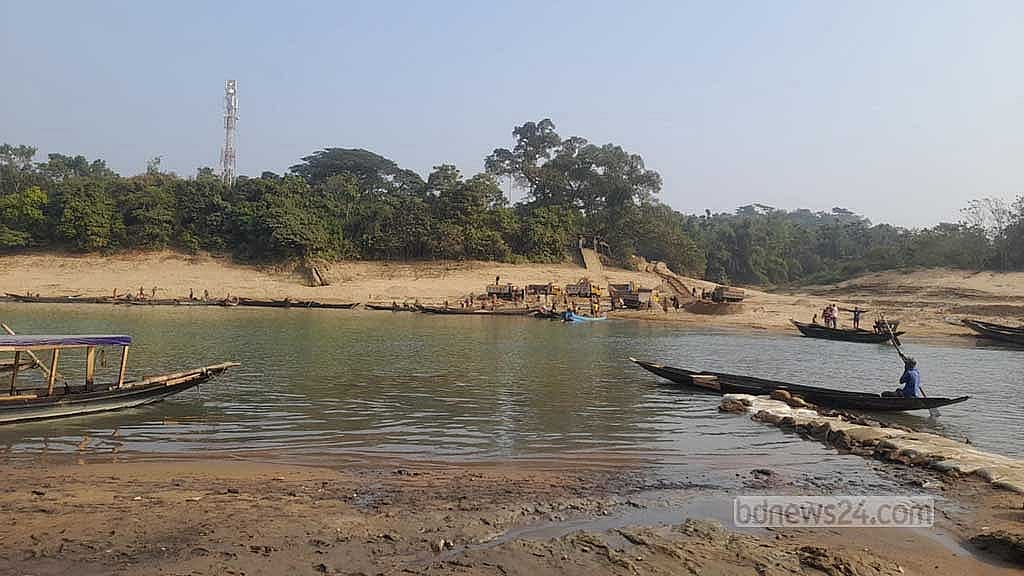
According to the Upazila administration, the Lalakhal area is a tourist destination.
The region is divided into three parts over a stretch of about 12km along the Sari River.
Among these, the Sari-1 area is under a sand lease.
The Sari-2 and Sari-3 sand mining zones, extending from Sari Ghat to Lalakhal Zero Point, are not under lease.
Due to ongoing cases, leasing for Sari-2 and Sari-3 has been suspended, but illegal sand extraction continues in these areas.
THRIVING ILLEGAL SAND TRADE
Sand traders in the Sari Ghat-Lalakhal region said sand is currently being sold at Tk 50 to Tk 55 per cubic foot.
However, the price paid to the workers for sand extraction is much lower, around Tk 30 to Tk 35 per cubic foot.
Each engine-driven boat typically carries three workers, and the boats can complete up to three trips per day.
With boats capable of holding 100 cubic feet of sand, three workers can collectively extract up to 300 cubic feet of sand each day, potentially worth around Tk 10,500.
From this amount, workers are forced to pay Tk 700 to Tk 800 to “manage influential figures”, alongside bearing fuel costs for the boat.
Residents of nearby villages claim that hundreds of boats are being used daily for sand looting.
In addition, Tk 700 to Tk 900 is reportedly collected as extortion money from the workers for each boat, with the proceeds allegedly distributed among beneficiaries in the illegal trade network.
Several owners of tourist boats in Lalakhal said their livelihoods depend on ferrying visitors through the scenic waters.
A boat trip from Sari Ghat to explore the area costs Tk 1,600 while transporting tourists to and from Zero Point from the Nazimgarh Resort Ghat is priced at Tk 800.
The region hosts over a hundred boats dedicated to serving tourists.
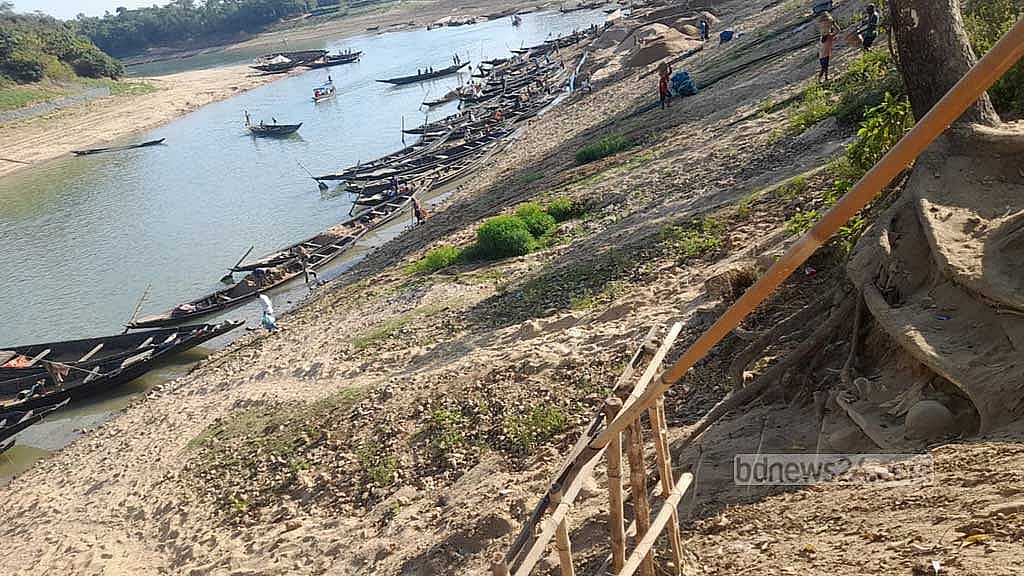
The boat owners fear that the unchecked sand extraction will gradually erode the natural beauty of Lalakhal.
They pointed out that sand is being taken directly from the parts of the canal where it is most abundant.
“Tourists will no longer see Lalakhal as the beautiful destination it once was. This must stop immediately.”
Despite multiple drives by the authorities in recent months, residents allege that illegal sand extraction and extortion in Lalakhal continue unabated.
No one wants to speak out against the criminal group behind these activities for fear of being beaten up.
STRICT SURVEILLANCE, SAND EXTRACTION COMPETITION
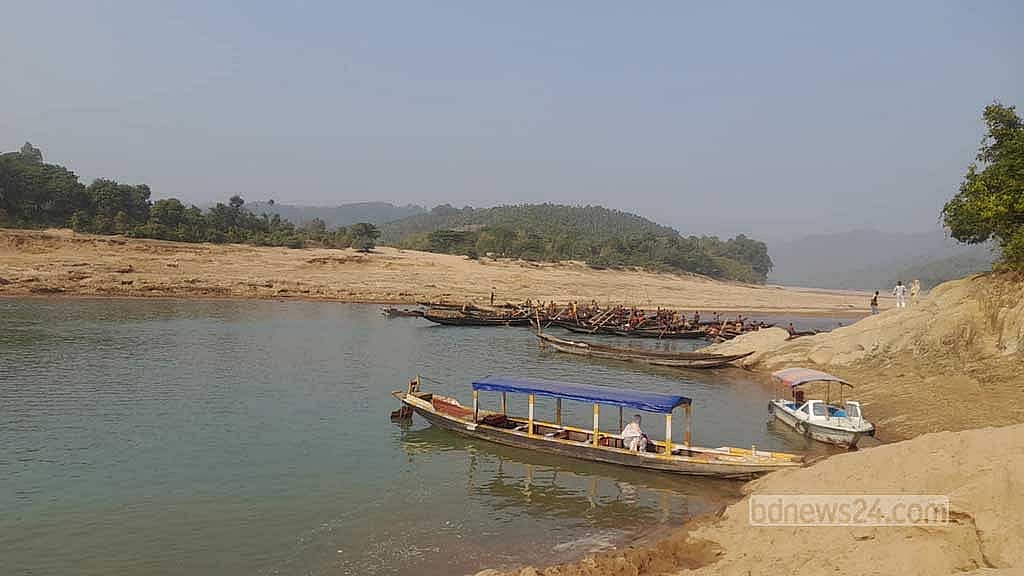
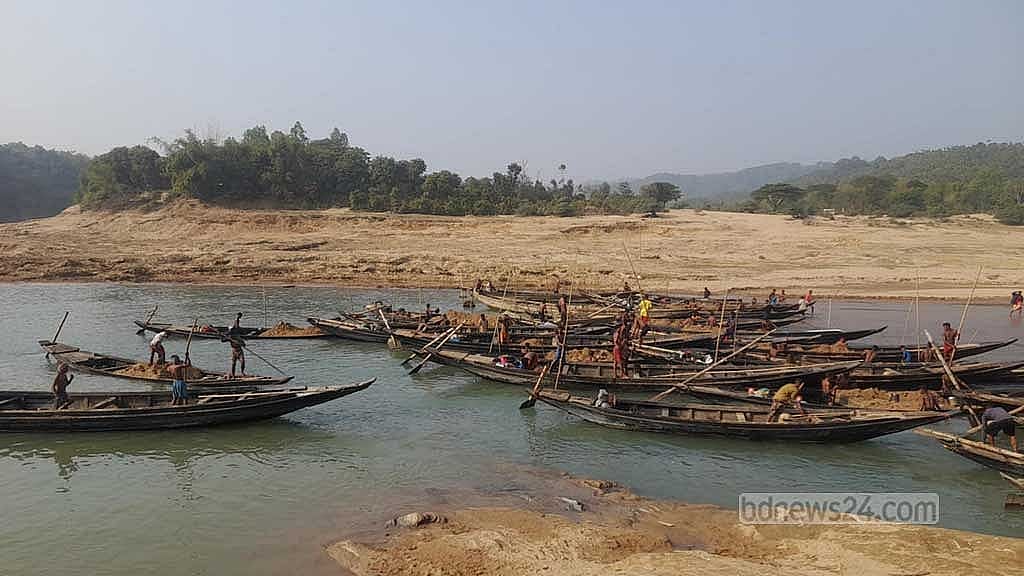
On a recent afternoon, at Lalakhal’s Zero Point, a bustling tourist destination, over 100 engine-driven wooden boats were actively engaged in sand extraction.
The workers were fully engrossed in their tasks, competing to load their boats as quickly as possible.
Both sides of the river at the Zero Point were crowded with workers, all focused on removing sand.
The sand extraction operation stretched from the Zero Point area towards the border, with workers navigating the riverbanks, some keeping an eye out for any signs of authority.
The sand was being removed from different points along the river, leading to the formation of numerous large and small pits along the riverbanks.
A few kilometres ahead of Lalakhal’s Zero Point lies the Nazimgarh Resort Ghat.
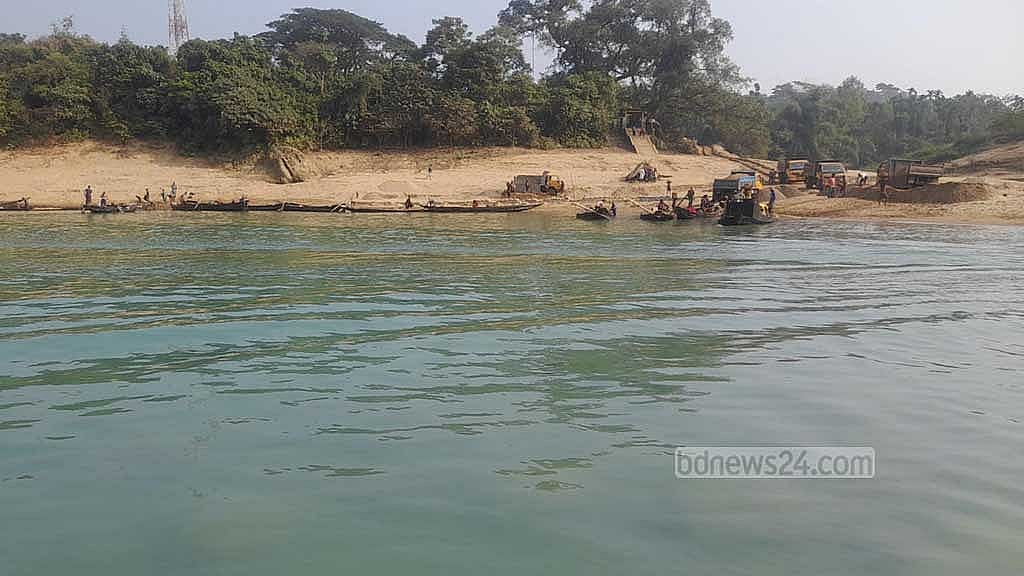
Along the eastern bank of the river, near the village of Nischintapur, sand labourers offload and sell the sand from their boats.
From the riverbanks, trucks are loaded with sand, ready for transportation—a process that continues throughout the day.
Most of the sand extracted is transported to the Sari Ghat area due to its proximity to the Sylhet-Tamabil Highway, making transportation easier.
The sand is often piled along the riverbank in Sari Ghat, where it is common to see between 150 and 200 boats unloading sand.
Akmal Hossain, a visitor to Lalakhal with his family, said: “I visited here a few years ago, and the beauty back then is no longer here. The riverbanks now seem scarred. Look at the Zero Point; there are pits all around, and sand is still being extracted.”
‘NOT JUST LALAKHAL, ENTIRE ECOSYSTEM WILL BE DESTROYED’
Md Jahirul Hoque, vice chancellor of Sylhet Metropolitan University and organiser of Dhoritri Rokkhay Amra, or DHORA, said Lalakhal is a transboundary and endangered river, distinct from others in the country, playing a crucial role in the existence of its ecosystem and the life it supports.
"The crystal-clear water flowing through Lalakhal, alongside the mineral-rich sand and pebbles at the riverbed, gives the impression of a natural aquarium.
“Tourists, both from home and abroad, come here to witness the breathtaking beauty of the Meghalaya hills bordering Bangladesh, along with the picturesque views.”
Prof Jahirul continued, “What is happening recently in the name of mass sand extraction from Lalakhal is essentially the plundering of mineral resources.
“However, if the sand extraction had been carried out in a planned manner based on expert opinions, it could have contributed to the country’s development without putting the river in jeopardy.
“In addition, the tourism value would have remained intact.”
He believes that if the authorities do not take strict action, it will not only destroy the river but also lead to severe damage to the local ecosystem, wildlife, and environment.
Foyez Hasan Ferdous, the acting president of the Sylhet Chamber of Commerce and Industry, said: "Extracting sand and stone from undeclared areas harms the environment. It is extremely risky to extract sand and stone from areas other than designated tourism spots.
“If this continues," he feared, "tourist destinations, people's homes, and several infrastructures will be ruined. It should not be allowed."
He emphasised that infrastructure development is essential for expanding the tourism business in Sylhet.
“Without this, tourists will not find peace when visiting the region.
“In addition, measures for ensuring the safety of tourists must be implemented. If the government survey allows for sand and stone extraction, it should only be done from specific locations and in a controlled quantity.
"Because," Ferdous pointed out, "nearly 30,000 people work in each sector in Sylhet, and approximately 120,000 family members rely on their earnings."
JOINT EFFORTS SOUGHT FROM AUTHORITIES
Sylhet Deputy Commissioner Mohammad Sher Mahbub Murad said roads used for the illegal transportation of sand from the riverbanks will be closed.
Last week, the district administration conducted a mobile court session at Lalakhali, he added.
In December, the Department of Environment filed cases against those involved in sand looting.
Jaintiapur UNO Umme Rumya said: "To stop illegal sand extraction, permanent barricades will be placed at eight locations from Sari Ghat to Lalakhal, using concrete pillars, to prevent vehicles from transporting sand along the riverbanks."
She also warned that any extortion under the name of the administration would result in strict action.
Farzana Akter Laboni, assistant commissioner (land) of Jaintiapur, said operations to stop illegal sand extraction are taking place almost daily. To effectively end the practice, a joint effort from the Upazila administration, the Department of Environment, police, and the Border Guard Bangladesh, or BGB is crucial, she emphasised.
Farzana also spoke about the importance of cracking down on those who exploit the administration’s name for extortion.
"I have heard this for the first time from you. I have not taken a single penny from anyone, and I will not in the future."
Commenting on the allegations of extortion under the administration's name, Jaintiapur Police Station chief Abul Bashar Mohammad Badruzzaman said: "I am unaware of this matter.
“Multiple operations and cases have been conducted to stop illegal sand extraction," he pointed out.
[Writing in English by Sheikh Fariha Bristy; editing by English Desk]