Home
+
Published : 11 Jul 2026, 11:02 PM
France had just beaten Paraguay to continue another deep World Cup run when the conversation drifted away from football.
Celeste Amarilla, a Paraguayan senator, had posted racist remarks about Kylian Mbappé and questioned the identity of a French team filled with players of African heritage. Her comments were crude, but the argument behind them was familiar. Versions of it return whenever France reach the latter stages of a major tournament: are these players really French?
It is a strange question to ask of men born, raised and developed in France, wearing the national shirt and singing the national anthem. Yet it persists because Les Bleus have become more than a football team. They are a screen on which people project their hopes, fears and resentments about immigration, race and national identity.
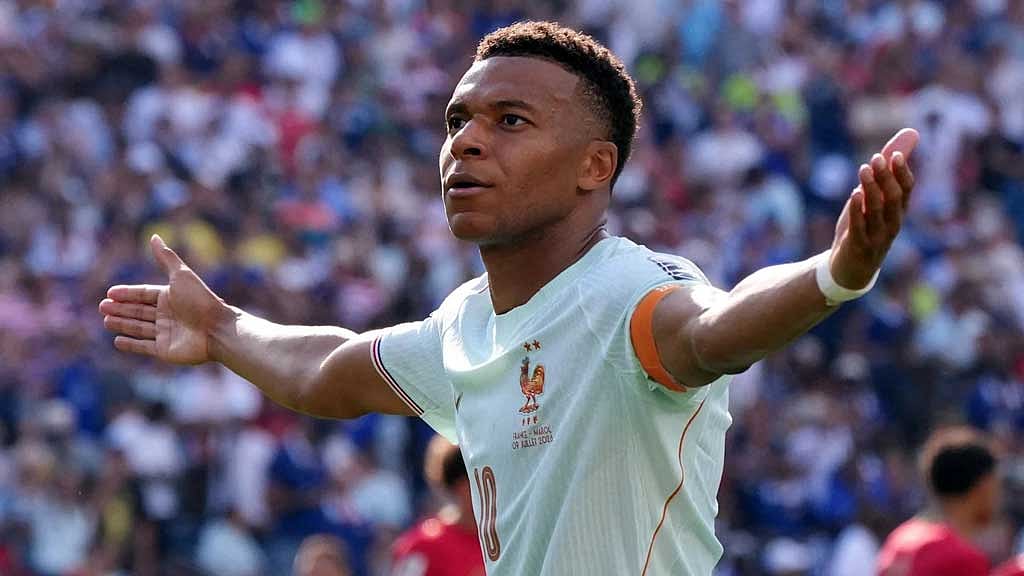
Mbappé sits at the centre of that story.
He was born in Bondy, in the north-eastern suburbs of Paris, to a father with Cameroonian roots and a mother of Algerian Kabyle heritage. His father, Wilfried, coached football. His mother, Fayza Lamari, played handball. Sport was not an escape discovered by chance. It was part of the family’s daily life.
Mbappé started at AS Bondy before entering Clairefontaine, the elite academy that has helped turn France into one of football’s great production lines. In his 2020 letter to the children of Bondy, he described the contrast between the two worlds. Clairefontaine was about improving technique. Bondy was about competition, survival and real life.
One gave him polish. The other gave him an edge.
There is no contradiction in saying that Mbappé is French while acknowledging his Cameroonian and Algerian heritage. Modern identities are often layered. They do not fit neatly into the narrow boxes demanded by political slogans or social-media trolls.
France’s national story has been layered for a long time.
For centuries, France controlled territories across Africa, the Caribbean, Asia and the Pacific. Its empire extracted labour, resources and political obedience, while creating lasting connections of language, education, citizenship and migration. The formal empire ended, but those relationships did not disappear.
After the Second World War, France needed workers to rebuild. Migrants arrived from Algeria, Morocco, Tunisia, Senegal, Mali and elsewhere, alongside Europeans from countries including Italy, Spain, Portugal and Poland. They worked in factories, construction, transport and other industries that powered France’s recovery.
Many settled on the outskirts of major cities. Their children and grandchildren grew up French but were not always treated as fully French. The banlieues came to represent both the promise of social mobility and the failure of the Republic to deliver equal opportunity.
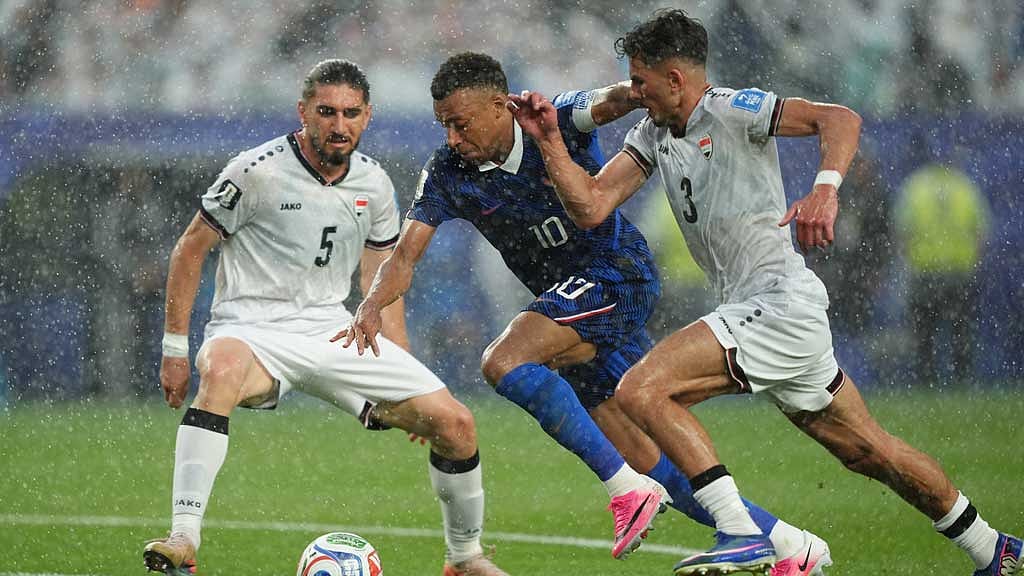
Football developed inside that contradiction.
Community clubs gave children structure, competition and a place to belong. Regional academies identified talent. Clairefontaine and France’s wider development network then combined athletic ability with technical education and tactical intelligence.
Arsène Wenger’s explanation of French football’s success is important because it avoids an easy or sentimental answer. He has linked France’s strength to the quality of its football education and talent identification, but also to immigration, particularly from Africa.
Immigration widened the talent pool. French institutions developed it.
That distinction matters.
To say France simply “take” African players is often inaccurate and can itself deny their Frenchness. Many were born in France, educated in France and trained by French clubs.
But it would be equally dishonest to remove history from the story. Colonial relationships influenced migration routes, language and citizenship. Wealthy European leagues also continue to benefit from players and families connected to countries with fewer resources and weaker football economies.
France’s success cannot therefore be reduced either to generous integration or cynical exploitation. It contains opportunity, investment, inequality and history all at once.
The names that have defined French football tell that story. Raymond Kopa was the son of Polish immigrants. Michel Platini came from an Italian family. Zinedine Zidane’s parents were Algerian. Patrick Vieira was born in Senegal. N’Golo Kanté’s parents came from Mali. Karim Benzema is of Algerian heritage.
The present generation -- Mbappé, Ousmane Dembélé, Aurélien Tchouaméni and others -- continues that tradition.
When France win, this diversity is celebrated as proof of national strength. The victorious 1998 team was presented under the slogan “Black-Blanc-Beur” -- Black, white and Arab -- as though one glorious summer had settled France’s deepest questions about race and belonging.
It had not.
The embrace can be conditional. After victories, the players are national treasures. After defeats, some are reminded of their ancestry, religion or skin colour.
Mbappé discovered that after Euro 2020.
France were knocked out by Switzerland after he missed the decisive penalty in the shootout. Football criticism was unavoidable. The racial abuse that followed was not.
Mbappé later said the response, and what he considered inadequate support from the French football authorities, left him wondering whether he should continue playing for the national team.
That episode exposed the fragility of belonging. Mbappé had helped France win the World Cup as a teenager, scored in the final and become one of the country’s most recognisable public figures. Yet one missed penalty was enough for some people to treat him as an outsider again.
Five years later, the picture looks very different.
At the 2026 World Cup, Mbappé has become the leading figure in another French campaign built on control, athleticism and ruthless tournament experience.
France beat Sweden in the round of 32, edged Paraguay in the last 16 and defeated Morocco 2-0 in the quarter-finals to reach a third successive World Cup semi-final.
Mbappé missed a penalty against Morocco but then scored in the second half. It was a small act of personal revision in a career repeatedly shaped by how he responds to failure.
The player blamed for the penalty against Switzerland is now the captain carrying France towards another possible World Cup final.
Yet this sporting revival is unfolding against a political background in which immigration has become one of Europe’s strongest dividing lines.
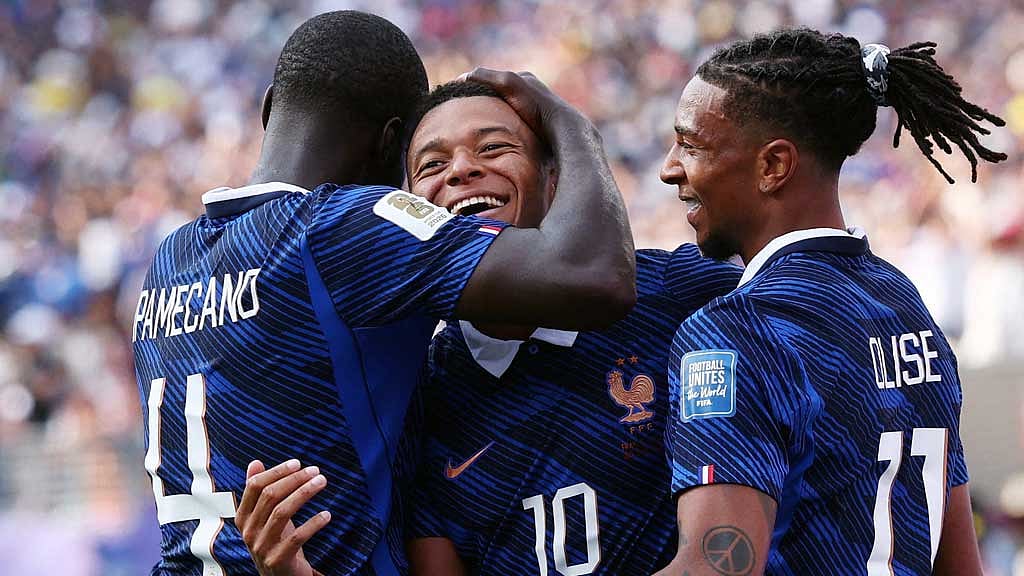
Far-right and nationalist parties have moved from the margins towards government or serious electoral contention across the continent. In France, the National Rally has placed immigration, security and “national preference” at the centre of its politics and remains a major force ahead of the 2027 presidential election.
Similar arguments shape political debate in Britain, Germany, Italy, the Netherlands and the United States.
Concerns about borders, housing, public services and social cohesion cannot all be dismissed as racism. Democracies have the right to debate how much immigration they want and how it should be managed.
But legitimate arguments over policy can slide into something darker: the suggestion that legal citizenship is not enough, and that some people remain permanent guests regardless of where they were born, what they contribute or how strongly they identify with the country.
Football exposes the weakness of that argument.
Mbappé did not become French when he scored in a World Cup final. Kanté did not become French when he controlled the midfield. Zidane did not become French when he headed France to victory in 1998.
Their achievements did not grant them membership of the nation. They already belonged.
That does not mean football has solved integration. A successful national team cannot erase discrimination, unemployment, segregated neighbourhoods or unequal access to opportunity. Nor should the success of a few exceptional athletes be used to pretend that the system works equally for everyone.
But Les Bleus reveal something true about France: the country’s identity has already changed.
It has been shaped by empire, war, migration and generations of families who built their lives there. The national team is not an artificial diversity project assembled for television. It reflects the society that produced it.
This is why attacks on Mbappé matter beyond one football match. He is not targeted only because he is famous. He represents a France that some people celebrate when it scores but seem reluctant to recognise on equal terms.
In his letter to the children of Bondy, Mbappé explained that there could be no Kylian Mbappé without his parents, his friends and his community.
The same can be said of modern French football. It cannot be separated from the workers who helped rebuild France, the families who made homes in its suburbs, the community clubs that nurtured their children and the histories -- proud, painful and complicated -- that connected France to the wider world.
The real question is not whether Mbappé and his teammates are French enough.
It is whether France is ready to accept everything that being French now means.