Home
+
Published : 25 Jun 2026, 07:01 PM
Bangladesh’s political landscape looks set for another period of uncertainty, with growing debate over the role and ambitions of Bangladesh Jamaat-e-Islami.
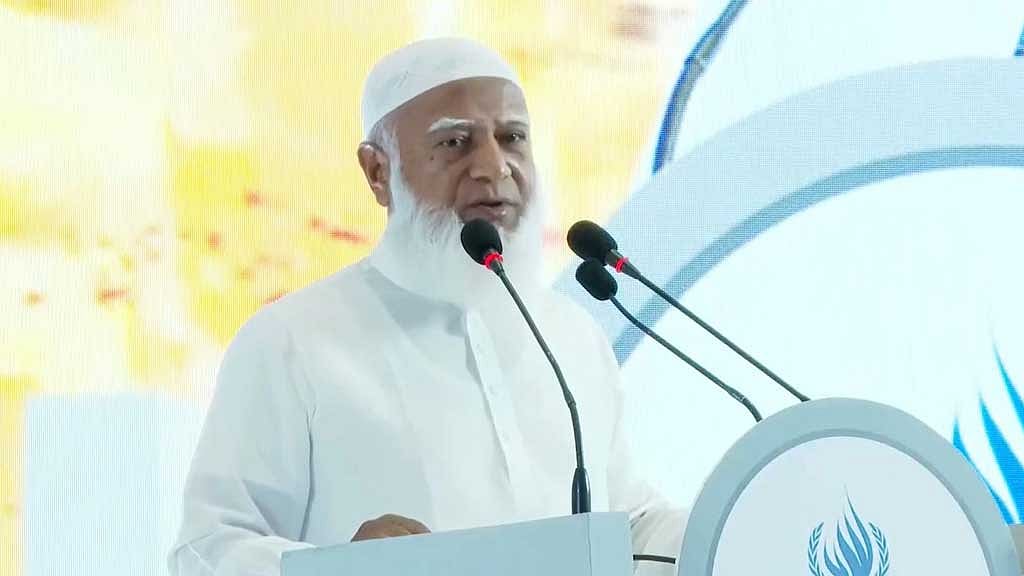
The party appears to be in a hurry to translate political influence into power, even if that means increasing confrontation and instability rather than contributing to democratic consolidation. Recent remarks by Jamaat Ameer Dr Shafiqur Rahman have intensified this debate.
Dr Rahman’s reported warning that Jamaat would launch a movement against the BNP-led government if reforms and implementation of the July Charter are not carried out can be viewed by opponents as premature political pressure. Such an approach negates efforts to strengthen democratic institutions and risks creating another cycle of street mobilisation and political uncertainty.
This argument becomes more significant because Bangladesh is already struggling with the consequences of a confrontational political culture. The BNP government, according to its critics, has not yet developed sufficient strength to effectively counter mob politics and the influence of groups described as “Tawhidi Janata”, which gained visibility during the period of the Muhammad Yunus-led administration. The inability to restore a stable law-and-order environment has provided Jamaat with an opportunity to argue that the government has failed, even while the same environment has been shaped by wider political and social disruptions.
Another issue raised by critics is Jamaat’s selective approach toward matters of national interest. The party frequently presents itself as a defender of sovereignty and the interests of the Muslim world. However, the Jamaat has been relatively silent on concerns surrounding the US-Bangladesh Reciprocal Trade Agreement and whether certain provisions could affect Bangladesh’s economic independence and policy space.
Similarly, questions can be raised about Jamaat’s response to international issues affecting Muslim-majority countries. While the party regularly speaks about solidarity with the Muslim world, it has not been equally vocal in criticising US policies and its alliance with Israel amid conflicts in the Middle East, including the devastating consequences of regional wars. Such conflicts have had wider consequences, including economic pressures, instability, and risks faced by Bangladeshi migrant workers in the region. A movement claiming to represent Muslim interests should address these issues with consistency rather than selectivity.
Domestically, Jamaat’s relationship with emerging political forces has also attracted scrutiny. The party has benefited from an environment where political disagreement is increasingly framed through labels such as “fascist”, allowing dissenting voices to be dismissed rather than debated. They argue that such practices weaken democratic discussion and create an atmosphere where political competition becomes more about silencing opponents than addressing national issues.
It is quite apparent that Jamaat operates through multiple front organisations and networks beyond its formal party structure. Many claim these platforms are used to mobilise pressure against the government and target social and cultural groups that do not align with Jamaat’s worldview. Supporters of Jamaat obviously dispute such claims and describe these networks as legitimate civic engagement.
Concerns have also been expressed over the sudden appearance of rallies and public displays involving symbols associated with extremist organisations such as ISIS, Al-Qaeda or Palestinian resistance group Hamas in Bangladesh. A legitimate question is whether elements seeking to destabilise the political environment may be exploiting religious sentiments to create fear and weaken the authority of the BNP government. One can also point to growing concerns over threats against minority communities, arguing that any rise in intimidation or communal tension can undermine social stability and provide political advantage to forces seeking to portray the government as incapable of maintaining order. While the origins and motivations behind such activities require proper investigation, one would warn that the manipulation of religious identity for political purposes poses a serious challenge to Bangladesh’s democratic and pluralistic traditions.
For many Bangladeshis, the debate over Jamaat cannot be separated from history. Critics continue to view the party’s ideological roots through the lens of the 1971 Liberation War and argue that Jamaat represents an attempt to revive political ideas associated with Pakistan-era identity politics. To them, Jamaat’s rise is not merely a change in electoral competition but a contest over the future direction and identity of Bangladesh.
Ultimately, the question facing Bangladesh is not only which party gains power, but what kind of political culture emerges. A democratic system not only requires competition, but it also requires patience, accountability, respect for dissent, and commitment to national institutions. The fear is that Jamaat’s current strategy prioritises rapid political advancement over these principles. Whether that perception proves accurate will depend on how the party conducts itself in the evolving political landscape of Bangladesh.
[Jibran Saaed is a journalist]