Published : 26 Jun 2026, 06:42 AM
Updated : 08 Sep 2026, 09:18 AM


Stagnant Arteries: Chronic Cost of Congestion
Decade of deadlock: Previous 2010 and 2021 relocation blueprints collapsed due to funding shortfalls and land acquisition hurdles
Gridlock gamble: Shifting terminals could worsen gridlock if thousands of passengers transfer into smaller vehicles to enter Dhaka
Sceptical citizens: Exasperated residents view the new scheme with deep cynicism, citing a history of empty infrastructure promises
Commuter dilemma: Experts warn late-night arrivals left at peripheral hubs will face immense safety risks and gruelling onward journeys
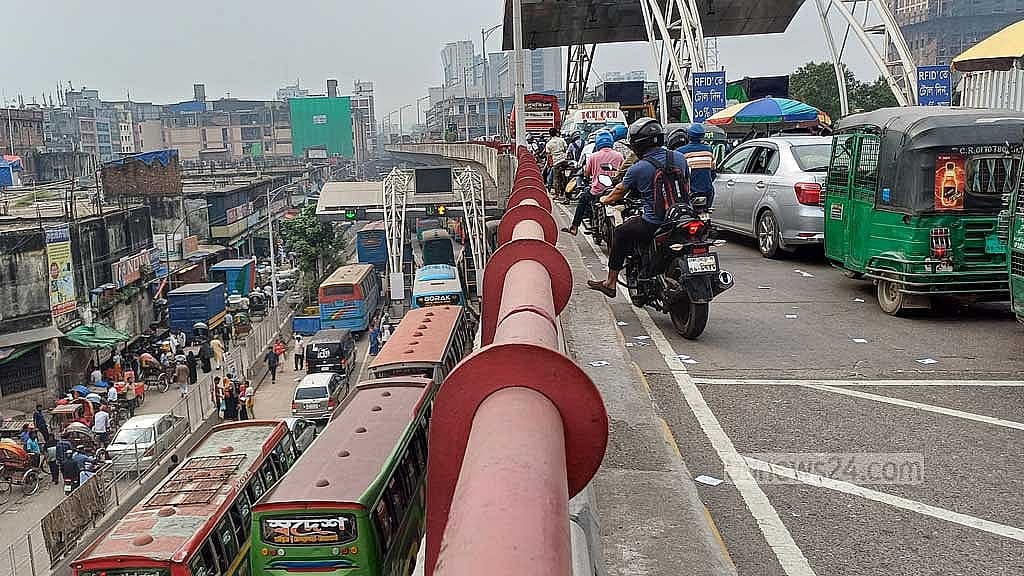
Dhaka spends much of every day trapped in traffic.
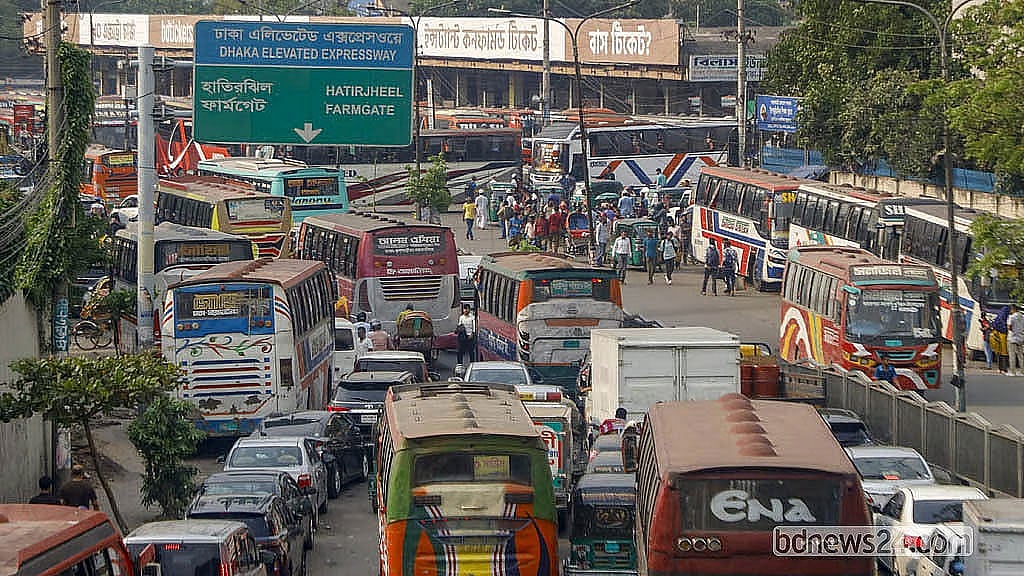
From dawn until late at night, buses, cars, rickshaws and motorcycles compete for limited road space in one of the world's most densely populated cities.
For years, policymakers have searched for a breakthrough solution. Now, a familiar proposal has returned to the centre of government thinking: move the capital's major long-distance bus terminals beyond the city limits.
The question is whether it will work this time -- and whether moving terminals alone can untangle Dhaka's notorious congestion.
The idea is not new. Similar plans surfaced in 2010, while fresh proposals, including site selections, emerged in 2021. Neither effort materialised.
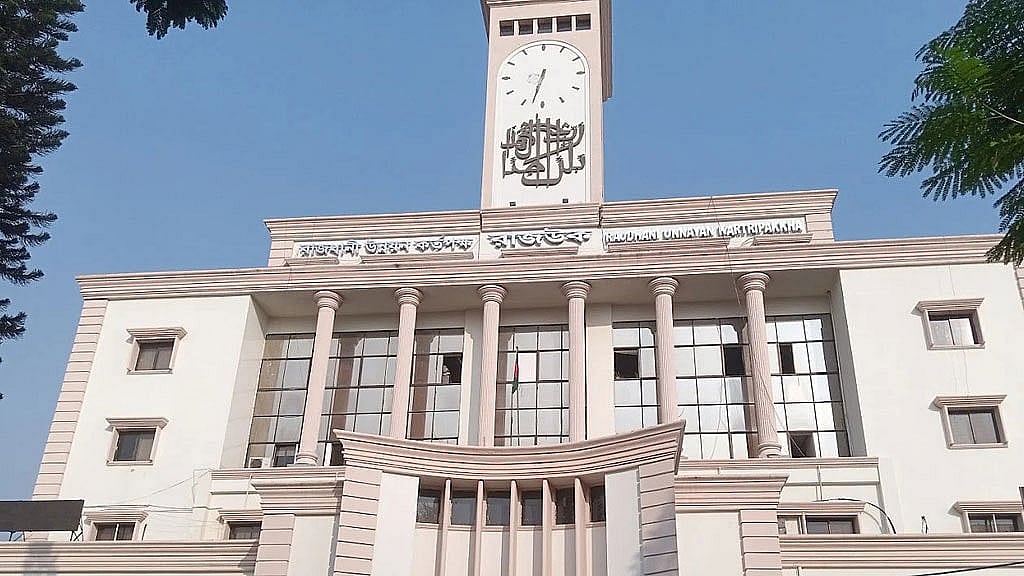
As a result, despite optimism from Rajdhani Unnayan Kartripakkha (RAJUK) and Dhaka's two city corporations, many residents remain sceptical.
Some urban planners and transport specialists argue that even if the government succeeds in relocating the terminals, the initiative could worsen congestion unless it is accompanied by a carefully designed transport network linking the outskirts with the city centre.
In June last year, Sheikh Moinuddin, special assistant to then chief advisor Muhammad Yunus, said at a seminar that traffic congestion in Dhaka causes annual economic losses of around Tk 370 billion and wastes nearly 5 million working hours.
The infrastructure and environment specialist served in the Road Transport and Highways Division under the interim administration.
A City that Outgrew Its Terminals
Dhaka once had a single inter-district bus terminal at Fulbaria in Gulistan.
In 1984, authorities attempted decentralisation by establishing new terminals at Gabtoli, Mohakhali and Sayedabad.
At the time, Dhaka's population stood at about 4.35 million.
According to the United Nations publication “World Urbanisation Prospects 2025”, the population of the two-city-corporation metropolis has now reached 36.6 million.
Vehicle numbers have surged as well. Data from the Bangladesh Road Transport Authority (BRTA) show that by May 2026, Bangladesh had 6.72 million registered vehicles, of which 2.39 million were in Dhaka alone.
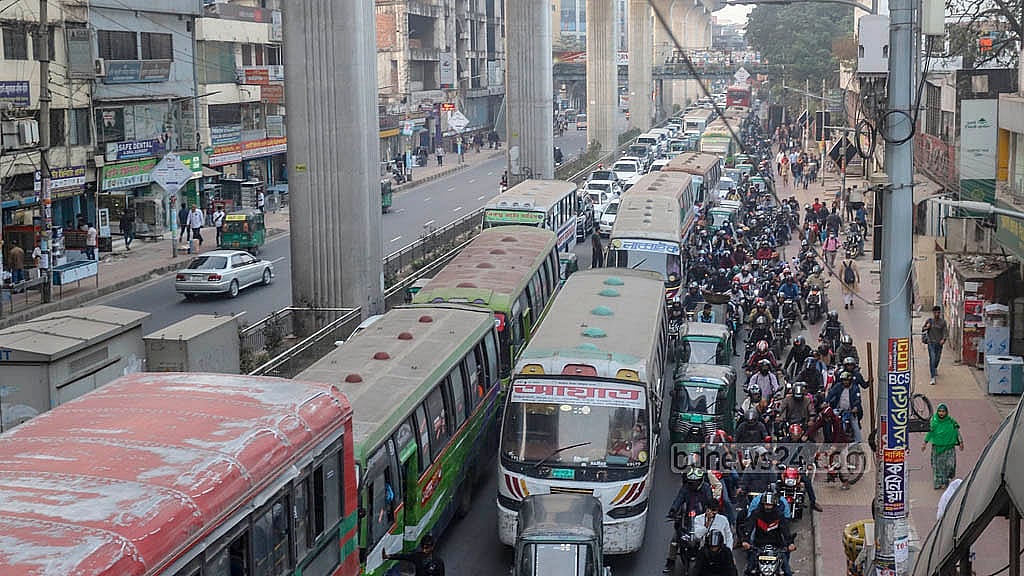
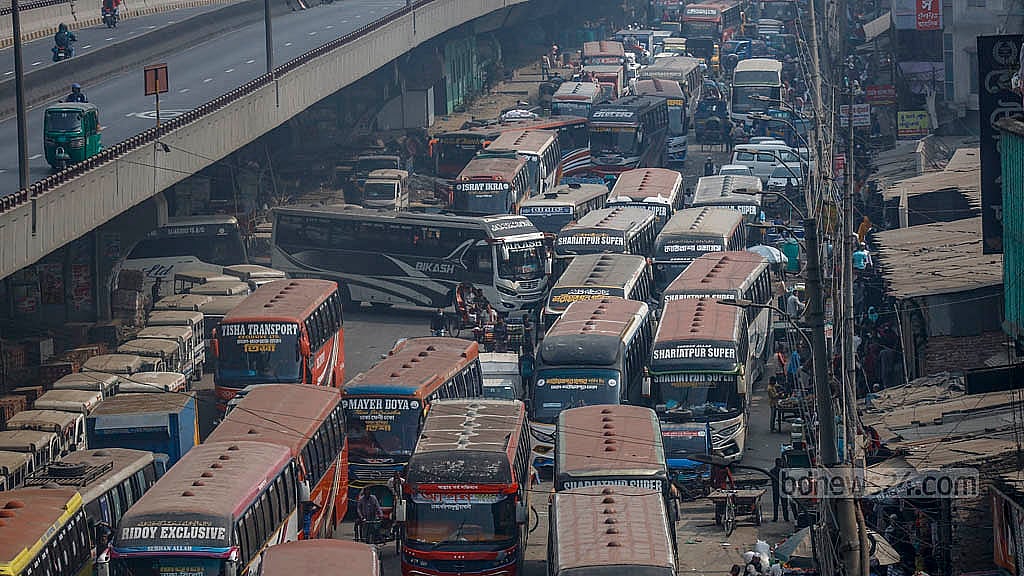
What were once peripheral terminals now sit deep inside an expanded metropolis. Under the pressure of explosive population growth and rising vehicle numbers, these facilities have become major contributors to congestion.
Why Earlier Plans Failed
The first formal attempt to relocate the terminals came in 2010 after authorities concluded that inter-district bus operations were worsening traffic conditions.
The proposal envisaged moving Sayedabad to Kanchpur, Gabtoli to Savar, Mohakhali to Uttara and Fulbaria to Keraniganj.
Dhaka city corporations even sought land from RAJUK.
The project never advanced.
Several RAJUK officials were unable to explain why.
RAJUK Director (Administration) Shilabrata Karmakar said, “I do not know about this issue.”
Chief Town Planner Md Ashraful Islam similarly said, “I am not exactly aware whether such an initiative was taken in 2010.”
Another plan emerged in 2021.
A feasibility study by the Dhaka Transport Coordination Authority (DTCA) proposed five new inter-district terminals at Bhatulia and Hemayetpur in Savar, Baghair in Keraniganj, South Kanchpur and Bhulta in Rupganj.
The project was estimated to cost Tk 14.63 billion and accommodate 38,028 buses. It required acquisition of around 63.63 hectares of land.
Ashraful said land acquisition complications and financing issues prevented progress.
“This was a project that could have been implemented by the two city corporations. But there were difficulties regarding land acquisition and funding. As a result, neither city corporation was particularly active.”

Latest Push
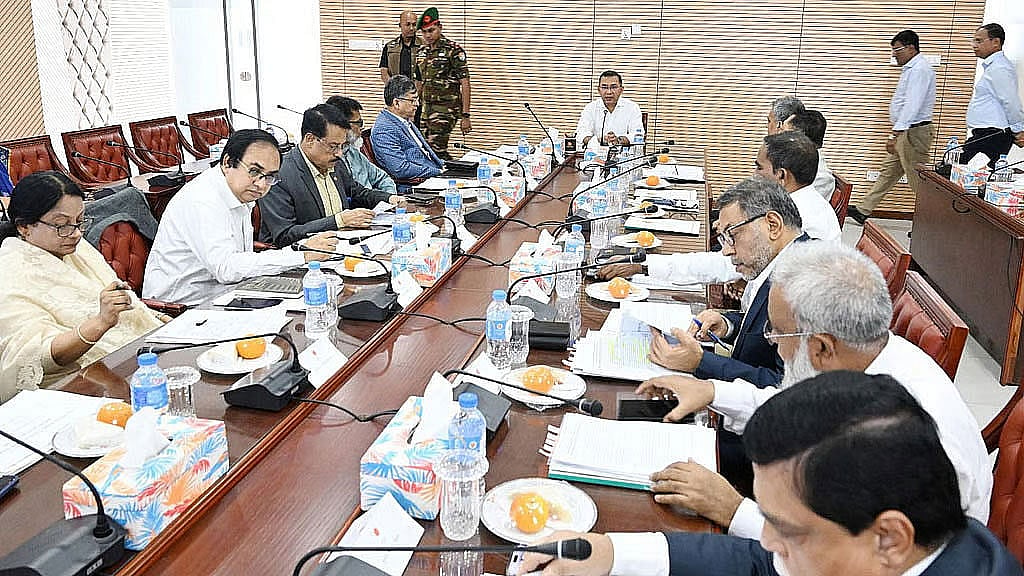
Momentum returned on Jun 15 when Prime Minister Tarique Rahman instructed officials at a high-level Secretariat meeting to swiftly relocate Dhaka's four principal bus terminals outside the capital.
Deputy Press Secretary Hasan Shiplu later said the premier had also ordered the removal of scattered bus counters operating across the city.
Under the latest plan:
• Fulbaria-Gulistan terminal will move to Keraniganj.
• Gabtoli will shift to Hemayetpur.
• Sayedabad will relocate to Kanchpur.
• Mohakhali will move temporarily to the eastern fringe before eventually relocating near Tongi.
Ashraful believes the initiative now has a greater chance of success.
“[Prime minister] has given importance to this issue so that it can be implemented quickly. Urbanisation around Dhaka is advancing rapidly. If land cannot be acquired now, preserving these sites in future will become much more difficult.”
Road Transport Minister Sheikh Rabiul Alam said on Jun 18 that relocation would take two to two-and-a-half years.
Initially, many of the facilities will function as depots rather than full terminals.
“Buses will stay there,” he said. “Before departure they will come to the terminal, pick up passengers and leave.”
Support — and Scepticism
Bus owners have largely welcomed the proposal.
ASM Ahmed Khokon, treasurer of the Dhaka Road Transport Owners Association, said operators would have no objection if the necessary infrastructure were built.
“Dhaka has become much more densely populated. Operating buses from inside the city is becoming increasingly difficult.”
Yet public confidence remains limited.
Gabtoli resident Sharif Ahmed said, “I have been hearing that congestion will be reduced for so long that my son has gone from primary school to college. Dhaka residents have learned that several elections can pass between an announcement and implementation.”
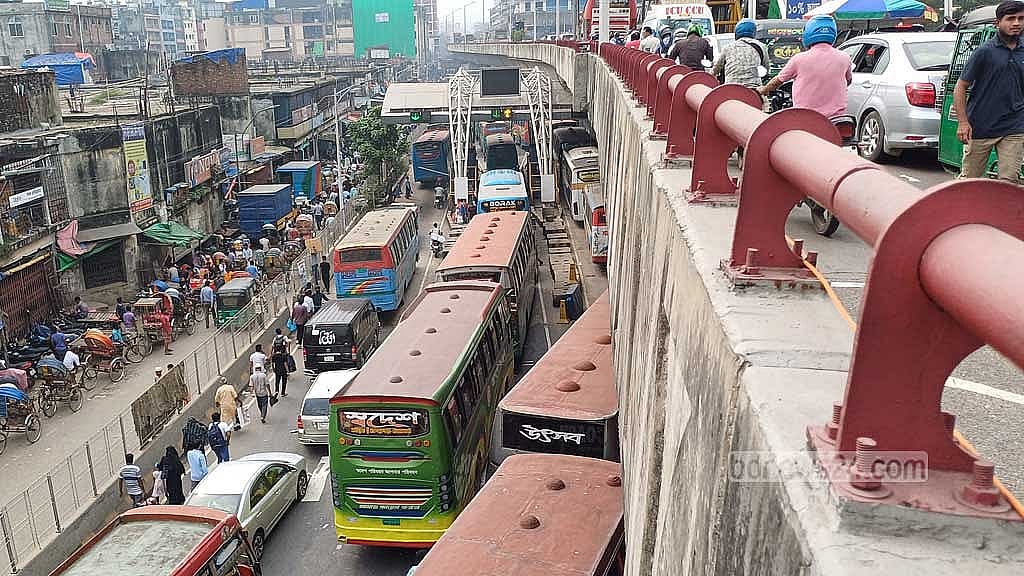
Private company employee Roman Hossain said Mohakhali remains clogged throughout the day because of buses entering and leaving, roadside parking and passenger loading.
“If the terminal moves, the area will get some relief. But many initiatives in this country remain trapped on paper.”
Land Acquisition Begins
Officials say preliminary work has already started.
DTCA Additional Executive Director Abdul Latif Khan said Hemayetpur, Keraniganj and Kanchpur remain under consideration, while Bhulta and Bhatulia are still being discussed.
Dhaka South City Corporation Chief Executive Md Zahirul Islam said around 4.86 hectares of Roads and Highways Department land at Kanchpur had already been filled and boundary work had begun.
“The prime minister's instruction is to start operations as quickly as possible, even on a temporary basis.”
Basic facilities such as toilets, temporary sheds and lighting will be installed first, while full infrastructure will follow later.
Dhaka North City Corporation Acting Chief Executive Muhammad Asaduzzaman said administrative approval procedures for acquiring land at Hemayetpur had already begun.
Will Congestion Really Disappear?
The central debate remains unresolved.
According to the DTCA feasibility study, inter-district and suburban buses account for about 24 percent of vehicles entering Dhaka's major roads and 74 percent of all buses.
Many assume relocating terminals will reduce traffic pressure.
Urban planner Adil Muhammad Khan is not convinced.
“Is inter-district bus traffic the only cause of congestion in Dhaka?” he asked. “Or are there management failures behind it?”
He pointed to operational issues at Mohakhali, including bus positioning and passenger boarding practices.
“Suppose a bus arrives carrying 40 passengers. If they are dropped outside the city, many will enter Dhaka using smaller vehicles. Will the number of vehicles decrease or increase?”
He argues that improving management may be more important than abolishing existing terminals.
“Current management can be improved. Multi-storey parking has been discussed for years. Implementing such measures could improve the situation.
“New terminals can be built if needed. But the existing terminals should not be removed entirely.”
BUET transport expert Prof Md Hadiuzzaman views the government's initiative more positively.
“We have never been able to make these terminals function as true terminals,” he said. “Many have effectively become garages and workshops.”
However, he favours creating depots rather than fully fledged terminals outside the city.
“Building complete terminals requires major investment and a long timeframe. Depots can be developed much faster.”
The Passenger Question
The biggest concern may not be traffic -- but people.
How will passengers arriving from Rangpur, Rajshahi or other districts reach central Dhaka after being dropped in Tongi, Hemayetpur or Kanchpur?
Adil says their voices should be central to the discussion.
“Those who travel to Dhaka from across the country are the most important stakeholders. Their opinions matter.”
He added, “If a passenger arrives at night with family members and luggage, how will they enter the city?”
The assumption that metro rail will solve the problem also requires scrutiny, he argued.
“Will inter-district passengers carrying luggage and travelling with family be able to use the metro comfortably?”
RAJUK's Ashraful said proposed terminals have been planned near existing or future metro stations and potential ring-road connections.
But BRTC Director Rahenul Islam said no decision had yet been taken on dedicated shuttle services.
Passengers themselves remain cautious.
Joy Sarkar from Sirajganj said another lengthy journey on local transport after arriving in Dhaka would be exhausting.
Dhaka University student Rakesh Roy from Dinajpur said relocating terminals far outside the city would create additional hardship.
Experts also warn of safety concerns, particularly for late-night travellers.
Hadiuzzaman fears remote highway terminals could expose passengers to security risks and simply transfer congestion from Dhaka's streets to surrounding highways.
“The most sustainable solution is to move depots outside the city,” he said. “Otherwise we will merely relocate Dhaka's congestion elsewhere.”
For Khan, the issue comes down to practicality.
“Decisions cannot be made simply by copying developed countries,” he said. “First, we must ensure that passengers dropped outside Dhaka can reach their destinations safely, comfortably and affordably.”