Home
+
Published : 25 Jun 2026, 06:07 PM
With Prime Minister Tarique Rahman away on his first overseas tour, how is Bangladesh's administrative nerve centre functioning? Are officials still arriving on time? Are ministers maintaining regular attendance?
Those questions have gained renewed attention amid criticism inside and outside parliament over the frequent absence of ministers during the ongoing budget session.
Under Cabinet Division instructions, employees of government, semi-government and autonomous institutions are required to remain at their respective offices from 9am to 9:40am.
Many ministers and advisors accompanied the prime minister on his trip abroad. But are those who remained in the country following the prescribed schedule?
The inspection was carried out by bdnews24.com reporters Liton Haider, Golam Mortuja Antu, Masum Billah, Kazi Mobarak Hossain, Masum Kamal and Hamimur Rahman Waliullah, who visited the Ministry of Public Administration, Cabinet Division, Ministry of Finance, Ministry of Commerce, Ministry of Health and Family Welfare, Ministry of Home Affairs, Ministry of Religious Affairs, Ministry of Road Transport and Bridges, Ministry of Youth and Sports, Ministry of Labour and Employment, Ministry of Rural Development and Cooperatives, Ministry of Local Government, Ministry of Cultural Affairs and the Financial Institutions Division.
They found several secretaries arriving only after office hours had begun, while ministers trickled in between 9:30am and 10am.
In ministries whose ministers were abroad on official business, many senior officials were still absent even one and a half hours after office hours began.
In some offices where ministers were in the country, preparations for cleaning and arranging rooms were still under way around 9:15am.
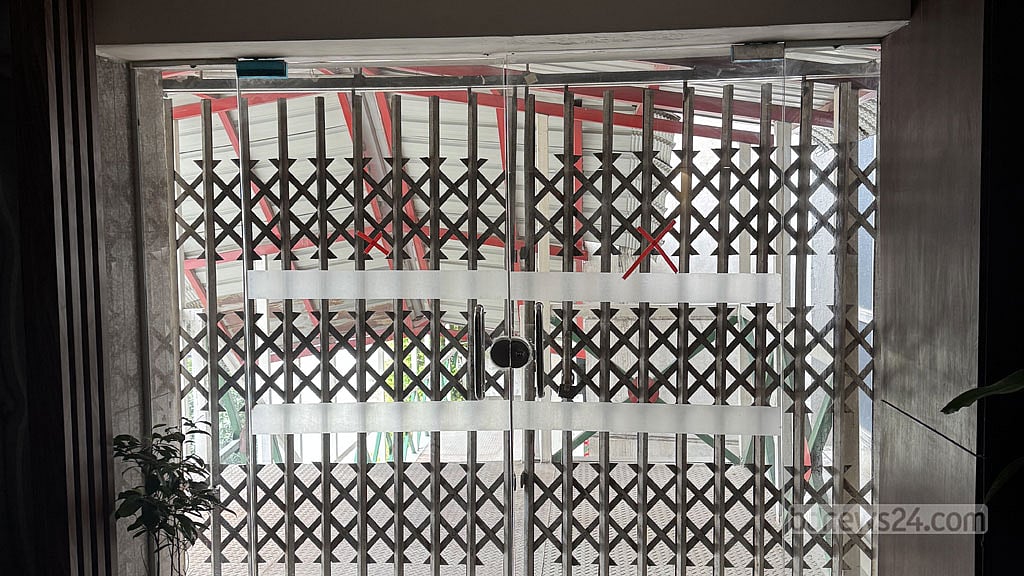
The earliest secretaries spotted entering their offices arrived at 9:07 am, though they insisted they normally report before 9am.
The reporters visited the Ministry of Public Administration, Cabinet Division, Ministry of Finance, Ministry of Commerce, Ministry of Health, Ministry of Home Affairs, Ministry of Religious Affairs, Ministry of Road Transport, Ministry of Youth and Sports, Ministry of Labour and Employment, Ministry of Rural Development and Cooperatives, Ministry of Local Government, Ministry of Cultural Affairs and the Financial Institutions Division.
The BNP, after nearly two decades out of power, had pledged before the February election to inject greater dynamism into the administration.
That commitment has been reflected in the premier’s actions since taking office.
From the outset, he regularly began work at the Secretariat, urging officials to be more productive.
He even worked on Saturdays and made surprise visits to seven ministries, drawing headlines while signalling his emphasis on attendance and discipline.
The Cabinet Division has also directed ministries to improve public services, accelerate administrative processes and strengthen coordination among government offices.
Its circular noted that employees often miss scheduled office hours because of seminars, workshops, training programmes or personal engagements, disrupting public services and inter-agency communication.
Parliament Criticism
The prime minister began his first foreign tour on Jun 21 with a visit to Malaysia before travelling directly to China. He is scheduled to return on Friday.
Meanwhile, parliament is debating the FY2026-27 budget announced on Jun 11. Opposition lawmaker Saiful Alam Khan Milon raised the issue of ministerial absences during proceedings.
"I have noticed that our ministers are absent most of the time during the budget session," the Dhaka-12 MP said.
"Look around -- the health minister, the home minister and many others are missing. The ministers' seats are empty. I seek your cooperation on this matter, speaker."
In response, Speaker Hafiz Uddin Ahmad said: "I would like to see more ministers attending the budget session. Be grateful that at least the finance minister is here. Other ministers should also be encouraged to attend. The budget session is important, and their presence would be appreciated."
The speaker also expressed disappointment over ministers' absences, saying: "No state duty is more important than a parliamentary session. Among all state activities, parliament deserves the highest priority."
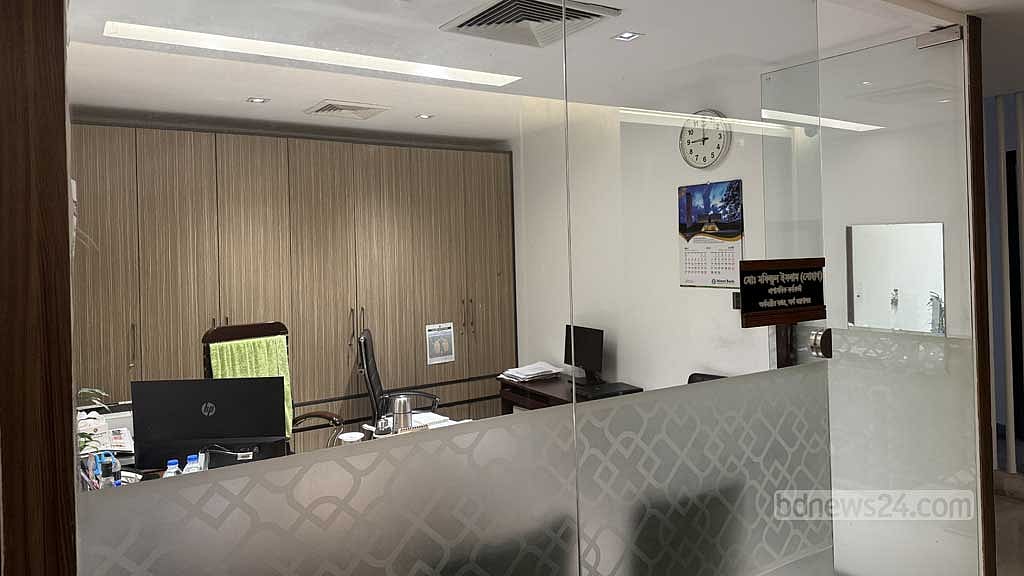
Against that backdrop, reporters set out to observe the Secretariat's morning routine.
What Reporters Found
Finance Minister Amir Khosru Mahmud Chowdhury remained in the country because of the budget session, while the Prime Minister's Finance Advisor Rashed Al Mahmud Titumir accompanied Tarique to China.
Between 9am and 9:05am, several key officials attached to the finance minister and advisor were absent from their offices.
One employee said, "The minister will arrive later. He may come around noon or 1pm."
The finance secretary was seen entering his office at 9:07am.
By 9:10am, officials were still absent from two of seven nearby offices. In the ministry's administration and coordination wing, three of 10 officials had not arrived by 9:15am.
At the Ministry of Commerce, the minister had still not arrived at 9:48am. Most officials in his office came after 9:15am. The minister eventually entered at 9:52am.
One official said, "To be honest, when the prime minister is away, the Secretariat is like a parliament without a quorum. Ministers do not feel the need to arrive early, and when ministers are absent, officials are less likely to come early too."
At 10:17am, the health minister's personal secretary and public relations officer were still absent.
"The minister is abroad. As for his secretary, I don't know why he is late today," an employee said.
Culture Minister Nitai Roy Chowdhury entered Building No. 6 at around 9:30am.
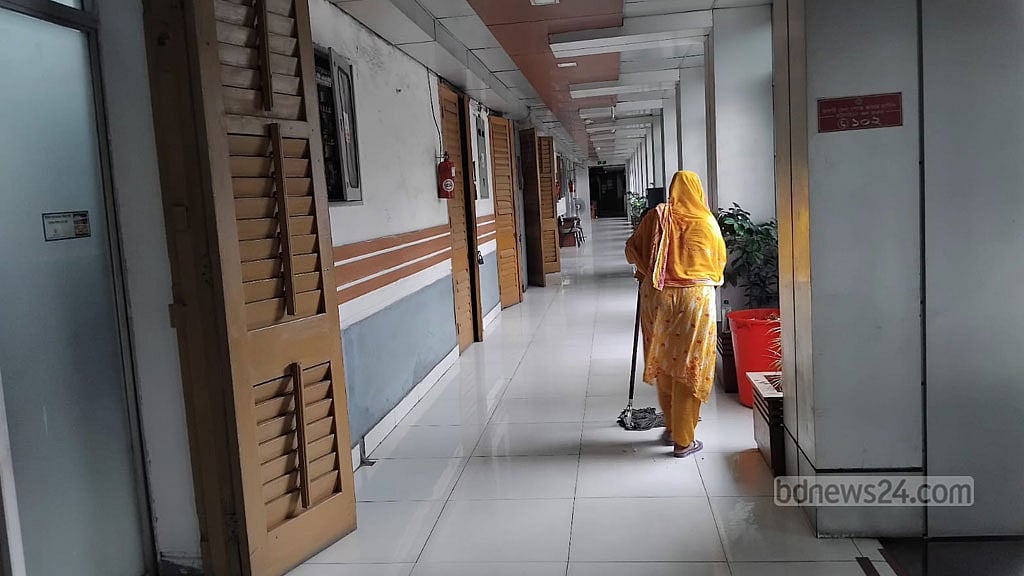
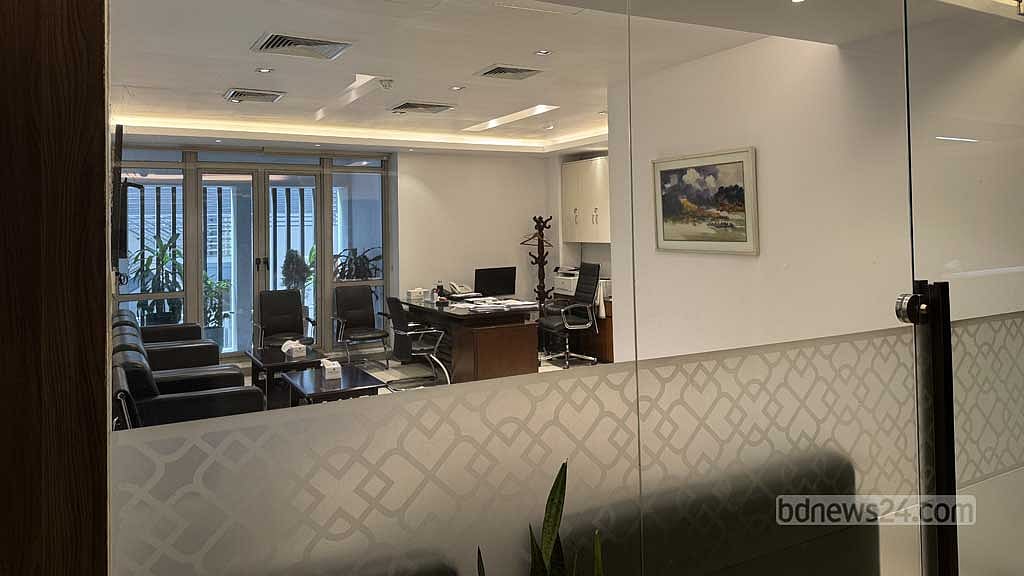
Cleaning Minister's Office after 9am
At the Ministry of Home Affairs, the home secretary had not arrived by 9:03am, while his personal secretary was also absent. Both entered the ministry at 9:12am.
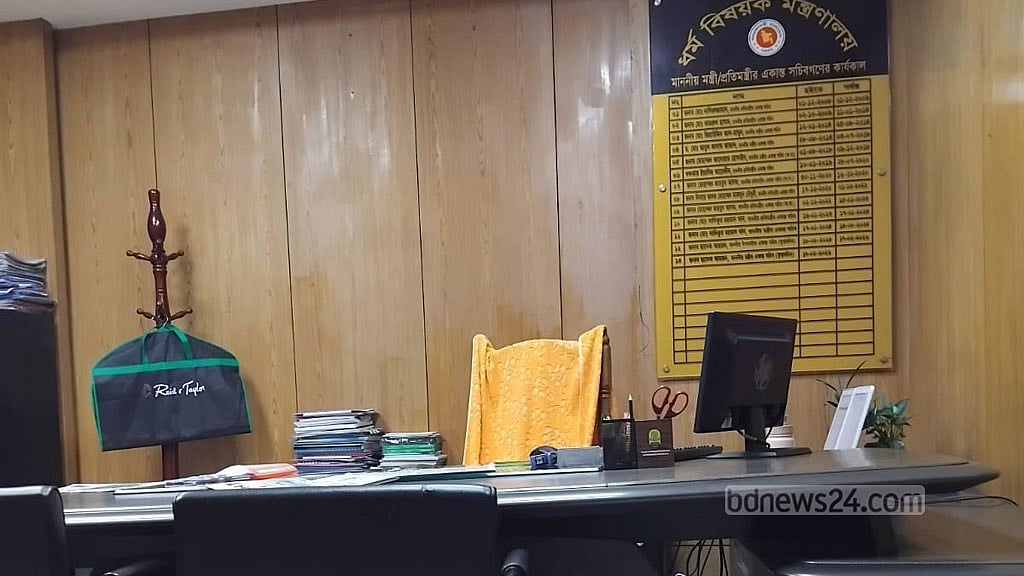
Around 9:15am., two employees, including a woman, were still cleaning the home minister's office.
Additional Secretary Faisal Ahmed arrived at 9:14am, while Additional Secretary Mohammad Abu Naim entered shortly after 9am.
At the Ministry of Religious Affairs, neither Minister Kazi Shah Mofazzal Houssain Kaikobad nor his personal secretary had arrived by 9:30am.
One official said, "Sir may not come today."
Another said the minister was slightly unwell and might attend an Islamic Foundation programme, while an office assistant claimed the minister had parliamentary commitments.
The ministry's secretary was also absent despite reportedly having no scheduled engagements.
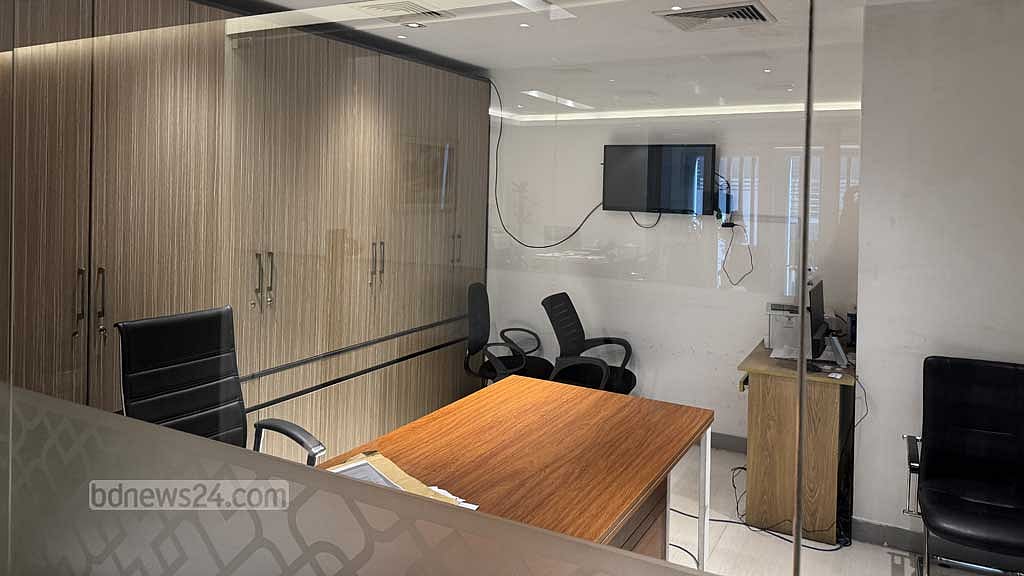
Late Arrivals, but 'On Time'
In Building No. 7, none of the secretaries of five ministries arrived before 9am.
Road Transport Secretary Md Ziaul Haque entered at 9:07am.
"I always arrive on time and try to be here before 9am," he said.
Youth and Sports Secretary Md Mahbub-Ul-Alam also entered at 9:07am.
Labour Secretary Abdur Rahman Tarafdar arrived at 9:30am, while Rural Development Secretary Mohammad Shawkat Rashid Chowdhury entered at 9:20am. Financial Institutions Division Secretary Nazma Mobarek arrived at 10am.
No ministers from the building's five ministries had arrived by 11am. State Minister for Youth and Sports Md Aminul Haque entered at 11am.
An aide to Road Transport and Bridges Minister Sheikh Rabiul Alam said the minister would not come to the office because parliament was sitting in two sessions that day.
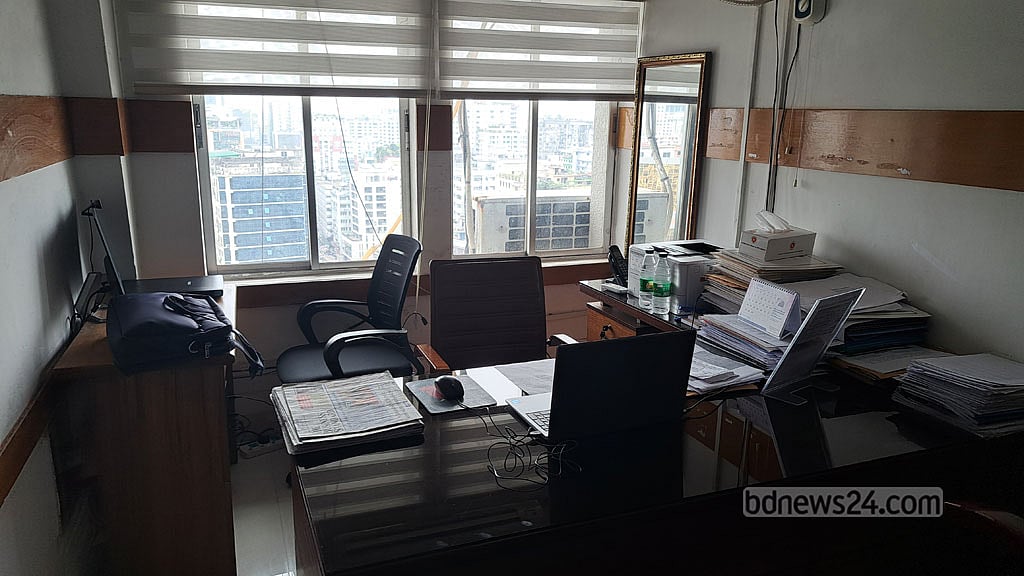
Education and Aviation Ministries
Education Minister ANM Ehsanul Hoque Milon, who frequently speaks to students about ethics and discipline, was also absent from his office when reporters visited around 9:15am. It was later learned that he had travelled to Barishal to attend an official programme.
At the same time, the ministry's Public Relations Officer Shibli Sadiq was also not at his office.
"He hasn't arrived. I can't say when he will come," a ministry official told bdnews24.com.
Abu Sayeed Md Borhan Uddin, the minister's personal officer, was also absent.
When asked whether they were expected to be in the office by 9am, another official said: "They are supposed to be here, but perhaps they are away on some official work."
At 9:21am, Civil Aviation Minister Afroza Khanam was not in her office either. Habibur Rahman, her personal officer, said: "She is on her way and is expected to attend a meeting after arriving."
The minister entered her office at around 9:34am.
By 9:30am, the ministry's Public Relations Officer Tarikul Islam and the minister's Assistant Private Secretary Abdul Awal were also absent. No one could explain their whereabouts.
Administrative Officer Mosa Eliza Akter signed in and entered her office at 9:27am, accompanied by several other officials who were also expected to have reported by 9am.
Additional Secretary Md Abdur Rauf had not arrived by 9:30am. Jalal Uddin Chowdhury, his personal officer, said: "Sir will be here by 10am. You may wait on the sofa outside."
When reminded of the public administration ministry's attendance directive, he replied: "He is supposed to arrive by 9am, but perhaps there was traffic on the way."
A Different Picture at Public Administration
The Ministry of Public Administration, which oversees postings, promotions and disciplinary matters across the civil service, presented a stark contrast.
Officials said the situation had changed since the prime minister began working from the Secretariat's new building.
State Minister Md Abdul Bari arrived between 8:40am and 8:45am, while Senior Secretary Md Ehsanul Haque was already in his office before him.
Officials said the state minister usually signs documents before 10am. because of his busy schedule and meetings with the prime minister, encouraging others to arrive earlier as well.
When asked about widespread absenteeism across ministries, Senior Secretary Ehsanul Haque declined to comment after making reporters wait for about 35 minutes.
The state minister also could not be reached despite repeated phone calls and text messages.
Reporters similarly failed to obtain comments from Cabinet Secretary Nasimul Ghani on whether the attendance directive was being monitored or effectively enforced.
‘Salary Deductions Would Fix It’
Former secretary AKM Abdul Awal Mazumder said the attendance directive currently being reissued by the government was not new. He recalled that a similar order had first been issued in 2003 under the signature of then cabinet secretary Saadat Husain.
“I signed the forwarding note for that order when I was a deputy secretary at the Cabinet Division,” he said.
“This time, the government has essentially reissued the previous directive. Back then, we clearly stated that ministers and secretaries should not summon officials during that period, and we also specified which categories of employees would be exempt.”
Explaining the rationale behind the order, he said it was designed primarily to ensure that government employees arrived at work on time.
“Many officials would have a meeting somewhere at 11am and simply not come to the office beforehand. They would stay at home until 10:30am and then head straight to the meeting.
“The idea was that everyone would first report to the office and then leave for meetings or other official engagements from there. It also meant that members of the public knew they could find an official at the office during that period. Visitors no longer had to sit around waiting.”
The former secretary lamented what he described as a culture of lax discipline in public offices.
“Unfortunately, people arrive late, spend time chatting, leave early and socialise during office hours. In no civilised country is it normal to arrive late, leave early or spend working hours in idle conversation.
“I do not know how this has become acceptable. The prime minister himself arrives on time and has repeatedly urged others to do the same.”
According to him, the success of the directive ultimately depends on those at the top of the bureaucracy.
“I believe implementation depends largely on secretaries and heads of organisations. If they arrive on time and monitor attendance properly, the directive can work.
“But if the secretaries themselves do not report on time and fail to monitor compliance, no order or request is likely to have any meaningful effect.”
Although the attendance directive does not formally apply to ministers, Mazumder noted that many ministers in previous administrations maintained regular office hours.
In his view, if ministers began following the premier’s example and maintained a consistent presence in their offices, attendance levels would improve and workplace discipline would inevitably follow.
Former principal secretary and cabinet secretary Ali Imam Majumder said the policy had faced obstacles from the very beginning.
“When Saadat was cabinet secretary, the order clearly stated that officials could not attend meetings during that 40-minute attendance window.
“But (former) principal secretary Kamal Siddiqui began scheduling meetings at exactly 9am on different days. I was a secretary at the time and would receive those notices. We had no option but to attend. If people at that level cannot organise themselves around the policy, it is impossible to expect those below them to implement it.”
He argued that stricter enforcement was needed if the government wanted the directive to be taken seriously.
“There are systems in place to monitor attendance, and there are rules for dealing with late arrivals. The regulations specify how repeated delays can be treated as absences and how salaries can be deducted accordingly.
“If salaries are actually deducted, the problem will be fixed within a month.”
Ali Imam said the government already possessed the necessary mechanisms to enforce its own directives.
“The arrangements required for strict implementation already exist. Those measures must be used. Otherwise, nothing will change.
“It is not enough simply to issue instructions. If people fail to comply, action must be taken against them.”